 8 Days
 Rajasthan Desert Safari Tour
From$739per person · 2 travellers
Book Now

Jaisalmer rises from the Thar Desert like a mirage, its golden sandstone fort still home to thousands of people. Our private Jaisalmer tours explore the living fort, its Jain temples and the lace-like havelis with a local guide. Then you head into the dunes for a sunset camel ride, folk music and a night under the stars.
8 Days Looking for a Customized Itinerary? Confused about Where, When and How? Talk to us — we will design the right tour for your dates.
Wander lanes of homes and shops inside a 12th-century fort, with its palace and Jain temples.
See the lace-like balconies of Patwon ki Haveli, Salim Singh and Nathmal ki Haveli.
Shrines, ghats and pavilions in the water, best in the golden early-morning light.
Rows of royal sandstone cenotaphs on a hill, one of Rajasthan's finest sunset views.
Cross the dunes at Sam or Khuri to a quiet ridge as the sky turns orange.
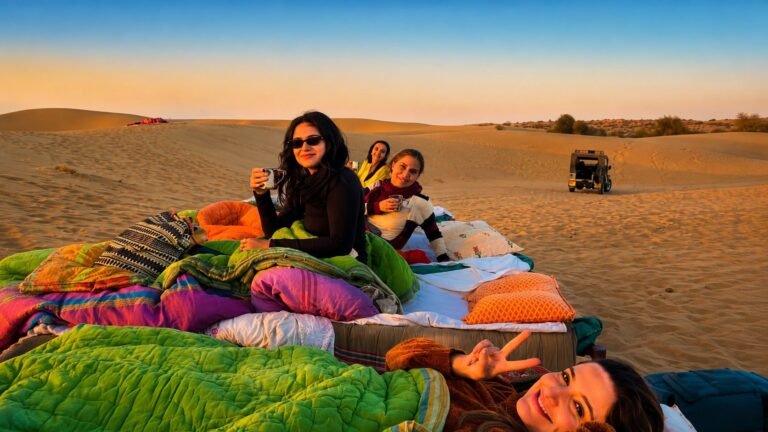
Folk music, Kalbelia dancing, dinner by the fire and a sky full of stars.
A ghost village of roofless sandstone houses on the road to the dunes.
October to March is the season: warm, sunny days of 22–28°C and cool nights that drop close to freezing in December and January. Most desert camps operate only in these months. The Desert Festival, held around the full moon of February, brings camel races, turban-tying contests and music on the Sam dunes. April to June is extremely hot, often above 45°C, with dust storms; sightseeing is limited to early morning. The monsoon (July to September) brings very little rain but high humidity, and many camps close.
Most visitors come by road from Jodhpur, about 285 km or 5 hours, through desert scenery. Trains connect Jaisalmer with Jodhpur, Jaipur and Delhi, including overnight services that save a day; check current timetables. Jaisalmer's small airport, about 15 km from town, has seasonal flights from a few cities. In the town, the fort and havelis are best explored on foot, with auto-rickshaws for short hops. Your private car takes you to the dunes, Kuldhara and the camps, and on to Jodhpur or Bikaner.
We recommend a heritage hotel outside the fort walls, to help protect the fort from water damage. Several have rooftops with views of the walls lit at night, and some are built in the traditional sandstone style. Spend one night in a desert camp near Sam or Khuri, choosing one with private bathrooms. Luxury tented camps and resorts on the road to Sam offer pools and spa treatments. Book early for Christmas, New Year and the Desert Festival, when the best rooms fill months ahead.
Desert food is simple, hearty and delicious: dal baati churma, ker sangri (desert beans and berries), gatte ki sabzi, bajra roti and kadhi. Laal maas is the local fiery mutton curry. Try the sweets of the old city, ghotua laddoo and panchdhari laddoo, and a cold lassi in the heat. Rooftop restaurants face the illuminated fort at night. Camp dinners are Rajasthani buffets by the fire. Vegetarians eat very well everywhere. Drink bottled water, and carry some on the dunes.
Water from hotels inside is damaging the fort's foundations. Admire it from a rooftop outside instead.
Tourist hours are limited, usually until about midday, and leather items are not allowed.
From December to February, nights in camp can be near freezing. Bring a fleece and a hat.
Avoid the noisiest strip at Sam at weekends; camps at Khuri or away from the road are calmer.
Wear a hat, sunglasses and sunscreen, and carry a scarf for wind on the dunes.
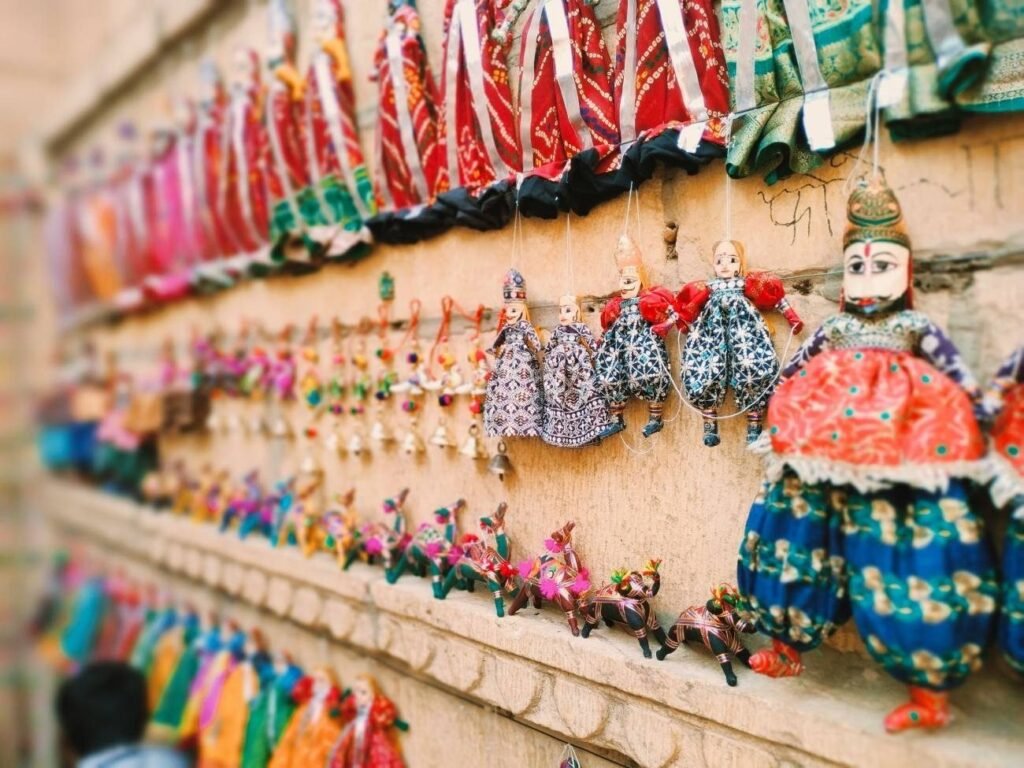
Swirling skirts, balancing pots and string puppets: an evening of Rajasthan's living traditions
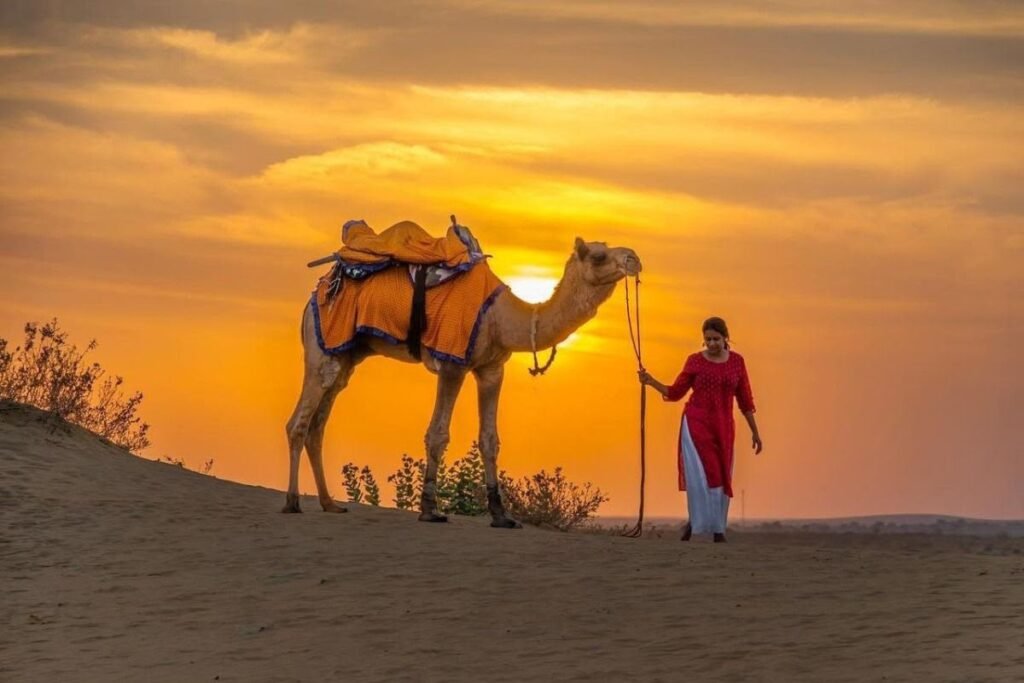
Sunset on the dunes of the Thar Desert, folk music by the fire and a night…
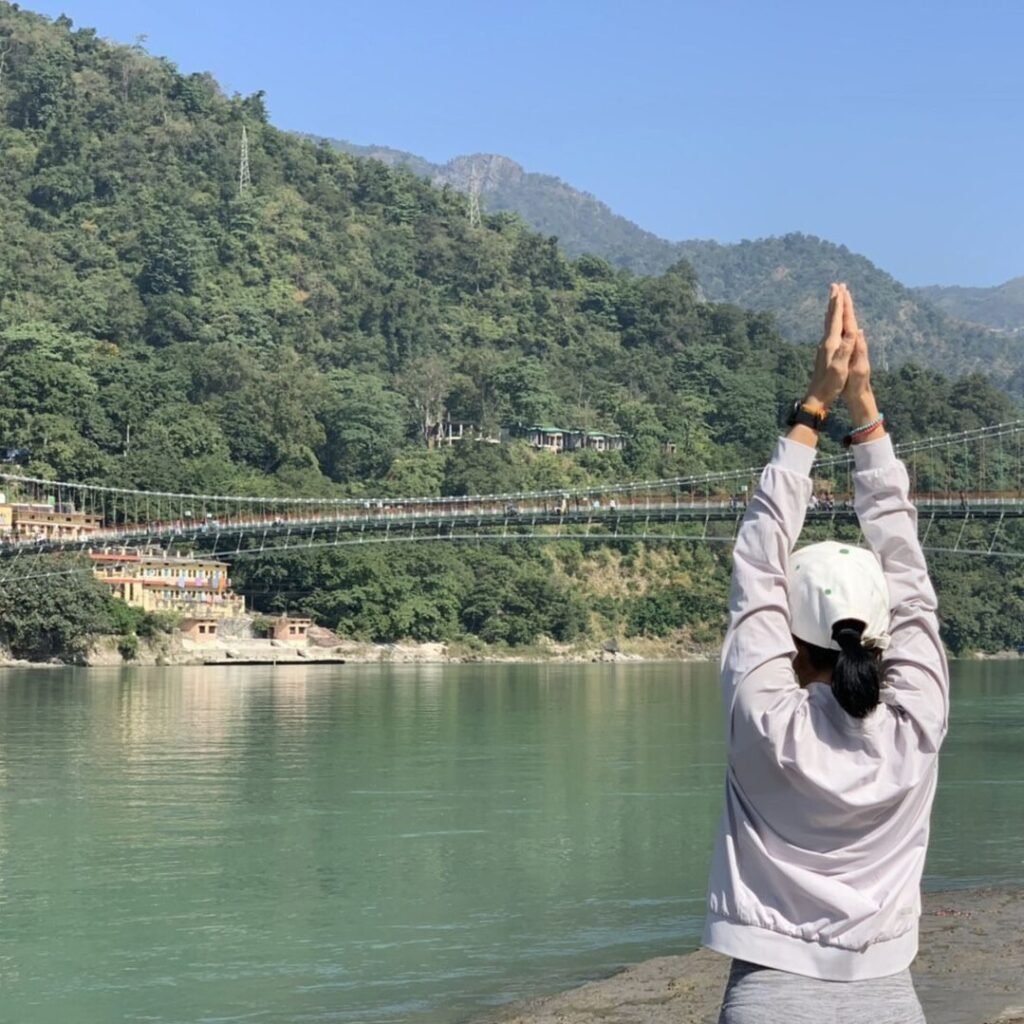
Sunrise on the Ganges, sunset on Lake Pichola and calm water under the Himalaya
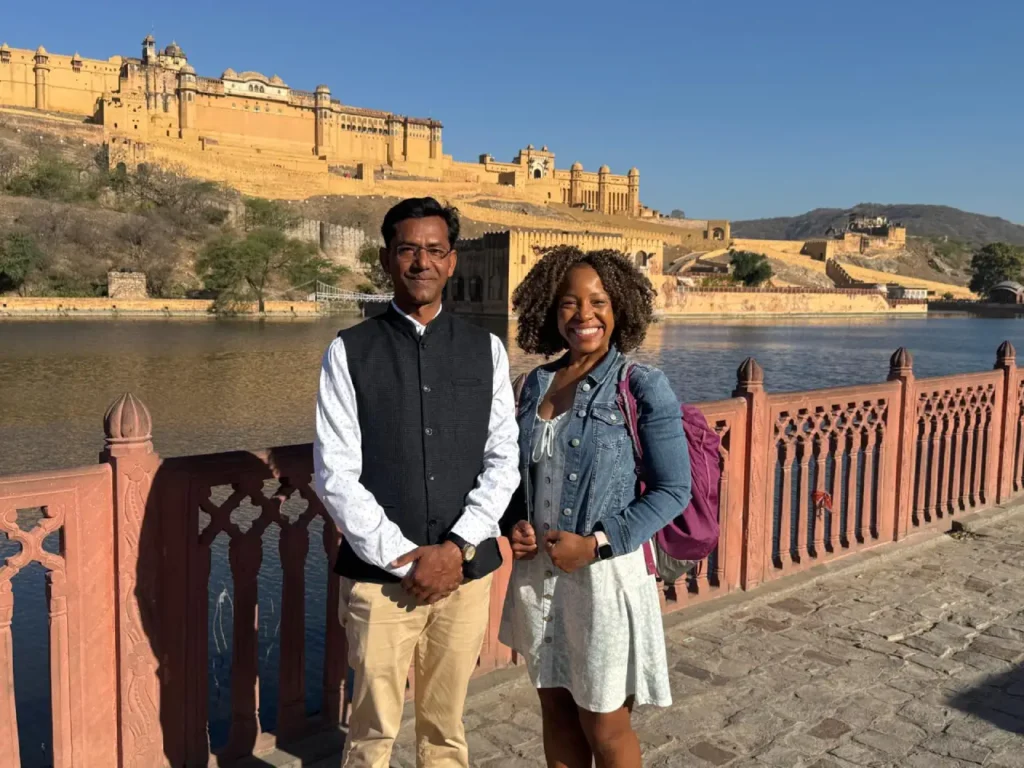
Old bazaars, hidden lanes and living history, explored on foot with a local guide
Jaisalmer
Jaisalmer's 12th-century Golden Fort, still lived in: the royal palace museum, carved Jain temples, havelis, lanes and ramparts over the…
Jaisalmer
Five 19th-century merchant mansions in Jaisalmer with lace-like carved sandstone balconies, and a museum of family life inside. History, timings…
Jaisalmer
The sand dunes of Sam and Khuri near Jaisalmer: camel and jeep safaris, desert camps, sunset, stargazing and the abandoned…
Jaisalmer
Jaisalmer's 14th-century lake with ghats, temples, floating pavilions and the Tilon ki Pol gate: boating, birds and sunset views. Timings…
The sand dunes of Sam and Khuri near Jaisalmer: camel and jeep safaris, desert camps, sunset, stargazing and the abandoned…
Five 19th-century merchant mansions in Jaisalmer with lace-like carved sandstone balconies, and a museum of family life inside. History, timings…
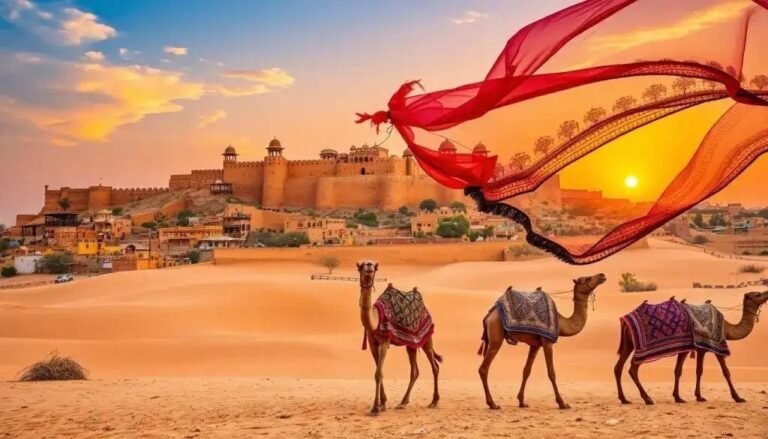
Jaisalmer's 12th-century Golden Fort, still lived in: the royal palace museum, carved Jain temples, havelis, lanes and ramparts over the…
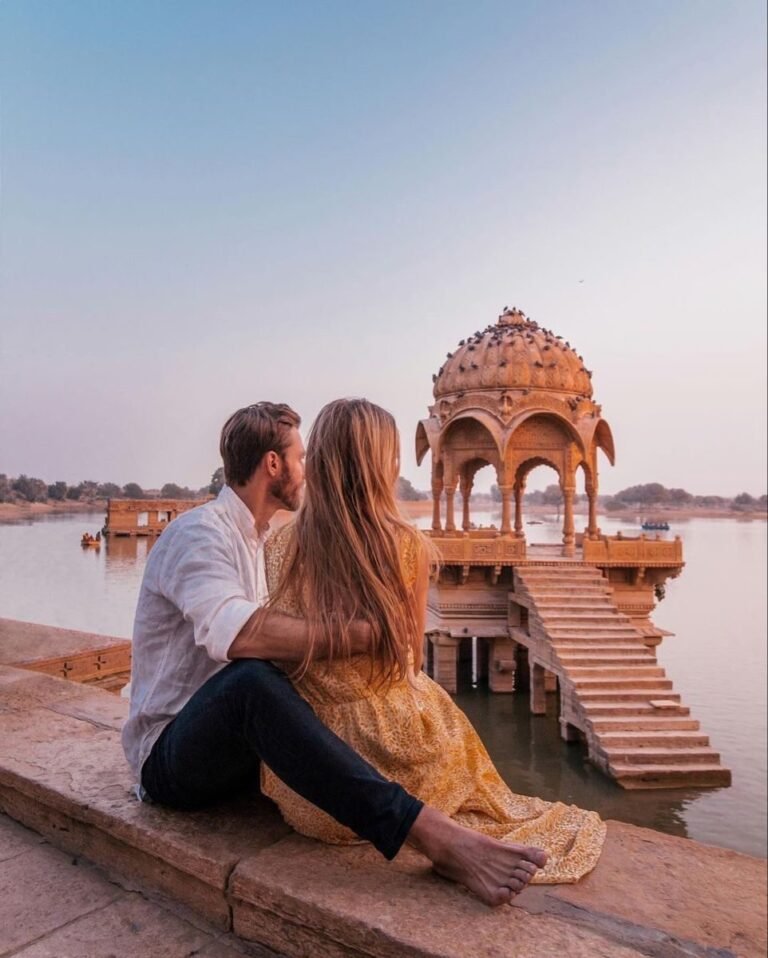
Jaisalmer's 14th-century lake with ghats, temples, floating pavilions and the Tilon ki Pol gate: boating, birds and sunset views. Timings…
Swirling skirts, balancing pots and string puppets: an evening of Rajasthan's living traditions
Sunset on the dunes of the Thar Desert, folk music by the fire and a night under the stars
Jaisalmer lies deep in the Thar Desert in far western Rajasthan, about 285 km west of Jodhpur and less than 100 km from the border with Pakistan. It was founded in 1156 by Rawal Jaisal, a Bhati Rajput chief, who built his fort on Trikuta Hill. For centuries the city grew rich on the camel caravans carrying silk, spices and opium between India, Persia and Central Asia. Its merchants spent their fortunes on mansions carved like lace. When sea trade and Partition ended the caravan routes, Jaisalmer was left isolated, which preserved its old character.
Everything here is built of the same honey-yellow sandstone, which glows gold at sunrise and sunset, giving Jaisalmer its name, the Golden City. It is remote, magical and quite unlike anywhere else in India, and the gateway to the most beautiful dunes of the Thar.
Jaisalmer Fort, the Sonar Qila, is one of the very few living forts in the world. About a quarter of the old city's people still live inside its walls, in houses, shops, temples and guesthouses along narrow, winding lanes. Its 99 bastions rise in a double ring of walls about 76 metres above the town. It is a UNESCO World Heritage Site, one of the Hill Forts of Rajasthan.
Inside, the Raj Mahal, the seven-storey palace of the Maharawals, is now a museum with fine views from its terraces. A group of seven Jain temples from the 12th to 16th centuries is carved in yellow sandstone with astonishing detail, including thousands of figures of gods, dancers and animals. Visiting hours for tourists are limited to the morning, and leather items are not allowed. Allow about three hours for the fort with a guide, ideally in the morning.
The fort's ancient drainage was built for a desert town with very little water. Today, piped water from hotels and homes has seeped into the foundations, and parts of the walls have collapsed in recent decades. To help protect it, we usually book hotels outside the fort walls, from which you can admire it lit up at night. We visit the fort on foot with a local guide.
Jaisalmer's merchant mansions are among the finest in India. Patwon ki Haveli is a cluster of five havelis built in the early 19th century by a family of wealthy brocade and opium traders. Its facades are covered in carved balconies, screens and arches, and one part is a museum showing how the family lived. Salim Singh ki Haveli, with its peacock-shaped roof brackets, belonged to a powerful prime minister. Nathmal ki Haveli was carved by two brothers who worked on opposite sides, so the two halves are similar but not identical. Your guide will point out the details.
Gadisar Lake, an old reservoir built in the 14th century, was once the city's only water supply. Its banks are lined with shrines, ghats and chhatris, and pavilions stand in the water. Entry is through the carved Tilon ki Pol gateway. An early-morning walk or a short boat ride is lovely; see boat rides. About 6 km north, Bada Bagh is a hillside of royal cenotaphs, delicate sandstone chhatris that make one of the most photographed sunset views in Rajasthan.
The dunes are the reason many people come. About 40 km west, the Sam dunes are the most dramatic and popular, with high ridges of soft sand. Khuri, south-west of the city, is a mud-walled village with quieter dunes and camps. A camel safari at sunset, a night in a desert camp with folk music and Kalbelia dancers by the fire, and a sky full of stars are highlights of any Rajasthan journey. See the Thar Desert page for more.
Camps range from simple huts to luxurious tents with private bathrooms. The busy strip at Sam can be noisy, with loudspeakers and crowds at weekends, so we prefer camps away from the main road or at Khuri, where the night is darker and calmer. Most camps operate from about October to March.
On the way to Sam, the abandoned village of Kuldhara is a ghost town of roofless sandstone houses. Legend says its Paliwal Brahmin inhabitants left overnight in the early 19th century to escape a cruel minister, cursing the village as they went. Nearby, the small Khaba Fort stands above another empty village. Further west, the Desert National Park protects dunes and grasslands and is one of the last refuges of the critically endangered great Indian bustard. For military history, the Tanot temple and the Longewala battlefield of the 1971 war lie near the border, a long day trip.
Two nights is ideal: one in a heritage hotel in town and one in a desert camp. Arrive in town, see Gadisar and the havelis, and watch sunset at Bada Bagh. Spend the next morning in the fort, rest, then drive to the dunes for the camel ride and a night in camp. With three nights, add Kuldhara and Khaba, the Desert National Park, or simply a slower pace.
You start at Gadisar Lake at 8 am, while the stone is golden and the boats are quiet, then walk up into the fort with your guide. You explore the palace, the Jain temples and the lanes until about midday, then lunch at a rooftop restaurant facing the walls and rest through the heat. Around 3:30 pm, you drive out past Kuldhara to the dunes. There you ride a camel to a quiet ridge for sunset, then settle into camp for dinner, music and stargazing.
Your private car and driver bring you from Jodhpur, with a licensed local guide for the fort and havelis. The desert camp, camel ride and transfers are booked in advance with operators we trust, who treat their camels well. We plan the hottest hours for rest and keep the walking in the fort to the cool morning. Jaisalmer is remote, so we recommend at least two nights to make the long drive worthwhile.
Two nights is ideal: one in town for the fort, havelis, Gadisar Lake and the sunset at Bada Bagh, and one in a desert camp after a sunset camel ride. A third night adds Kuldhara, the Desert National Park or a slower pace.
There are guesthouses inside the fort, but water seepage from hotels and homes is damaging its foundations. To help protect the monument, we recommend staying in a heritage hotel outside the walls, many of which have views of the fort lit at night.
October to March is best, with warm days and cool desert nights; most camps open only in these months. The Desert Festival, usually in February, brings camel races and folk music. April to June is extremely hot, often above 45°C.
Sam has the highest, most dramatic dunes but gets crowded, especially at weekends. Khuri is quieter, with a traditional mud-walled village and darker skies. We choose camps away from the busiest strip for a peaceful night.
It depends on the camp. Our camps have proper beds and private bathrooms, and many have electricity and hot water. Nights from December to February can fall close to freezing, so bring warm layers; camps provide blankets.
By road from Jodhpur, about 5 hours. Overnight trains run from Delhi and Jaipur, and day trains from Jodhpur. Jaisalmer's small airport has some seasonal domestic flights.
Jaisalmer Fort, the Sonar Qila, built in 1156 of golden sandstone, is one of the few living forts in the world, with houses, shops and temples still inside. It is a UNESCO World Heritage Site.
Yes, the border is about 100 km away. The city and the dunes are safe to visit. Some border areas need permits, and the Tanot temple and Longewala battlefield can be visited as a long day trip.
 12 Hours
 6 HRS
 1 Day
 1 Day
 1 Day
 1 Day
 1 Day
 1 Day
 1 Day
 1 Day