Patwon ki Haveli stands in a narrow lane of Jaisalmer’s old town, below the fort. It’s not one haveli but a row of five, built between about 1805 and 1860 by Guman Chand Patwa, a wealthy trader in brocade, jewellery and gold thread, for his five sons. The patwas were merchants who grew rich on the caravan trade that passed through Jaisalmer, and they spent lavishly on their homes. The first and largest of the five is the most elaborate, and it’s the one most visitors come to see.
The carving
The havelis are famous for their facades: yellow sandstone carved so finely that it looks like lace or woodwork. More than sixty balconies (jharokhas), latticed screens, arches and brackets cover the walls, decorated with flowers, birds and geometric patterns. Standing in the narrow lane and looking up at the facade, especially when the morning or late-afternoon sun lights the stone, is one of the great sights of Jaisalmer.
What it’s like to visit
Inside, the first haveli has been restored as a museum. Its rooms show how a rich merchant family lived in the 19th century, with painted walls and ceilings, mirror work, furniture, costumes, kitchen utensils, jewellery boxes and household objects. Climb to the rooftop for views over the old town to the fort. Some of the other havelis in the row are partly open, with shops selling textiles and handicrafts. Allow about an hour.
Other havelis nearby
Jaisalmer has two other famous havelis within walking distance: Salim Singh ki Haveli, built for a powerful prime minister, with a distinctive peacock-shaped roof, and Nathmal ki Haveli, carved by two brothers who each worked on one side, so the two halves are subtly different.
Plan your visit
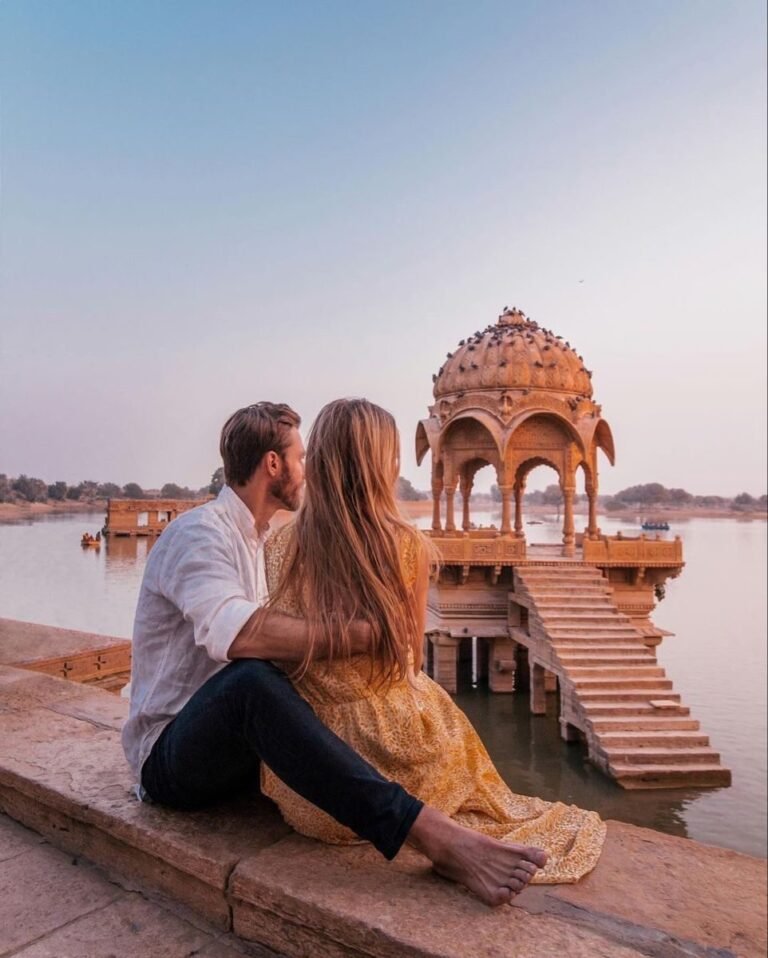
Visit after the Jain temples and palace in Jaisalmer Fort, then take a sunset walk at Gadisar Lake. Read our Rajasthan travel guide for more.