
Few journeys in the world offer as much in so little time as India’s Golden Triangle Tour. For first-time visitors — especially those traveling from the US or UK — it is the perfect introduction to a country that is ancient, vibrant, overwhelming, and utterly beautiful all at once.
In just three cities, the Golden Triangle offers you a taste of everything India stands for: the grandeur of Mughal empires, the flamboyance of Rajput royalty, the chaos and color of bazaars, the aroma of street food, the spirituality woven into everyday life, and some of the world’s most breathtaking monuments. Delhi’s political legacy, Agra’s undying romance, and Jaipur’s royal swagger — together, they tell the story of India better than any history book ever could.
That said, the Golden Triangle is not all of India — it is a curated, accessible, deeply rewarding starting point. And the good news? It comes in many flavors. You can do the classic culture-and-heritage circuit, or you can extend it with wildlife safaris in Ranthambore, spiritual experiences in Varanasi, or yoga retreats in Rishikesh. The Golden Triangle adapts to what you are looking for.
Whether you have 5 days or 12, whether you are a history enthusiast, a photographer chasing that perfect Taj Mahal sunrise shot, a foodie eager to try chaat and kebabs, or a traveler simply looking to be moved, the Golden Triangle Tour delivers.
What Is the Golden Triangle Tour?
The Golden Triangle Tour is a well-established travel circuit in northern India that connects three iconic cities:
- Delhi — India’s capital and one of the world’s oldest continuously inhabited cities
- Agra — Home to the Taj Mahal, one of the Seven Wonders of the World
- Jaipur — The Pink City, capital of Rajasthan, and seat of magnificent Rajput heritage
These three cities form a rough triangle on the map, each roughly 200–250 km apart, making it a practical and efficient route for travelers. The circuit can be completed in as few as 5 days, though 7–10 days allows you to experience it without rushing.
Popular Golden Triangle Variations
- Classic Golden Triangle — Delhi, Agra, and Jaipur. Pure culture, history, and heritage.
- Golden Triangle with Wildlife — Adds Ranthambore National Park for a tiger safari experience.
- Golden Triangle with Spirituality — Includes Varanasi, the holy city on the Ganges, for a deeply immersive spiritual experience.
- Golden Triangle with Yoga & Wellness — Adds Rishikesh for meditation, yoga, and river adventures.
Delhi — Where Empires Left Their Mark
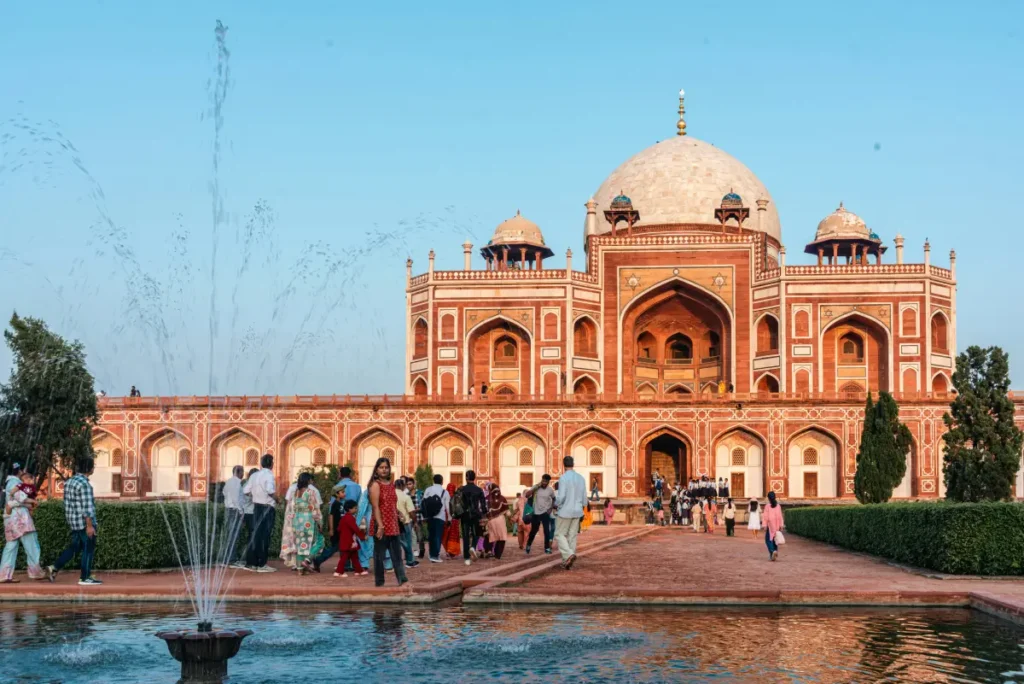
India’s capital is not one city — it is many cities layered on top of one another. Old Delhi pulses with medieval energy: narrow alleys, Mughal mosques, and the intoxicating aroma of street food. New Delhi, designed by the British in the early 20th century, is stately and wide-boulevarded, lined with embassies and colonial-era buildings. Together, they make Delhi one of the most complex and fascinating capitals in the world.
Allow at least 2 full days for Delhi, ideally 3 if your itinerary permits.
Places to Explore in Delhi
Red Fort (Lal Qila) Built by Mughal Emperor Shah Jahan in 1639, the Red Fort is a UNESCO World Heritage Site and perhaps the most powerful symbol of India’s imperial past. Its massive red sandstone walls enclose a world of palaces, audience halls, and gardens. Every evening, a sound and light show brings the fort’s history to life — highly recommended for first-time visitors.
Humayun’s Tomb Often called the “prototype of the Taj Mahal,” Humayun’s Tomb is a masterpiece of Mughal architecture that predates the Taj by nearly a century. Set in beautifully restored Charbagh gardens, it is far less crowded than the Taj Mahal while being equally awe-inspiring in its scale and symmetry. A must-visit for architecture lovers.
Lotus Temple One of Delhi’s most striking modern landmarks, the Lotus Temple belongs to the Bahá’í faith and welcomes people of all religions. Its petal-shaped white marble structure rising from reflective pools is a remarkable piece of contemporary architecture, offering a moment of tranquility amid the bustle of the city.
Qutub Minar The world’s tallest brick minaret, built in 1193, the Qutub Minar stands 73 meters tall and marks the beginning of Muslim rule in India. The surrounding Qutub Complex is a fascinating archaeological ensemble, with ruins of ancient temples and mosques that reflect India’s layered religious history.
India Gate & Rashtrapati Bhawan India Gate is Delhi’s war memorial, an imposing 42-meter arch dedicated to Indian soldiers. The boulevard leading up to it — Kartavya Path — is flanked by government buildings and culminates at Rashtrapati Bhawan, the Presidential Palace, one of the largest residences of any head of state in the world. An evening stroll here, with the monument illuminated, is memorable.
Delhi’s Popular Bazaars
Chandni Chowk One of Asia’s oldest and busiest markets, Chandni Chowk is an assault on the senses in the best possible way. Built by Shah Jahan in the 17th century, it is a labyrinth of narrow lanes each specializing in something different — spices, silver, saris, books, electronics, and wedding paraphernalia. Start your visit with a breakfast of paratha at the iconic Paranthe Wali Gali. Arrive early and wear comfortable shoes.
Connaught Place, New Delhi’s commercial heart is a grand colonnaded circle built during the British era. Today it is home to high-street brands, restaurants, and cafes alongside some older establishments that have been here for decades. It is a great place to pick up souvenirs, sit down for a meal, or simply people-watch.
Hauz Khas Village A bohemian enclave built around a medieval reservoir and deer park, Hauz Khas Village is Delhi’s artsy, upscale neighborhood. Independent boutiques, concept stores, art galleries, and some of the city’s best restaurants and cafes are tucked between 14th-century ruins. Great for an evening out.
Khan Market One of India’s most expensive retail addresses, Khan Market is where Delhi’s diplomats, expats, and affluent locals shop. You will find international brands alongside excellent Indian bookstores, specialty food shops, and some very good restaurants. If you want to pick up premium Indian handicrafts, artisan food products, or contemporary Indian fashion, this is the place.
Agra — City of Eternal Love
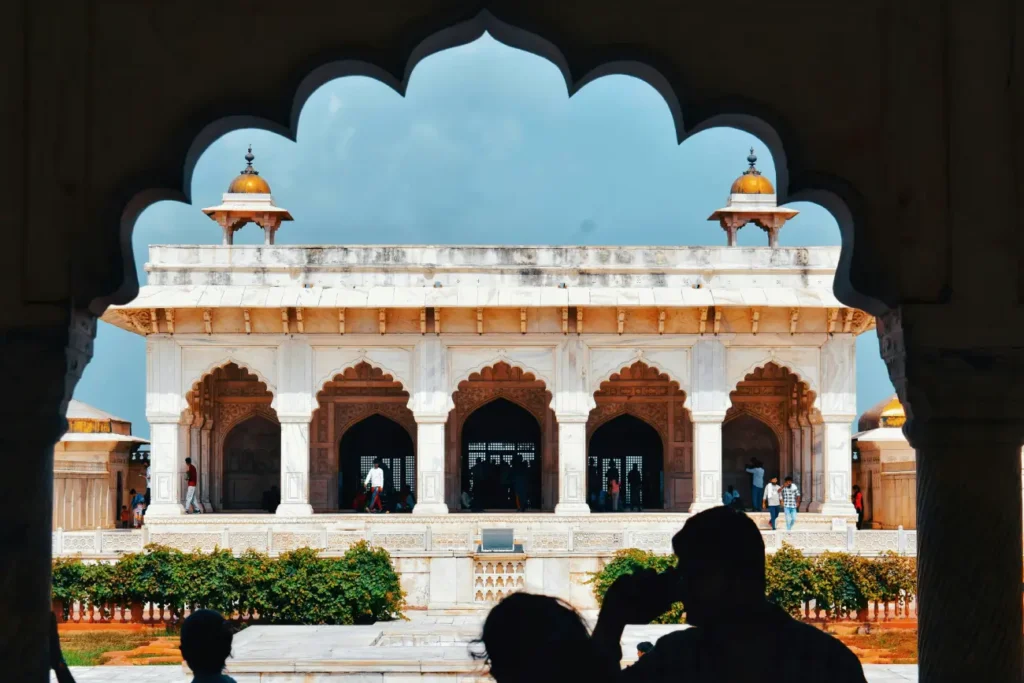
Agra is a city that exists, for most of the world, because of one building. But while the Taj Mahal is the unquestioned centerpiece, Agra has more to offer than most visitors realize. This was once the capital of the Mughal Empire — one of the wealthiest and most powerful empires in human history — and that legacy lives on in its forts, monuments, and bazaars.
Allow at least 1.5 to 2 full days in Agra.
Places to Explore in Agra
Taj Mahal. No description does it justice. Built by Emperor Shah Jahan between 1631 and 1648 as a mausoleum for his beloved wife Mumtaz Mahal, the Taj Mahal is widely considered the greatest monument to love ever built. Its white marble changes color with the light — pale pink at sunrise, brilliant white at noon, soft gold at sunset. Go at sunrise. The fewer crowds, the softer light, and the mist rising off the Yamuna River create a scene you will carry with you for the rest of your life.
Practical tip for US/UK visitors: Book your tours in advance online. The site opens before sunrise and that is the time to be there.
Also Read: Complete Taj Mahal Tour Guide
Agra Fort Just 2.5 km from the Taj Mahal, Agra Fort is another UNESCO World Heritage Site and arguably one of the finest examples of Mughal military and palace architecture in India. This was the seat of Mughal power for generations — Akbar, Jahangir, and Shah Jahan all held court here. From the fort’s walls, you can see the Taj Mahal in the distance, which is particularly poignant given that Shah Jahan was imprisoned here by his own son and spent his final years gazing at his wife’s tomb.
Itimad-Ud-Daulah (Baby Taj) (Recommended on longer tours) Often overshadowed by its more famous neighbor, the Itimad-Ud-Daulah — nicknamed the Baby Taj — is a exquisite gem of Mughal craftsmanship. Built for Empress Nur Jahan’s father, it was the first Mughal structure to be built entirely in white marble and is covered in delicate pietra dura inlay work. Less visited, utterly beautiful.
Mehtab Bagh (Moonlight Garden) (Recommended on longer tours) Directly across the Yamuna River from the Taj Mahal, Mehtab Bagh is a Mughal-era garden that offers one of the most spectacular views of the Taj — especially at sunset. It is uncrowded, peaceful, and perfect for photographers.
Agra’s Popular Bazaars
Kinari Bazaar Agra’s most atmospheric bazaar, Kinari Bazaar is a tangle of lanes near the Jama Masjid selling everything from brocaded fabrics and wedding trimmings to marble souvenirs and street food. It is a sensory experience as much as a shopping destination.
Old Agra The lanes around Taj Ganj, the old neighborhood adjacent to the Taj Mahal, are lined with marble workshops, carpet sellers, and small eateries. This is where you will find craftsmen who have been practicing the art of marble inlay for generations — the same craft that adorns the Taj Mahal itself.
Jaipur — The Pink City of Rajasthan
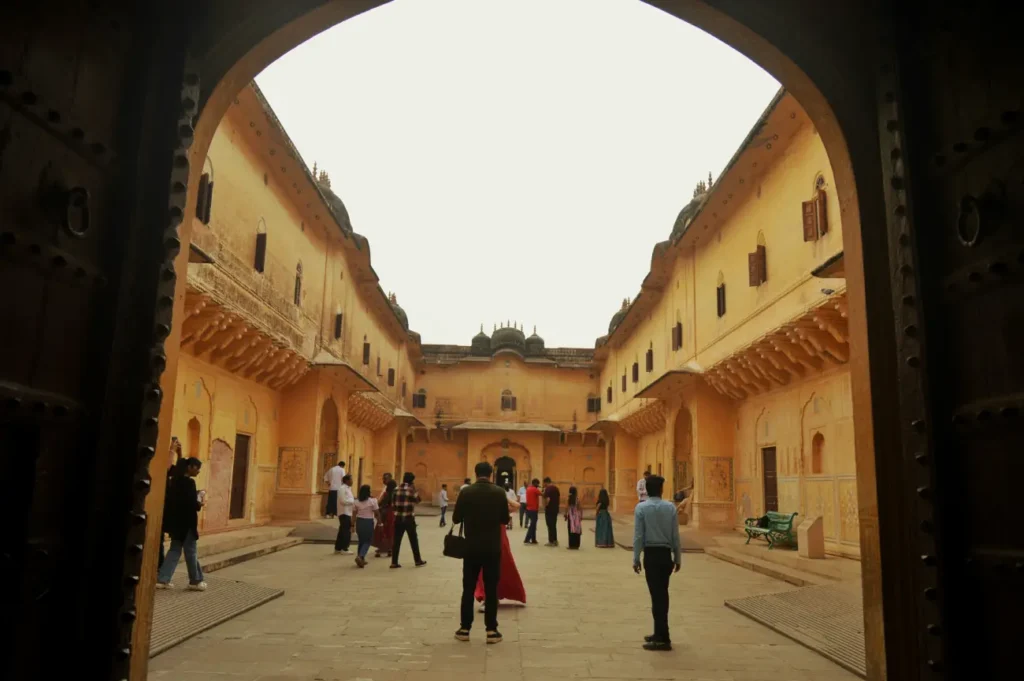
Jaipur is where India’s royal past comes alive in full, glorious, turbaned color. Founded in 1727 by Maharaja Jai Singh II, Jaipur is the capital of Rajasthan — India’s largest state and land of maharajas, forts, and deserts. The old city is painted a distinctive terracotta pink, a color chosen in 1876 to welcome the Prince of Wales and never changed since. Walking through its streets feels like stepping into a living museum.
Allow at least 2 full days in Jaipur.
Places to Explore in Jaipur
Amer Fort (Amber Fort) Perched on a hillside overlooking a lake and surrounded by the Aravalli range, Amer Fort is one of the most majestic forts in India. Built in the 16th century, this was the original seat of the Kachwaha Rajput clan before Jaipur was founded. Its palaces, courtyards, and mirror halls (Sheesh Mahal) are spectacular. The approach road to the fort, with its reflection in Maota Lake below, is one of the most photographed sights in Rajasthan.
City Palace Still partially home to the royal family of Jaipur, the City Palace is a magnificent complex of courtyards, gardens, and buildings that blend Rajput and Mughal architectural styles. The museum within holds an extraordinary collection of royal artifacts, textiles, weapons, and manuscripts. Look out for the two giant silver urns — said to be the largest silver objects in the world — which Maharaja Madho Singh II used to carry sacred Ganges water on his voyage to England for King Edward VII’s coronation.
Hawa Mahal (Palace of Winds) Jaipur’s most iconic facade, the Hawa Mahal is a five-story honeycombed screen of 953 small windows, built in 1799 to allow royal women to observe street life and festivals unseen. It is a remarkable piece of architecture — best photographed from the street outside in the morning light, when it glows a deep salmon-pink.
Jantar Mantar One of five astronomical observatories built by Maharaja Jai Singh II in the early 18th century, Jantar Mantar in Jaipur is the largest and best preserved. Its massive stone instruments were used to observe astronomical positions with remarkable accuracy, predating the telescope era. A UNESCO World Heritage Site and a genuinely fascinating place for curious minds.
Old Jaipur City (Walled City) The walled city of Jaipur is itself a UNESCO World Heritage Site — one of the few planned cities of the pre-modern world. Its grid layout, wide bazaars, and uniform pink buildings were a deliberate design choice by Jai Singh II. Walking or cycling through the bazaars of Johari Bazaar, Tripolia Bazaar, and Bapu Bazaar is one of the authentic pleasures of visiting Jaipur.
Jal Mahal (Water Palace) Rising from the middle of Man Sagar Lake, the Jal Mahal is a dreamlike five-story palace, only one story visible above water. It is best seen at dusk when the sky turns violet and the palace is reflected in the still lake. You cannot enter the palace, but the view from the lakeshore road is stunning and makes for an excellent photograph.
Albert Hall Museum (Optional) Jaipur’s oldest museum, housed in a beautiful Indo-Saracenic building inspired by London’s Victoria and Albert Museum, holds an impressive collection of artifacts including paintings, jewelry, carpets, and the famous Egyptian mummy. Worth an hour if you have time.
Add-On Cities: Extending Your Golden Triangle Tour
One of the great pleasures of the Golden Triangle route is how naturally it connects to other extraordinary destinations. Consider these add-ons to deepen your India experience:
Varanasi — The Soul of India
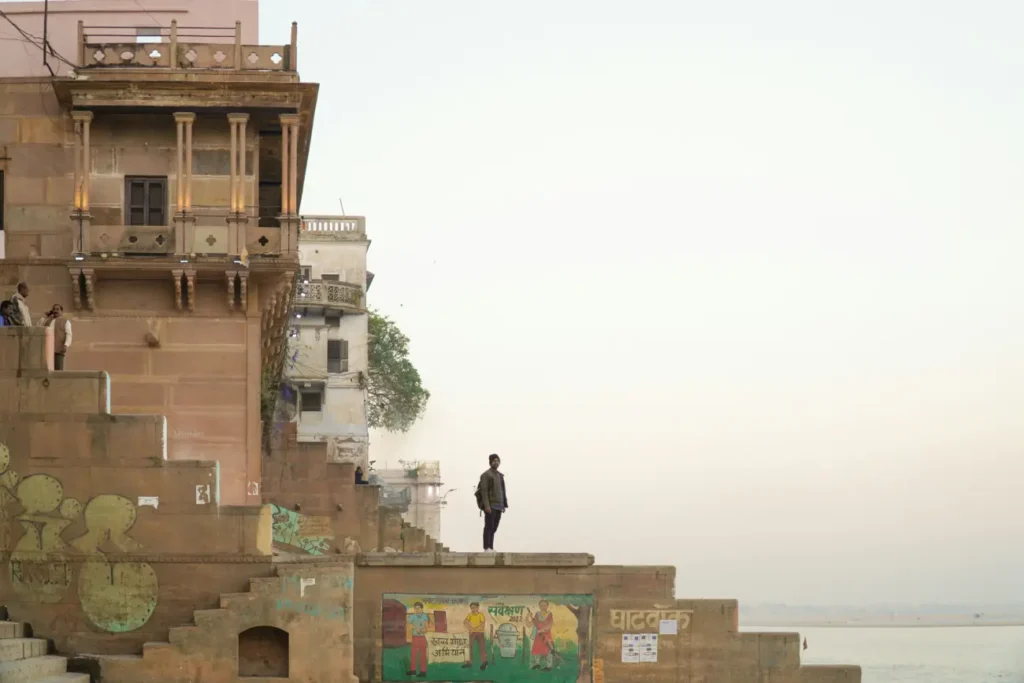
India’s oldest living city, Varanasi (also known as Banaras or Kashi) is unlike anywhere else on Earth. Situated on the banks of the Ganges River, it has been a center of learning, spirituality, and Hindu pilgrimage for over 3,000 years. The ghats — wide stone steps leading down to the river — are where all of life and death plays out simultaneously. The evening Ganga Aarti ceremony, a mesmerizing ritual of fire, chanting, and incense, is one of the most profound experiences India has to offer. A boat ride at dawn along the river, watching the city awaken, is something you will never forget. Varanasi is confronting, spiritual, chaotic, and deeply moving — not for every traveler, but unforgettable for those who go.
Ranthambore — India’s Finest Tiger Territory
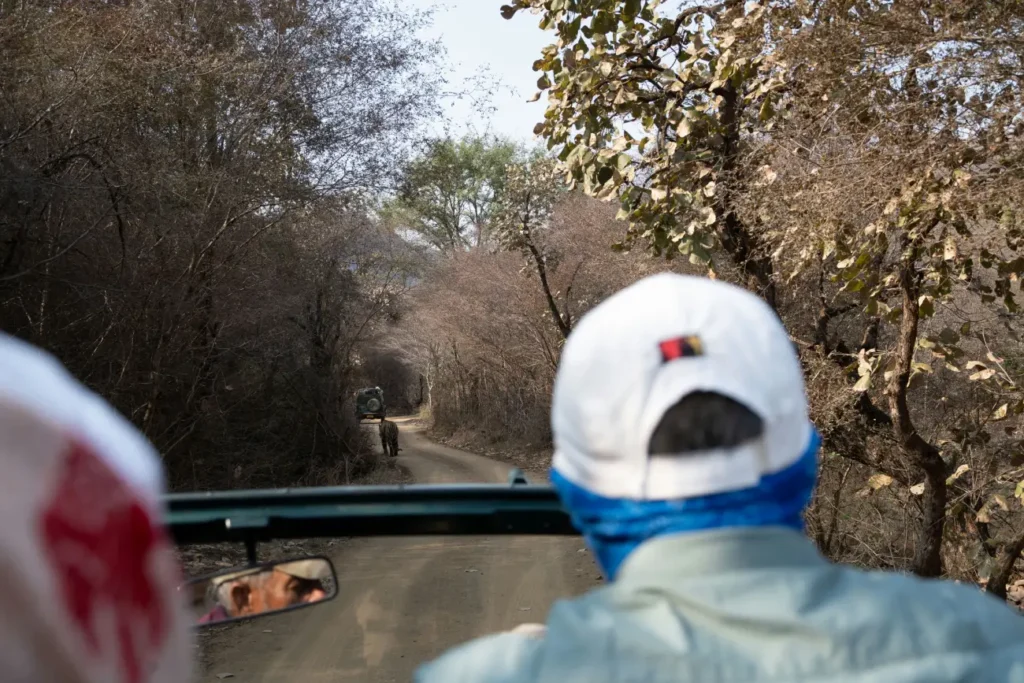
Located in southeastern Rajasthan, Ranthambore National Park is one of the best places in the world to spot wild Bengal tigers. Set against a dramatic backdrop of ancient ruins and rocky terrain, Ranthambore offers jeep and canter safaris into the forest, where tigers, leopards, sloth bears, crocodiles, and hundreds of bird species can be encountered. For wildlife enthusiasts, photographers, and safari seekers, this is as good as it gets in India. It fits naturally between Agra and Jaipur on the route.
Rishikesh — Where the Himalayas Begin

Nestled in the foothills of the Himalayas where the Ganges rushes out of the mountains, Rishikesh is India’s yoga capital and a sanctuary for seekers of all kinds. It is a place of ashrams and meditation centers, of bridge crossings and temple bells, of white-water rafting and bungee jumping alongside ancient spiritual practices. For travelers who want to balance the intensity of the Golden Triangle cities with something quieter and more reflective, Rishikesh offers the perfect counterpoint.
How Many Days Are Sufficient for the Golden Triangle Tour?
The honest answer: it depends on your travel style and what you want to experience.
| Duration | What You Can Do |
|---|---|
| 5 Days | A tight but doable classic circuit — 1.5 days Delhi, 1.5 days Agra, 2 days Jaipur. You will see the highlights but with little breathing room. |
| 7 Days | The sweet spot for most travelers. Enough time to explore each city at a relaxed pace, including bazaars and local food experiences. |
| 9–10 Days | Ideal if you want to add Ranthambore or Rishikesh, or linger longer in a city you love. |
| 12–14 Days | Allows you to include Varanasi comfortably and experience a fuller picture of northern India. |
Our recommendation for first-time visitors from the US or UK: 7 to 9 days gives you enough time to genuinely experience each city without exhaustion, and allows for a comfortable pace with time to sit in a café, wander a bazaar, or simply absorb the atmosphere.
Best Months to Visit India on the Golden Triangle Tour
October to March is the golden season — quite literally.
During these months, the weather in Delhi, Agra, and Jaipur is at its most pleasant. Days are sunny and warm, evenings are cool, and the skies are clear — perfect for photographs and outdoor sightseeing.
- October & November: Excellent. Post-monsoon freshness, greenery, and mild temperatures. Festive season with Diwali (festival of lights), which is a magical time to be in India.
- December & January: Cool and crisp — think London in a mild autumn, not a harsh winter. Fog can occasionally affect visibility at the Taj Mahal in January mornings, but also creates a hauntingly beautiful effect. Carry a light jacket or coat for evenings.
- February & March: Arguably the best months. Temperatures are rising pleasantly, the air is clear, and crowds are slightly smaller than December–January. The festival of Holi falls in March — experiencing Holi in Jaipur or Delhi is a once-in-a-lifetime experience.
Avoid April to September, especially May to July when temperatures in this region can exceed 45°C (113°F). The monsoon season (July–September) brings humidity and rain, though it also brings dramatic skies and lush greenery if you do not mind the heat.
What to Eat on the Golden Triangle Tour
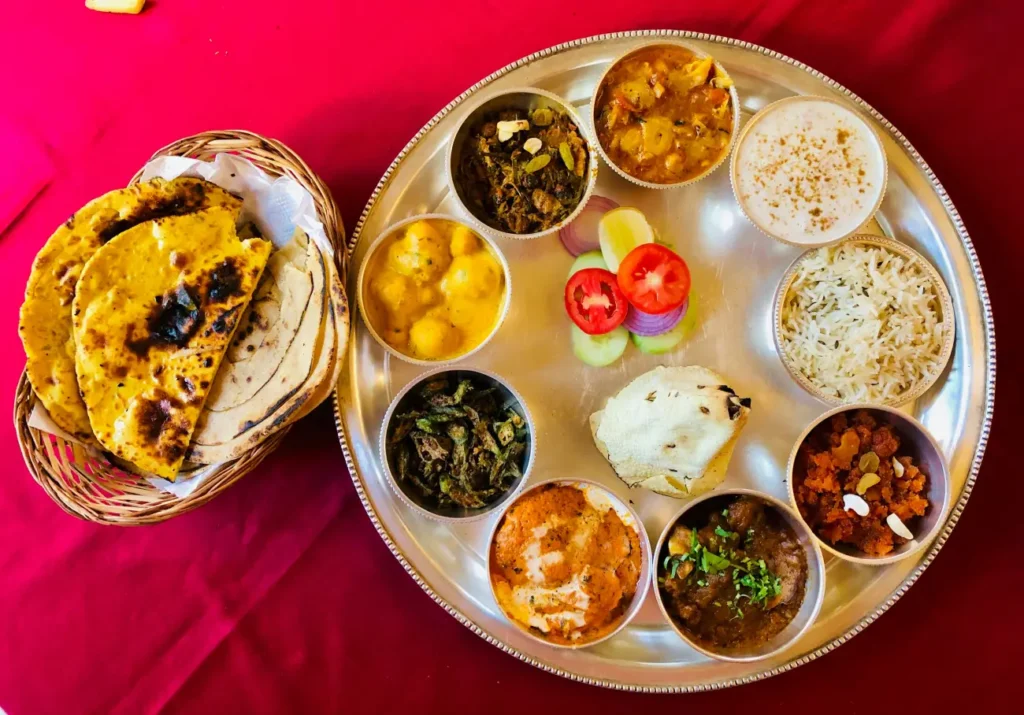
Food on the Golden Triangle is a journey in itself. Each city has its own culinary identity, and eating your way through the route is one of its great pleasures.
In Delhi
Delhi’s food scene is extraordinary in its range and depth. Do not leave without trying:
- Chaat — The king of Indian street food. Tangy, spicy, sweet, and crunchy all at once. Try it at Chandni Chowk or Connaught Place.
- Paranthe Wali Gali — A lane in Chandni Chowk famous for stuffed flatbreads (paranthas) fried in ghee, served with an array of chutneys and pickles. A Delhi institution since the 1870s.
- Butter Chicken & Dal Makhani — Both dishes originated in Delhi and are best eaten here. Moti Mahal in Daryaganj claims to be the birthplace of butter chicken.
- Kebabs — Delhi’s Mughal heritage lives in its kebabs. Try seekh kebabs, galouti kebabs, and kakori kebabs at Old Delhi’s famous eateries.
- Lassi — A thick, creamy yogurt drink — sweet or salted — that is the perfect antidote to spice.
In Agra
Agra is less celebrated for its food than Delhi or Jaipur, but it has some gems:
- Petha — Agra’s most famous sweet, a soft translucent candy made from white pumpkin, available in dozens of flavors. The original sweet shop, Panchhi Petha, has been making it for over 70 years. Take some home as a gift.
- Mughlai Cuisine — Rich, slow-cooked meat dishes, biryanis, and kormas that reflect the city’s imperial heritage. Several restaurants near the Taj Mahal serve excellent versions.
- Bedai & Jalebi — A classic Agra breakfast: spicy lentil-stuffed fried bread with crispy, syrupy jalebis. Try it at the old bazaar near Jama Masjid.
In Jaipur
Rajasthani cuisine is one of India’s most distinctive regional cooking traditions, born from a desert landscape where water and fresh vegetables were scarce:
- Dal Baati Churma — The iconic Rajasthani dish: hard wheat dumplings baked over fire, dunked in spiced lentils (dal), with a crumbled sweet (churma). Hearty, rustic, and utterly satisfying.
- Laal Maas — A fiery red mutton curry made with Mathania chilies — Rajasthan’s most famous non-vegetarian dish. Not for the faint of heart, but extraordinary.
- Ghewar — A disc-shaped sweet made from flour and ghee, soaked in sugar syrup, and topped with cream or nuts. A Rajasthani specialty, especially popular during festivals.
- Masala Chai — Jaipur has some wonderful old chai shops. Sit down, slow down, and drink in the experience.
Practical note for US/UK visitors: Drink only bottled or filtered water throughout your trip. Most reputable restaurants and hotels follow safe food handling standards, but street food is best enjoyed at busy, well-frequented stalls where turnover is high and food is freshly cooked.
What to Shop on the Golden Triangle Tour
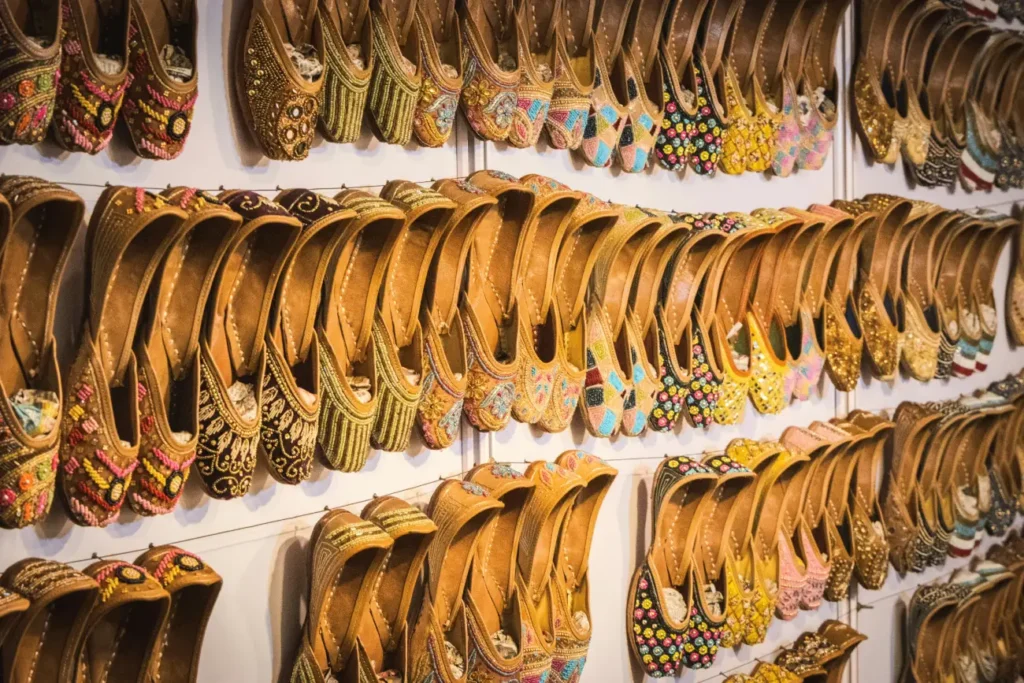
The Golden Triangle is one of the world’s great shopping circuits. Each city specializes in different crafts, and the quality available — especially through reputable vendors — is exceptional.
In Agra
Marble Inlay Work (Pietra Dura) The same craft that adorns the Taj Mahal — intricate patterns of semi-precious stones inlaid into white marble — is practiced by artisans whose families have been doing it for generations. You can find everything from small decorative boxes and coasters to large tabletops and vases. Visit a workshop to watch the craftsmen at work before buying. Look for precision of inlay, quality of stone, and smoothness of finish.
Mughal Carpets Agra has been a center of carpet weaving since the Mughal era — Emperor Akbar brought Persian master weavers to Agra in the 16th century. Hand-knotted wool and silk carpets with intricate floral and geometric designs can be purchased here. Prices vary enormously based on material, knot density, and size. A good carpet is an investment; ask about the knot count per square inch, which indicates quality.
Leather Goods Agra is also known for leather shoes and accessories, particularly the traditional mojari (embroidered flat shoes). The Kinari Bazaar area has several good shops.
In Jaipur
Lac Bangles Jaipur is the undisputed capital of Indian bangle-making. Lac bangles — made from a natural resin and decorated with mirrors, beads, and gold — are the city’s most iconic craft. The bangle sellers of Johari Bazaar and Tripolia Bazaar display them in dazzling rainbow towers. They make beautiful, lightweight souvenirs and gifts.
Gemstones & Jewelry Jaipur is one of the world’s most important gemstone trading centers, particularly for colored stones — emeralds, rubies, sapphires, and garnets. The city is also renowned for its traditional Kundan and Meenakari jewelry, and for its silver jewelry set with semi-precious stones. Johari Bazaar is the place to look, but buy from reputable, established shops and get a receipt that includes stone certification if buying fine jewelry.
Block-Printed Textiles Jaipur’s textile tradition is centuries old. Hand block-printed cotton and silk — in vivid patterns of indigo, red, and gold — make for gorgeous tablecloths, scarves, bedsheets, and clothing. Bapu Bazaar and the stores around the Old City are full of them.
Blue Pottery Unique to Jaipur, blue pottery is made from a distinctive glazed earthenware in turquoise, cobalt, and white — the craft was brought from Persia and Afghanistan and has been adapted into something distinctly Jaipuri. Decorative tiles, bowls, vases, and wall hangings are the most popular items.
Shopping tip: Government-certified emporiums (Rajasthali in Jaipur, for example) offer fixed prices and quality guarantees, making them a safe first stop. For bazaar shopping, gentle bargaining is expected and part of the experience — be friendly, take your time, and never feel pressured to buy.
How to Book a Golden Triangle Tour
Booking your Golden Triangle Tour thoughtfully makes a significant difference to the quality of your experience. Here is what we recommend:
Book with a Government-Certified Tour Operator Look for travel agencies recognized by the Ministry of Tourism, Government of India. These operators follow regulatory standards and are accountable for the services they provide. Certification is a mark of legitimacy and professionalism.
Know Your Tour Guides: A great guide can transform your experience — bringing monuments to life, sharing stories that no guidebook contains, and navigating the practical complexities of Indian travel with ease. Always verify that your guides are licensed by the Archaeological Survey of India (ASI) for monument visits. Do not hesitate to ask about their experience and training.
Understand What Is Included — and What Is Not. Before booking, get absolute clarity on inclusions: accommodation category and standards, all meals vs. breakfast only, transportation type (private car vs. shared coach), monument entry fees, tips and gratuities, and travel insurance. Hidden costs can add up significantly. A transparent, itemized itinerary is a good sign.
Choose Private Over Group Tours If Budget Allows. Private tours offer flexibility — you control the pace, the timing of your Taj Mahal visit, the restaurant choices, and the detours. For first-time visitors, the slightly higher cost of a private tour is almost always worth it.
Read Reviews From Other Western Travelers. Platforms like TripAdvisor, Google Reviews, and dedicated India travel forums have extensive reviews from US and UK visitors. Pay particular attention to reviews from travelers with similar interests and travel styles to your own.
Things to Know Before Booking Your Golden Triangle Tour
A little preparation goes a long way in India. Here is what experienced travelers recommend:
Plan Your Travel Months Carefully October to March is the window. Avoid May through September if heat and humidity are not your idea of a good time — and they are genuinely extreme in this region during summer months.
Pack Light You will be moving between cities, climbing forts, walking through bazaars, and potentially hopping in and out of vehicles multiple times a day. A single medium-sized rolling bag plus a daypack is the ideal setup. Leave room for purchases.
Wear Comfortable, Shoes There will be a significant amount of walking — across uneven cobblestones, up fort staircases, through crowded bazaar lanes. Comfortable, closed-toe shoes are essential. Note that you will need to remove your shoes before entering mosques and some temples, so slip-ons or easy-to-remove shoes are helpful.
Pack Warm Clothes for November–February Visits Mornings and evenings in Delhi and Jaipur can be genuinely cold in December and January — temperatures drop to around 5–8°C (41–46°F) on some nights. Layering is key: a warm jacket, scarf, and a light thermal base layer will cover most eventualities.
Stay Hydrated — With Bottled Water Drink bottled water consistently throughout your trip. Most good hotels provide complimentary bottled water; always carry a bottle when sightseeing.
Respect Local Customs at Religious Sites Cover your shoulders and knees when entering temples, mosques, and gurudwaras. Many sites provide scarves or wraps at the entrance. Remove shoes as directed. Photography rules vary by site — follow them.
Download Offline Maps Mobile data can be unreliable in certain areas. Download offline maps of Delhi, Agra, and Jaipur on Google Maps before you leave your hotel each morning.
Carry Some Cash While cards are widely accepted in hotels and larger shops, many street vendors, auto-rickshaw drivers, and small eateries are cash-only. Keep a supply of Indian rupees (INR) in smaller denominations on hand.
Is the Golden Triangle Tour Worth It?
Without hesitation: yes.
For travelers from the US and UK visiting India for the first time, the Golden Triangle Tour is not just worth it — it may well be one of the most rewarding travel experiences of your life. Here is why:
In the space of a week, you will stand before the Taj Mahal at sunrise and feel, genuinely feel, why it is considered one of the most beautiful structures human beings have ever created. You will walk the ramparts of a Mughal fort and look out over a landscape that emperors surveyed from the same vantage point 400 years ago.
You will get gloriously lost in a bazaar that has been operating continuously for three centuries. You will eat food that bears no resemblance to any “Indian restaurant” you have visited at home — richer, more complex, more alive. You will be overwhelmed, delighted, occasionally confused, and constantly surprised.
India is not an easy country to visit. It is loud, crowded, intensely colorful, and occasionally chaotic. But the Golden Triangle, precisely because it is a well-traveled, well-supported circuit, offers a structured way into this complexity — with excellent infrastructure, experienced guides, and an itinerary that makes sense geographically and culturally.
The monuments alone would justify the journey. Add the food, the markets, the people, the colors, the history, and the sheer life of it all, and the Golden Triangle Tour becomes something more than sightseeing. It becomes a story you will tell for the rest of your life.
All tours are available in private and small-group formats. Contact our team to create a custom itinerary tailored to your interests, budget, and travel dates.