
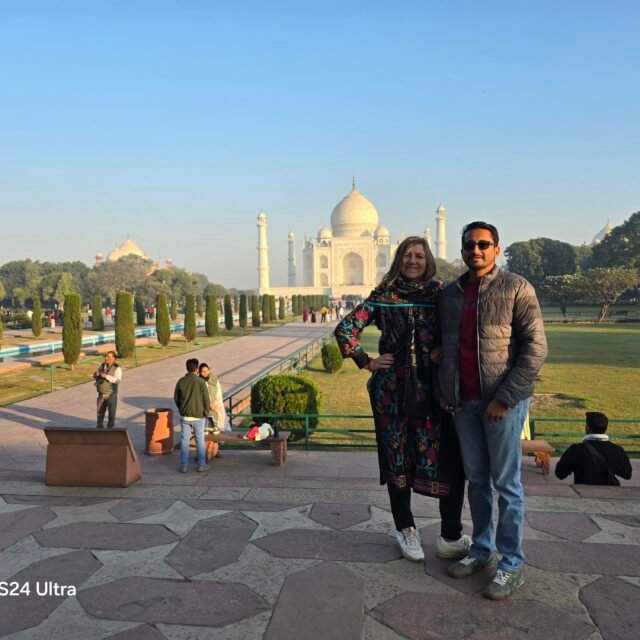
 2 Days
2 Day Private Luxury Tour to Agra From Delhi
From$449per person · 2 travellers
Book Now
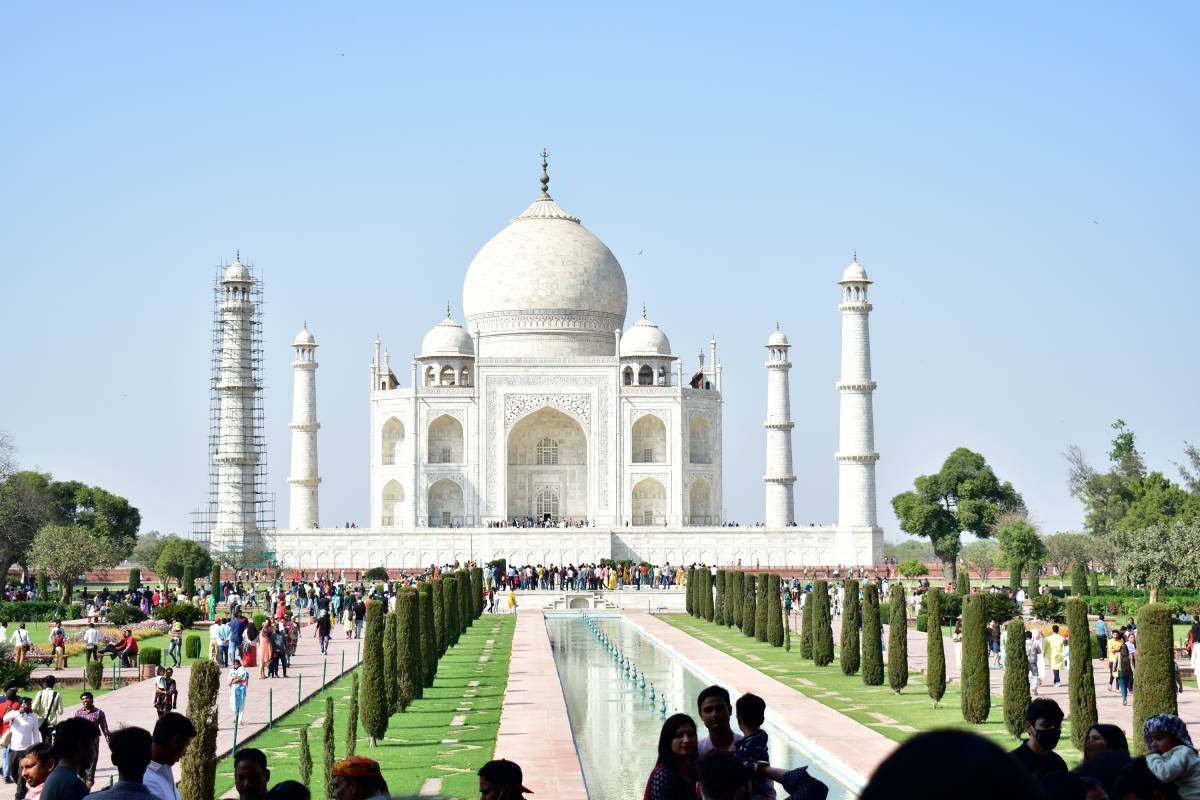
Agra was the Mughal capital, and it holds three UNESCO World Heritage Sites within an hour of each other. Our private Agra tours always reach the Taj Mahal at sunrise, when the marble glows pink and the gardens are quiet. A licensed guide sets an unhurried pace, from same-day trips to two-night stays.
2 Days  5 Days
 3 Days
 12 Days
 8 Days
 8 Days
 8 Days
 8 Days
 5 Days
 4 Days
 1 Day
 3 Days
 1 Day
 1 Day
 1 Day
 1 Day
 1 Day
 1 Day
 1 Day
 12 Hours
Looking for a Customized Itinerary? Confused about Where, When and How? Talk to us — we will design the right tour for your dates.
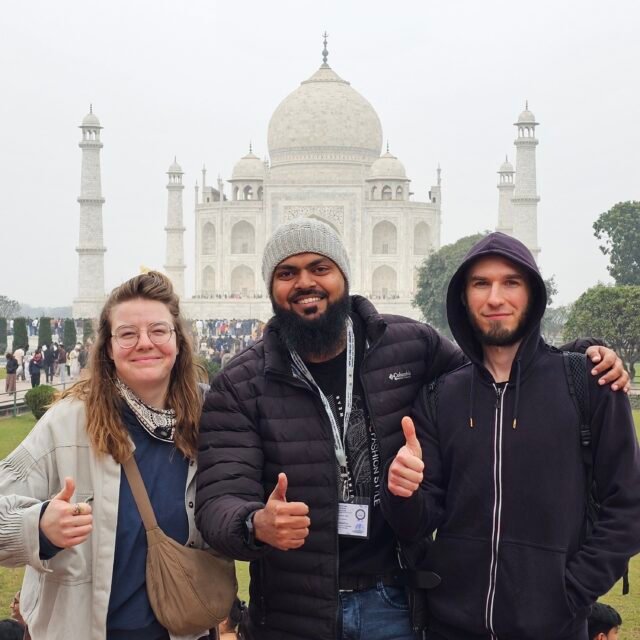
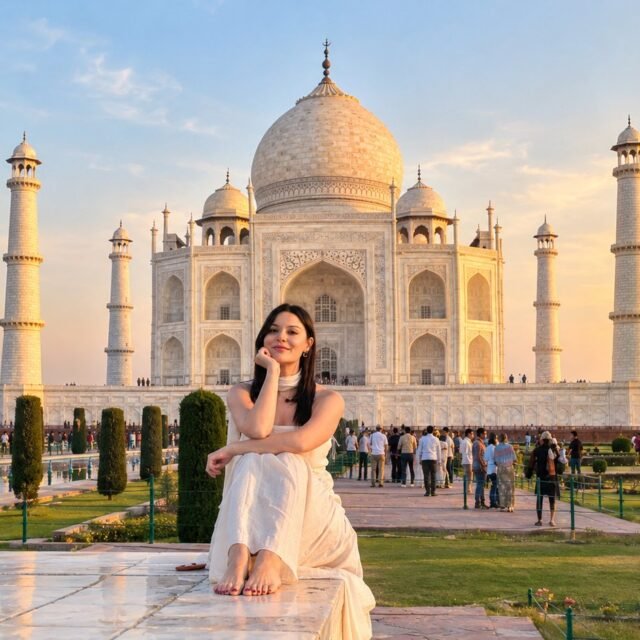
Enter as the gates open, watch the marble turn pink and explore the gardens before the crowds arrive.
Walk the red-sandstone ramparts and white-marble palaces where the Mughal emperors ruled, with views to the Taj.
Itimad-ud-Daulah, a small riverside tomb covered in delicate inlay, was the first Mughal building faced in white marble.
The Moonlight Garden across the Yamuna gives the classic evening view of the Taj, and it is open on Fridays.
Akbar's abandoned red-sandstone capital, with palaces and a living Sufi shrine, lies on the road to Jaipur.
A vast, quiet garden tomb on the edge of the city, with deer and langur monkeys among the lawns.
Spices, sweets, wedding trimmings and centuries-old lanes behind the fort, with a local guide.
See how families still cut and set semi-precious stones into marble, the technique used on the Taj itself.
Learn everyday Agra dishes and breads in a home kitchen, then share the meal with your hosts.
October to March is the best season: clear, dry days of 20–28°C. December and January bring cold mornings and sometimes dense fog at dawn, which can hide the Taj until 9 or 10 am; it usually lifts. February and March are lovely, with Holi in March celebrated nearby in Mathura and Vrindavan. April to June is very hot (over 40°C), so plan sightseeing for early morning and evening only. The monsoon (July to September) brings humidity, short heavy showers and green gardens, with fewer visitors. Remember the Taj is closed every Friday, and that weekends and Indian holidays are the busiest days.
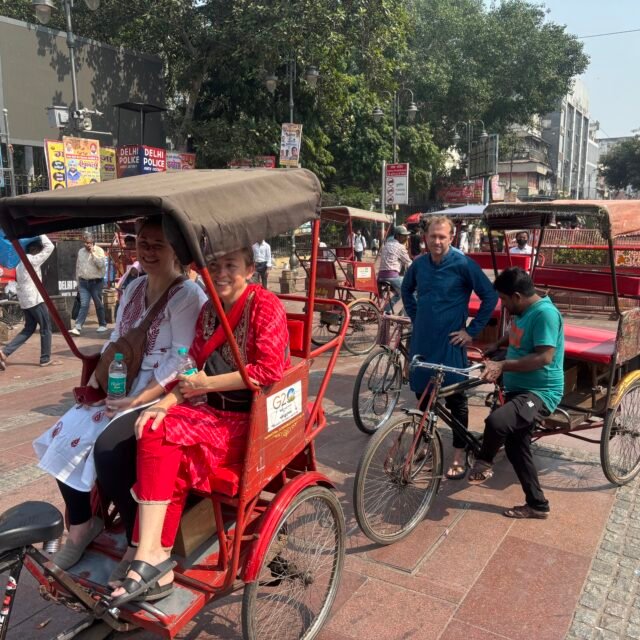
From Delhi (about 230 km), the Yamuna Expressway takes 3.5–4 hours by car. The fastest trains, the Gatimaan Express and Vande Bharat, run in about 100 minutes to Agra Cantt station; confirm current timetables before booking. Jaipur is about 4.5 hours by road. Agra's own airport has only a few domestic flights. Noida International Airport at Jewar, which opened in June 2026, is roughly two hours away by expressway, while Delhi's main airport is about four hours. In Agra, polluting vehicles are banned near the Taj, so electric buses and golf carts link the car parks to the gates. Auto-rickshaws and e-rickshaws cover short hops; our private car and driver handle everything on tour.
Stay in Taj Ganj or on Fatehabad Road, 5–15 minutes from the Taj's East Gate. That makes a sunrise visit easy and leaves time for a rest after breakfast. Fatehabad Road has most of the large international and Indian hotel brands, several with Taj views from the upper floors. Taj Ganj itself has smaller hotels and guesthouses, some with rooftop views of the dome. The Cantonment area is greener and quieter, about 20 minutes away, with a few heritage properties. For a splurge, a handful of luxury hotels look directly onto the Taj. We match the hotel to your budget and pace on every tour.
Agra's kitchens are Mughlai at heart: rich kormas, kebabs, biryani and breads from the tandoor. Its two famous specialities are petha, a translucent sweet made from ash gourd, and dalmoth, a spiced lentil snack. In the old city, mornings start with bedmi puri and potato curry with hot jalebi, and evenings bring chaat and kulfi in Sadar Bazaar. Vegetarians eat very well everywhere. Rooftop restaurants in Taj Ganj have views of the dome, and hotels serve reliable international food. Our guides choose busy, trusted places; avoid tap water, ice and raw salads.
The Taj Mahal is closed every Friday. Use that day for Agra Fort, the Baby Taj, Mehtab Bagh or travelling on.
Phone or camera, wallet, water and passport only. Bags, food, tripods, chargers and drones are refused at security.
Ignore touts offering cheap guides or tickets at the car parks. Licensed guides carry a government ID card.
Covered shoulders and knees are best at the Taj's mosque and at Fatehpur Sikri's shrine. Wear shoes you can slip off easily.
From April to September, sightsee before 11 am and after 4 pm, carry water and rest at the hotel in the afternoon.
Some Agra monument tickets include a city development fee covering other sites on the same day, so keep it until evening.

Be at the gates as they open and watch the white marble turn pink in the…
See the Taj glow under the full moon on one of only five nights a month
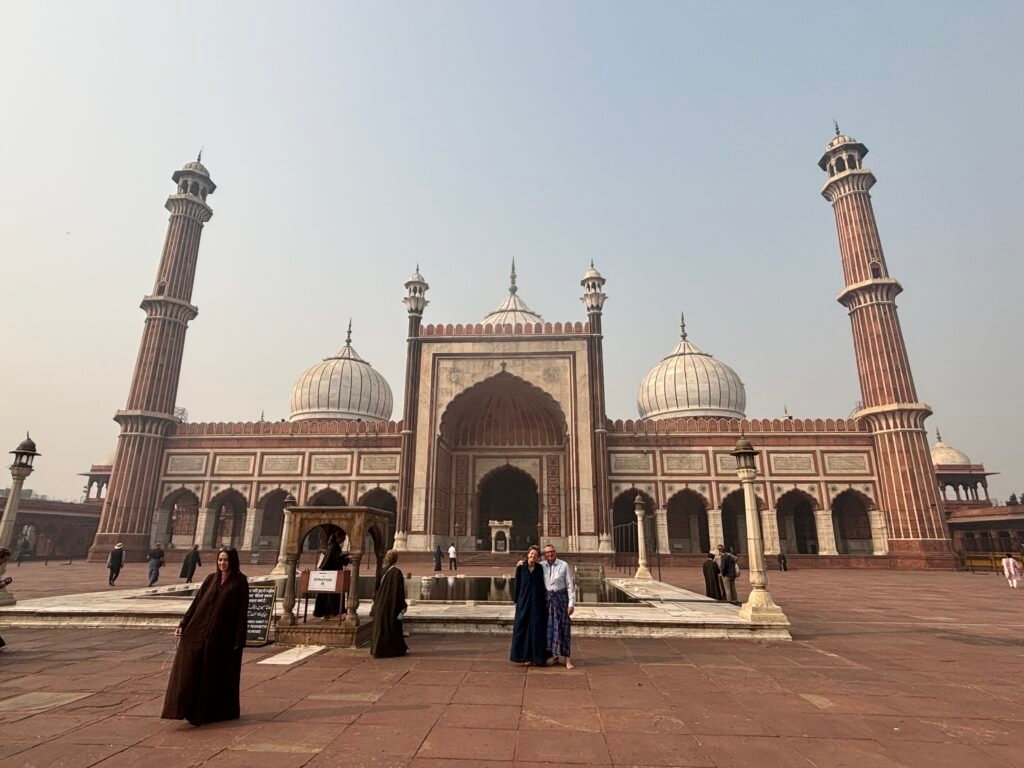
Taste your way through India's old cities with a guide who knows the best stalls
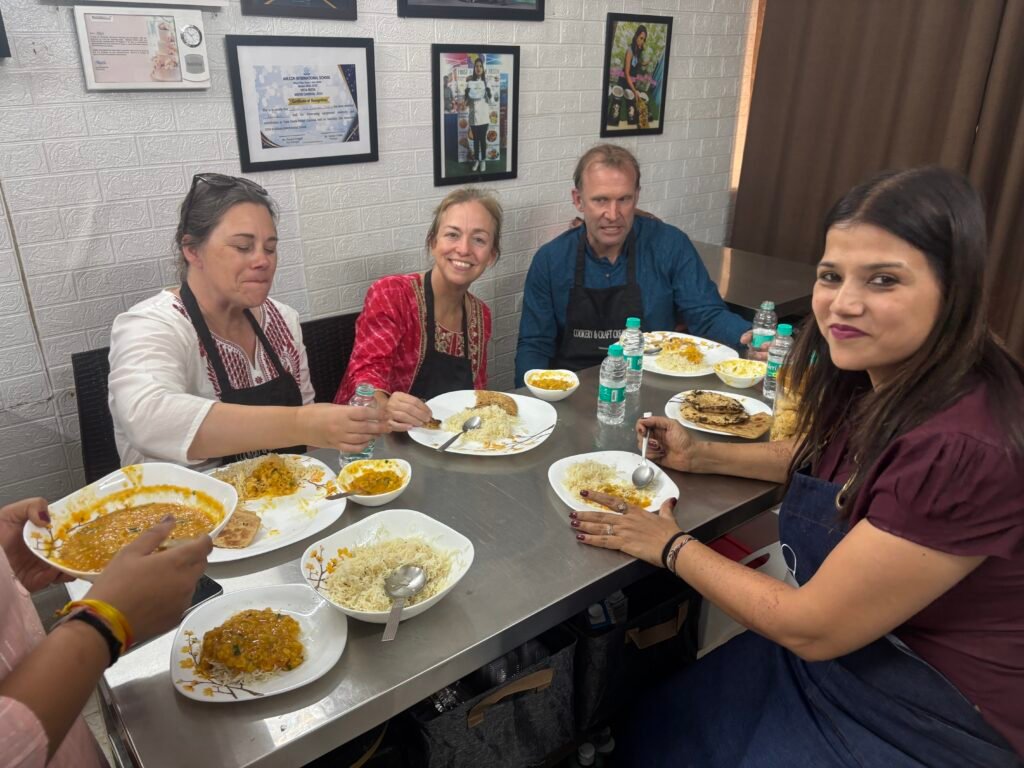
Cook a home-style Indian meal with a local family, then sit down and eat it
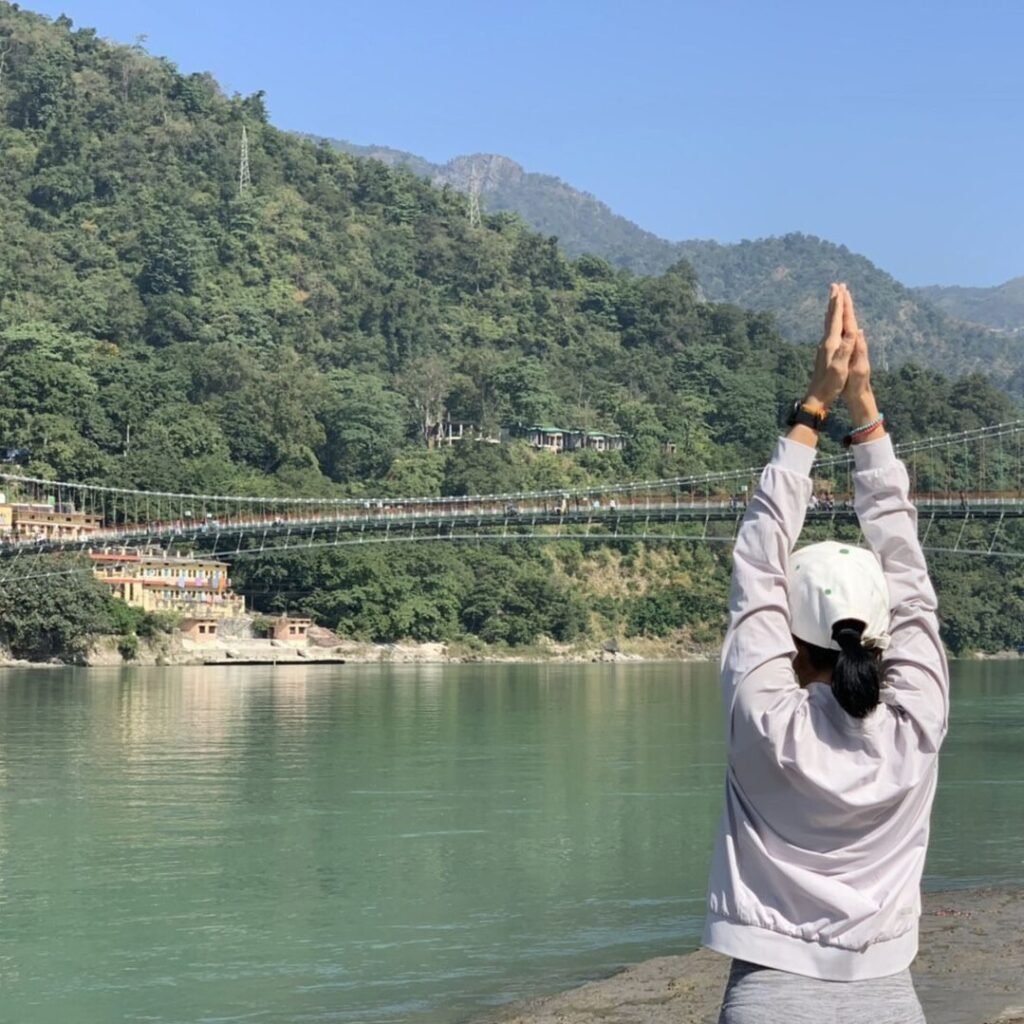
Sunrise on the Ganges, sunset on Lake Pichola and calm water under the Himalaya
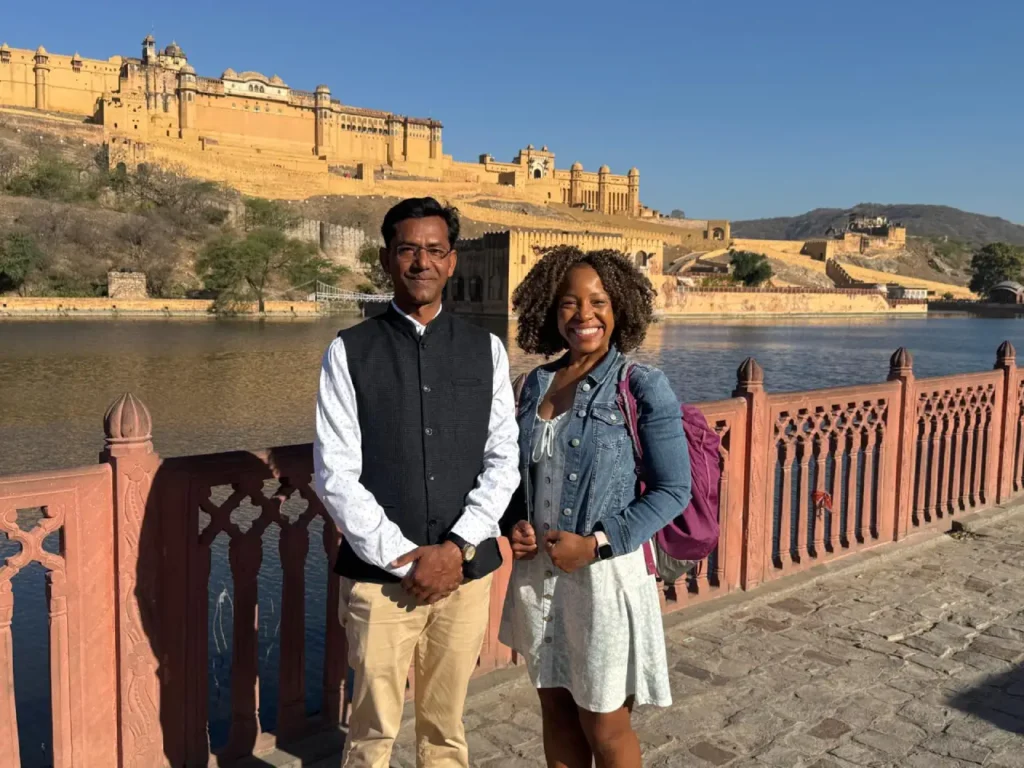
Old bazaars, hidden lanes and living history, explored on foot with a local guide

Morning yoga by the Ganges, in a garden near the Taj or on a Varanasi ghat,…
Agra
Akbar's red sandstone fortress and Shah Jahan's marble palaces, 2.5 km from the Taj Mahal. Timings, tickets, history and what…
Agra
Akbar's abandoned red sandstone capital near Agra: palaces, the Buland Darwaza, the Jama Masjid and Salim Chishti's tomb. Timings, tickets,…
Agra
The "Baby Taj": Nur Jahan's jewel-box marble tomb for her father, the first Mughal building covered in pietra dura inlay.…
Agra
The world's most famous monument to love: a white-marble mausoleum on the Yamuna in Agra. Timings, tickets, rules, the best…
Agra
Agra's oldest market, behind the Jama Masjid near Agra Fort: wedding trims, saris, silver, spices, petha and street food. Timings,…
Agra
The Mughal Moonlight Garden on the far bank of the Yamuna, facing the Taj Mahal. The best sunset view of…

The world's most famous monument to love: a white-marble mausoleum on the Yamuna in Agra. Timings, tickets, rules, the best…
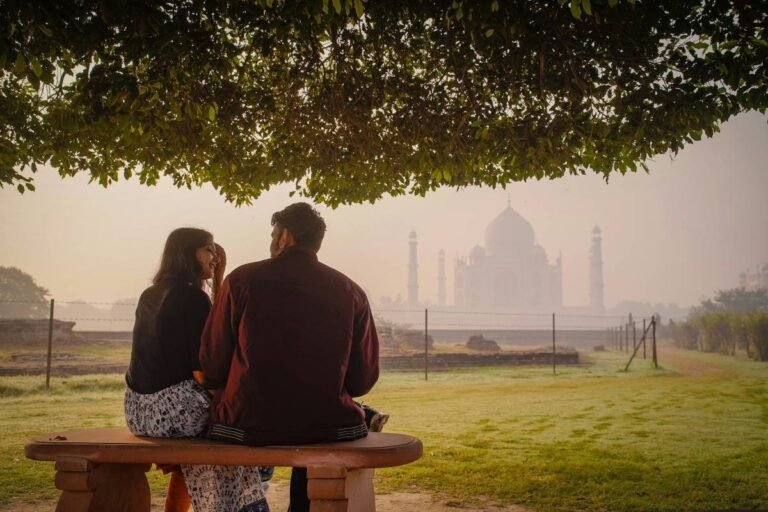
The Mughal Moonlight Garden on the far bank of the Yamuna, facing the Taj Mahal. The best sunset view of…
Agra's oldest market, behind the Jama Masjid near Agra Fort: wedding trims, saris, silver, spices, petha and street food. Timings,…
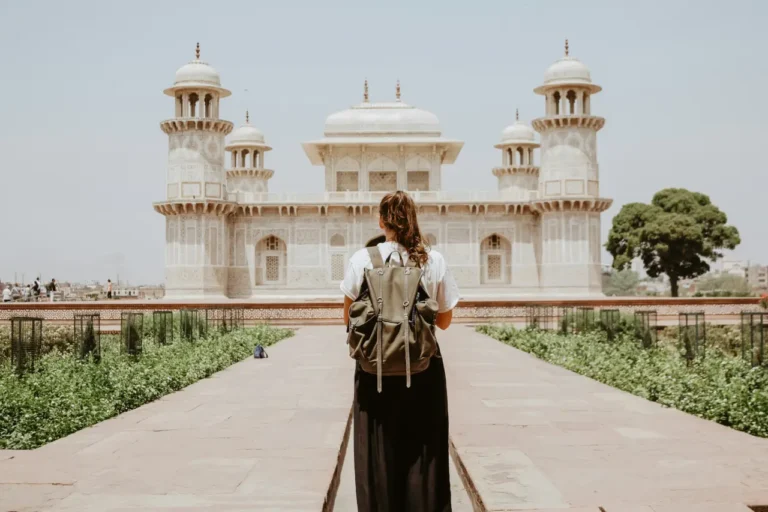
The "Baby Taj": Nur Jahan's jewel-box marble tomb for her father, the first Mughal building covered in pietra dura inlay.…
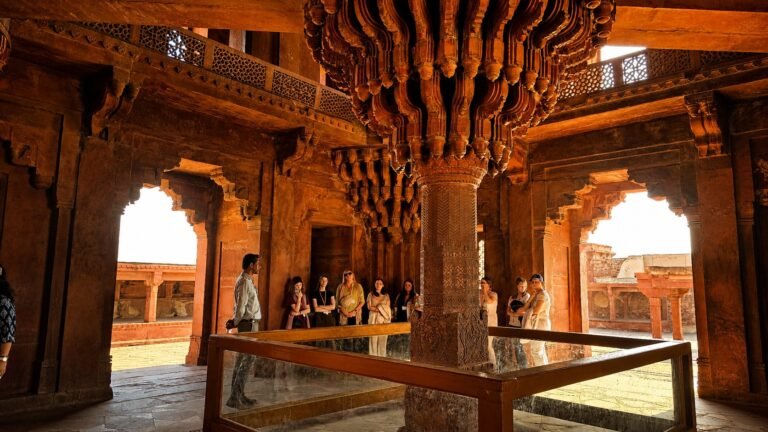
Akbar's abandoned red sandstone capital near Agra: palaces, the Buland Darwaza, the Jama Masjid and Salim Chishti's tomb. Timings, tickets,…
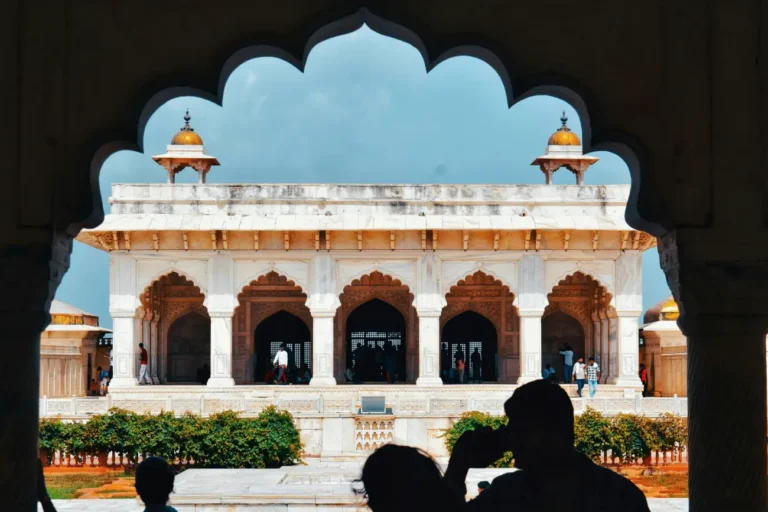
Akbar's red sandstone fortress and Shah Jahan's marble palaces, 2.5 km from the Taj Mahal. Timings, tickets, history and what…
Agra sits on the Yamuna river in Uttar Pradesh, about 230 km south-east of Delhi. For most of the 16th and 17th centuries it was the capital of the Mughal Empire. Sultan Sikandar Lodi made it his seat in 1504, Babur and Akbar built it into an imperial city, and Shah Jahan ruled from here until he moved the court to Delhi in 1648. The result is a concentration of monuments found nowhere else in India: three UNESCO World Heritage Sites (the Taj Mahal, Agra Fort and Fatehpur Sikri) plus a dozen Mughal tombs and gardens along the river.
Modern Agra is a busy, working city of almost two million people, known for its leather, marble and sweet industries as much as for tourism. Most visitors see only the road between their hotel and the Taj. With a little more time, the old city, the riverside gardens and the craft workshops show a far richer place.
The Taj Mahal is Shah Jahan's mausoleum for his wife Mumtaz Mahal, built between about 1632 and 1653 by some 20,000 craftsmen. Nothing prepares you for its scale or for the detail of the inlaid flowers in the marble. How you visit makes a real difference, and these are the choices our guides make every day.
The gates open about 30 minutes before sunrise, and every one of our Agra itineraries starts there. In the first hour the light is soft and pink, the reflection pool is still, the air is cool and the crowds that arrive from Delhi after 9 am are still on the road. By midday in summer the marble is blinding and the paths are packed. The Taj is closed on Fridays for prayers, so we plan around it.
Most of our guests use the East Gate, which is close to the Taj Ganj hotels and usually has the shortest queue at opening. The West Gate is busier with day-trippers, and the South Gate is used mainly by residents of the old Taj Ganj quarter. Vehicles must stop well short of the monument, so the last stretch is by electric bus, golf cart or a short walk.
Allow two and a half to three hours. Your guide will take you through the great red-sandstone gateway, along the gardens and up onto the marble plinth. Entry to the main tomb chamber, with the cenotaphs of Shah Jahan and Mumtaz, needs a small add-on ticket. Whether it is included depends on the package you choose, and each tour's inclusions list shows it clearly. Bring only a phone or camera, a wallet and water: large bags, food, tripods and drones are refused at security, and there is a locker room near each gate. Shoe covers are provided on the plinth. Details of tickets and timings are on our Taj Mahal page and the Taj sunrise experience.
On the full-moon night and two nights either side (except Fridays and Ramzan), small groups can see the Taj from a platform near the main gate between about 8:30 pm and 12:30 am. Tickets must be booked a day ahead. See moonlight viewing.
Mumtaz Mahal died in 1631 giving birth to her fourteenth child, and Shah Jahan began her tomb the following year. The design draws on Persian, Timurid and Indian traditions. The tomb stands at the far end of a Persian-style garden divided into four quarters, an image of paradise in Islamic thought, rather than in its centre, so that it rises against open sky above the river. The four minarets lean very slightly outwards, and the calligraphy around the arches grows larger as it rises, so that it reads evenly from the ground. The flowers in the marble are not painted: they are pietra dura, thousands of pieces of carnelian, jade, lapis and other stones cut and set by hand. Your guide will show you how a torch makes the stones glow from within.
Agra Fort, 2.5 km upstream, was the Mughal seat of power: a walled city of red sandstone begun by Akbar in 1565, with white-marble palaces added by Shah Jahan. From the Musamman Burj, where Shah Jahan spent his last years under house arrest, you look down the river to the Taj. Allow about two hours, ideally after breakfast on the day of your sunrise visit.
Itimad-ud-Daulah, nicknamed the Baby Taj, is the tomb Empress Nur Jahan built for her father in the 1620s. It was the first Mughal building faced entirely in white marble with pietra dura inlay, a rehearsal for the Taj. It is small, quiet and exquisite, and many guests end up loving it most.
Mehtab Bagh, the Moonlight Garden, lies directly across the river from the Taj. It is the place for the classic sunset view of the mausoleum, and on Fridays it is the best way to see the Taj at all. Further out, Akbar's Tomb at Sikandra, 10 km north on the Delhi road, is a vast, peaceful garden tomb where deer and langur monkeys graze, and an easy stop on the way in or out of the city.
About 40 km west of Agra, on the road to Jaipur, stands Fatehpur Sikri, the red-sandstone city Akbar built in the 1570s and abandoned within about 15 years. Its palaces, audience halls and the Panch Mahal are remarkably intact. Next door, the Jama Masjid and the white-marble tomb of the Sufi saint Salim Chishti are still places of active worship, where women tie threads on the screens to pray for children. Allow two hours. Because it lies on the way to Jaipur, we usually visit it when you travel on from Agra, rather than as a separate return trip.
Behind Agra Fort, the old city is a maze of bazaars around the Jama Masjid of Shah Jahan's daughter Jahanara. Kinari Bazaar sells wedding trimmings, spices, sweets and silver, and most of its shops close on Tuesdays. In the lanes nearby, families still practise crafts that served the Mughal court: marble inlay using semi-precious stones, zardozi gold embroidery, and carpet and dhurrie weaving. Our heritage walk and street-food walk explore this side of Agra with a local guide. Workshop visits are always optional, and there is never any pressure to buy.
Possible, and popular, but long: about 3.5 to 4 hours each way by road, or 100 minutes on the fast morning trains. Done well, it means the Taj and Agra Fort with a proper lunch break, and back in Delhi by evening. To reach the Taj at sunrise on a same-day trip, you leave Delhi around 3 am. We offer this, but recommend staying the night.
Arrive in the afternoon, visit Agra Fort or the Baby Taj, and watch sunset from Mehtab Bagh. The next morning, walk into the Taj at sunrise from a hotel ten minutes away, rest after breakfast, then continue to Jaipur via Fatehpur Sikri or return to Delhi. It is the calmest way to see everything.
Add the old city walk, a cooking class with a local family, Akbar's Tomb at Sikandra, and either a second sunrise from Mehtab Bagh or a day trip to Mathura and Vrindavan. Two nights also suit seniors and families who want a rest each afternoon.
Every Agra tour is private: your own air-conditioned car and driver, and a government-licensed guide who meets you at the hotel or station. We book monument tickets in advance and plan the day around the sunrise opening, the Friday closure and the midday heat, with a maximum of two major sights before a long lunch and a rest. Guides adapt the walking for seniors and children; wheelchairs and golf carts are available at the Taj, though the main tomb is reached by steps. If you want a quieter day, we simply do less.
Photographers get the best light in the first hour after opening, from the central platform by the reflection pool and from the mosque terrace to the west. Video is allowed in the gardens, but photography is not permitted inside the tomb chamber, and tripods are refused at the gate. For the river view, Mehtab Bagh in the late afternoon and the Agra Fort ramparts in the morning are the classic spots.
Families do best with a sunrise visit, a long break at the hotel pool, and a gentle evening at Mehtab Bagh. Children enjoy the scale of Agra Fort, the deer at Sikandra and a cooking class. Seniors and guests with limited mobility can use golf carts from the car park; the gardens are flat, but the main tomb plinth and the fort involve steps and ramps. Our guides plan the route, the rests and the shade around you.
Agra is the natural middle of the Golden Triangle, about four and a half hours by road from Jaipur. Mathura, Krishna's birthplace, and the temple town of Vrindavan are an hour north, and at Holi the Braj villages host India's most famous celebrations. Keoladeo National Park at Bharatpur, a UNESCO-listed wetland famous for winter birds, is about an hour west. Fast trains also connect Agra with Gwalior and with Jhansi, the gateway to Orchha and Khajuraho.
Yes. Agra Fort, the Baby Taj (Itimad-ud-Daulah), Mehtab Bagh, Akbar's Tomb and the abandoned city of Fatehpur Sikri are all world-class, and the old city has living Mughal crafts. One night lets you see the Taj at sunrise and two or three other sites without rushing.
Yes. The drive takes about 3.5–4 hours each way on the Yamuna Expressway, or about 100 minutes by the fast morning trains. A day trip covers the Taj and Agra Fort comfortably, but to see the Taj at sunrise without a 3 am start, we recommend one night in Agra.
Sunrise. The gates open about 30 minutes before sunrise, the light is soft, the reflection pool is calm and the crowds are thin. Sunset from Mehtab Bagh, across the river, is the best evening view.
The Taj Mahal is closed every Friday, when the mosque inside holds prayers. Agra Fort, the Baby Taj and Mehtab Bagh stay open, and Mehtab Bagh gives a fine view of the Taj across the Yamuna.
One night is ideal for most travellers: Agra Fort and Mehtab Bagh on arrival, the Taj at sunrise next morning, then Fatehpur Sikri on the way to Jaipur. Two nights add the old city, a cooking class or a day trip to Mathura and Vrindavan.
The East Gate usually has the shortest queue at opening and is closest to the Taj Ganj hotels. The West Gate is busier with day-trippers. Vehicles stop short of all gates, and electric buses or golf carts cover the last stretch.
It is not compulsory, but a licensed guide makes a big difference: the history, the symbolism of the gardens, the inlay techniques and the best photo spots. Use only government-licensed guides; our tours include one, and they handle tickets and queues.
Yes, on five nights a month around the full moon, except Fridays and Ramzan. Viewing is from a platform near the main gate in 30-minute slots, and tickets must be bought a day ahead. We arrange it on request.
Agra is generally safe, and the monument areas are well policed. The usual issues are persistent touts and unlicensed guides near the gates. With a private car, a licensed guide and a central hotel, most travellers, including women travelling alone, find it easy.
Delhi is about 230 km (3.5–4 hours by road, about 100 minutes by fast train). Jaipur is about 240 km (around 4.5 hours by road), and Fatehpur Sikri lies on the way, so we usually visit it when driving between the two.
 6 HRS
 1 Day
 1 Day
 1 Day
 2 Days
 7 Days
 1 Day
 8 Days
 1 Day
 1 Day