Water in the desert
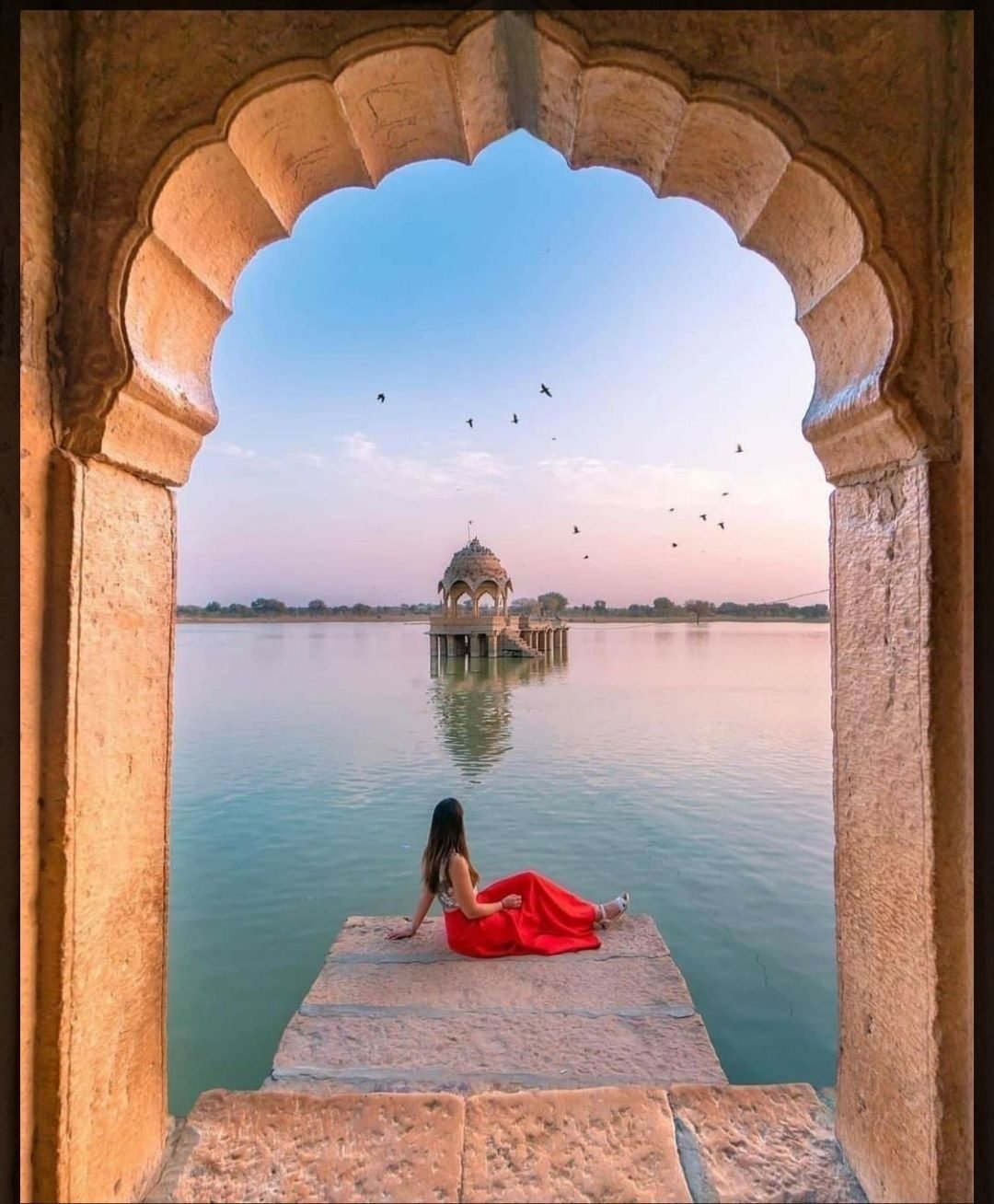
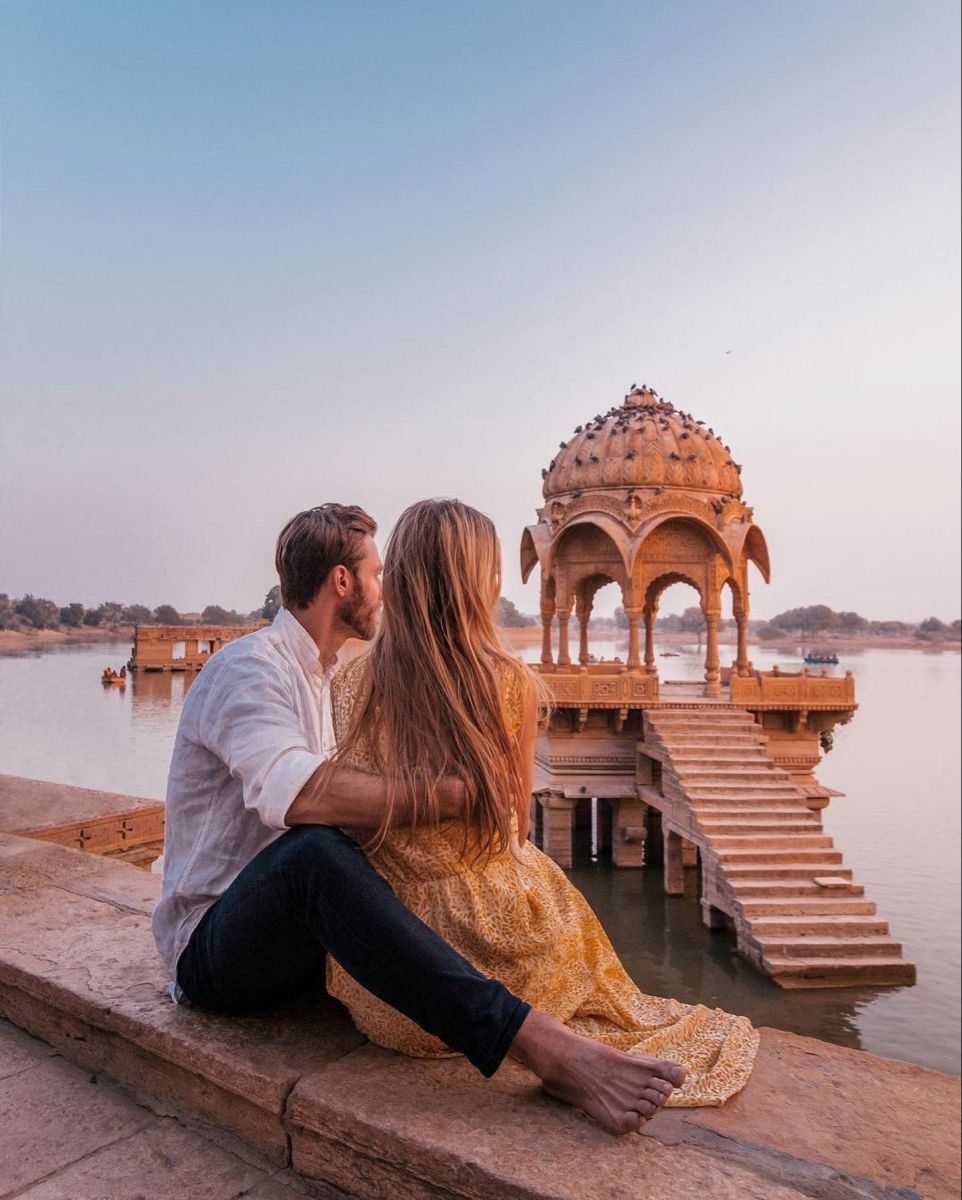
For centuries, Gadisar Lake was Jaisalmer’s lifeline. In the middle of the Thar Desert, where rain is scarce, this reservoir collected monsoon water and supplied the city all year. It’s said to have been built in the 14th century by Maharawal Gadsi Singh, whose name it bears, and later rulers added the ghats, temples, shrines and pavilions (chhatris) that line its banks and stand on platforms in the water. Today it’s no longer the city’s water supply, but it remains one of Jaisalmer’s most peaceful and photogenic places.
Tilon ki Pol
You enter the lake through Tilon ki Pol, a graceful arched gateway of carved yellow sandstone. A popular legend says it was built by a wealthy courtesan named Tilon. When the king objected to a courtesan’s gateway being the main entrance to the lake, she added a small Krishna temple on top, so it could not be torn down. True or not, it’s one of the most beautiful gates in Jaisalmer.
What it’s like to visit
Paths and steps lead along the banks past small temples and shrines, where locals come to pray and feed the large catfish that crowd the shallows. Rowing boats and pedal boats can be hired to glide out between the floating pavilions. In winter, migratory birds gather on the water. The lake is at its loveliest early in the morning, when the water is still and the light soft, and at sunset, when the stone turns gold and the fort glows on its hill in the distance. Allow about an hour, longer with a boat ride.
Photography
- Photograph the chhatris reflected in still water at sunrise.
- Tilon ki Pol is best in warm late-afternoon light.
- From the far bank, you can frame the pavilions with the fort behind.
Plan your visit
Gadisar is a short drive from Jaisalmer Fort and Patwon ki Haveli. Visit at sunrise, or at sunset if you aren’t heading out to the dunes that evening. Read our Rajasthan travel guide for more.