
 8 Days
 Golden Triangle Tour with Rishikesh
From$959per person · 2 travellers
Book Now
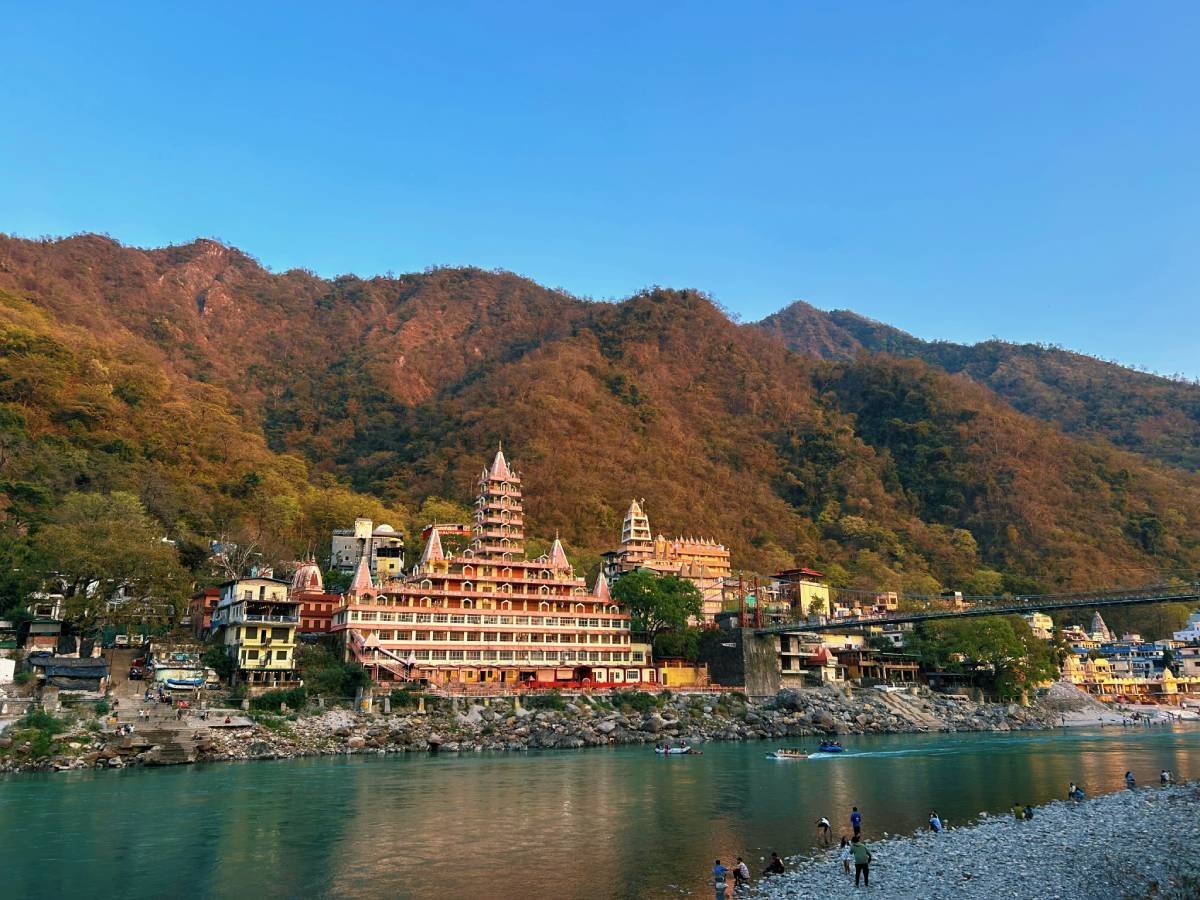
Rishikesh is where the Ganges leaves the Himalayan foothills, clear and fast between forested hills lined with ashrams and temples. It is the world's yoga capital and a peaceful contrast to India's big cities. Our private Rishikesh tours include sunrise yoga, the evening aarti, the Beatles Ashram and, for the adventurous, white-water rafting.
8 Days Looking for a Customized Itinerary? Confused about Where, When and How? Talk to us — we will design the right tour for your dates.
A private class with a certified teacher on a terrace above the Ganges, suited to your level.
Sing along as lamps are lit on the river steps at sunset, beside the great Shiva statue.
Cross the suspension bridge into car-free Swarg Ashram, with its ashrams, temples and cafés.
Mural-covered ruins and meditation domes where the Beatles studied meditation in 1968.
Gentle floats or grade III rapids with licensed operators, from October to June.
Thousands gather at Har Ki Pauri as lamps are raised over the fast-flowing river, 25 km away.
A hilltop temple with wide views over the Himalayan foothills on clear mornings.
October to April is the best time: clear skies, pleasant days of 15–28°C and the rafting season. December and January mornings are cold, close to 5°C. March brings the International Yoga Festival and Holi. May and June are hot (up to 38°C) but busy with rafters and Indian holidaymakers. The monsoon (July to September) brings heavy rain, rafting stops and landslides can block mountain roads; the Kanwar pilgrimage in July also fills the town with crowds. Weekends are busy with visitors from Delhi.
Rishikesh is about 240 km from Delhi, around 6 hours by road. The nearest airport, Jolly Grant at Dehradun, is about 35 km (45 minutes) away, with flights from Delhi of under an hour. Fast trains, including Vande Bharat and Shatabdi services, run from Delhi to Haridwar in 4–5 hours, followed by a 45-minute drive; check current timetables. In town, the riverside areas around Ram Jhula and Swarg Ashram are best explored on foot, with shared e-rickshaws for longer hops. Your private car handles transfers and day trips.
Choose by mood. Swarg Ashram, across Ram Jhula, is car-free, peaceful and close to Parmarth Niketan, with simple hotels and ashram stays. Tapovan and the Laxman Jhula area are livelier, with yoga schools, cafés and boutique hotels. Upstream, along the road to Shivpuri, luxury spa resorts and riverside camps sit in the forest. Ashram stays are simple, with fixed meal and silence times. We pick a calm hotel within walking distance of the river for most guests, so that the aarti and the morning yoga are a short stroll away.
Rishikesh is entirely vegetarian, with no meat or alcohol sold in town, but its cafés are some of the best in India for healthy food. Expect fresh juices, smoothie bowls, wood-fired pizza, Israeli and Tibetan dishes, organic salads and herbal teas, many with river views. For Indian food, try a simple North Indian thali, aloo puri for breakfast and the sweets of the town's old shops. Ashrams serve simple sattvic meals. As always, drink bottled or filtered water, and enjoy a slow breakfast with a river view.
No meat, eggs or alcohol in town. Dress modestly, especially at ashrams and temples.
Macaques on the bridges grab food and bags. Keep snacks hidden and glasses secure.
Choose certified teachers and licensed rafting operators; we arrange both for you.
In July the Kanwar pilgrimage closes roads; Delhi weekenders fill Rishikesh on Saturdays and Sundays.
Mornings and evenings are cool by the river, even when afternoons are warm.
Paddle the rapids of the Ganges where it rushes out of the Himalayan foothills
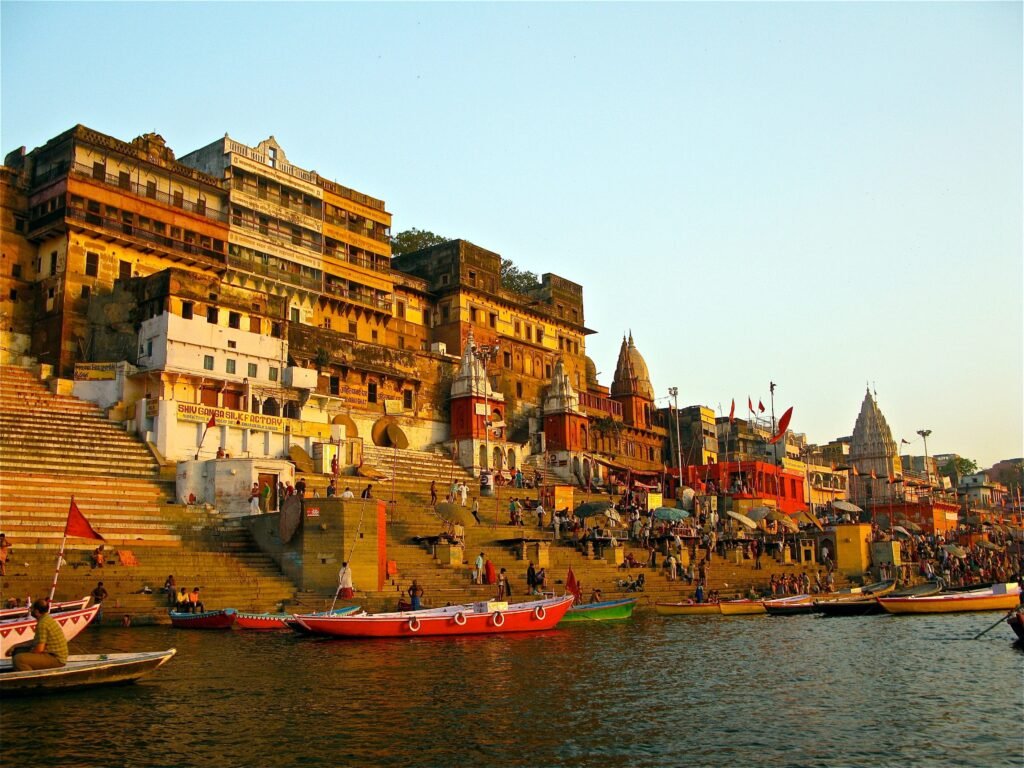
Fire, bells and chanting at dusk on the banks of India's holiest river

Morning yoga by the Ganges, in a garden near the Taj or on a Varanasi ghat,…
Rishikesh
The forest ashram in Rishikesh where the Beatles stayed in 1968: meditation domes, ruined halls, colourful murals and river views.…
Rishikesh
Rishikesh's largest ashram on the Ganges: the evening Ganga Aarti open to all, yoga and meditation classes, the International Yoga…
Rishikesh
Rishikesh's iconic suspension bridges over the Ganges: Laxman Jhula (closed since 2019), the new Bajrang Setu, and Ram Jhula, with…
Rishikesh
Rishikesh's largest ashram on the Ganges: the evening Ganga Aarti open to all, yoga and meditation classes, the International Yoga…
Haridwar's hilltop temple to the wish-fulfilling goddess, reached by cable car: views over the Ganges, wishing threads, timings, ropeway fares…
Rishikesh's iconic suspension bridges over the Ganges: Laxman Jhula (closed since 2019), the new Bajrang Setu, and Ram Jhula, with…
Haridwar's holiest ghat on the Ganges: the legend, holy bathing, the evening Ganga Aarti with thousands of pilgrims, Kumbh Mela,…
The forest ashram in Rishikesh where the Beatles stayed in 1968: meditation domes, ruined halls, colourful murals and river views.…
Morning yoga by the Ganges, in a garden near the Taj or on a Varanasi ghat, with a local teacher
Rishikesh lies in Uttarakhand, about 240 km north-east of Delhi, where the Ganges flows out of the Himalayan foothills onto the plains. For centuries sages and pilgrims have meditated here, and the riverbanks are lined with ashrams, temples and bathing ghats. The town is a gateway for pilgrims heading to the Char Dham shrines high in the mountains. In 1968 the Beatles came to study meditation, and since then Rishikesh has become known around the world as the capital of yoga.
It is a small, green and relaxed town, divided by the river and linked by footbridges. Rishikesh is strictly vegetarian, and alcohol is banned within the town. For travellers, it offers a rare mix of spirituality, nature and gentle adventure, and it is a welcome breath of fresh air after Delhi.
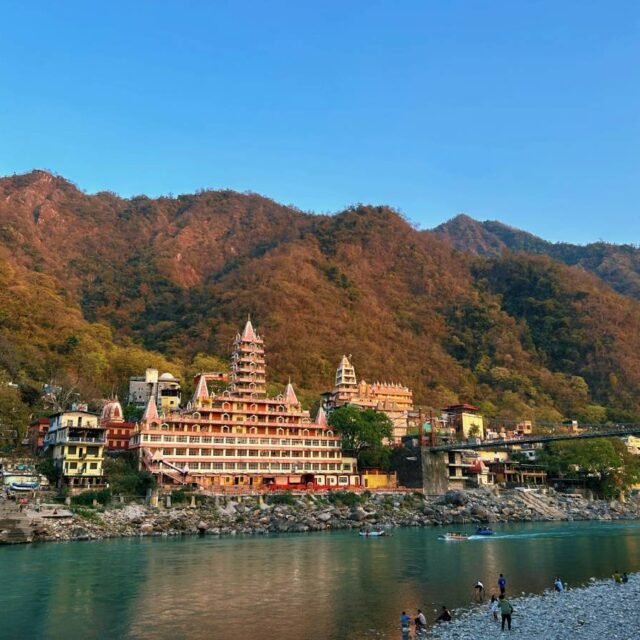
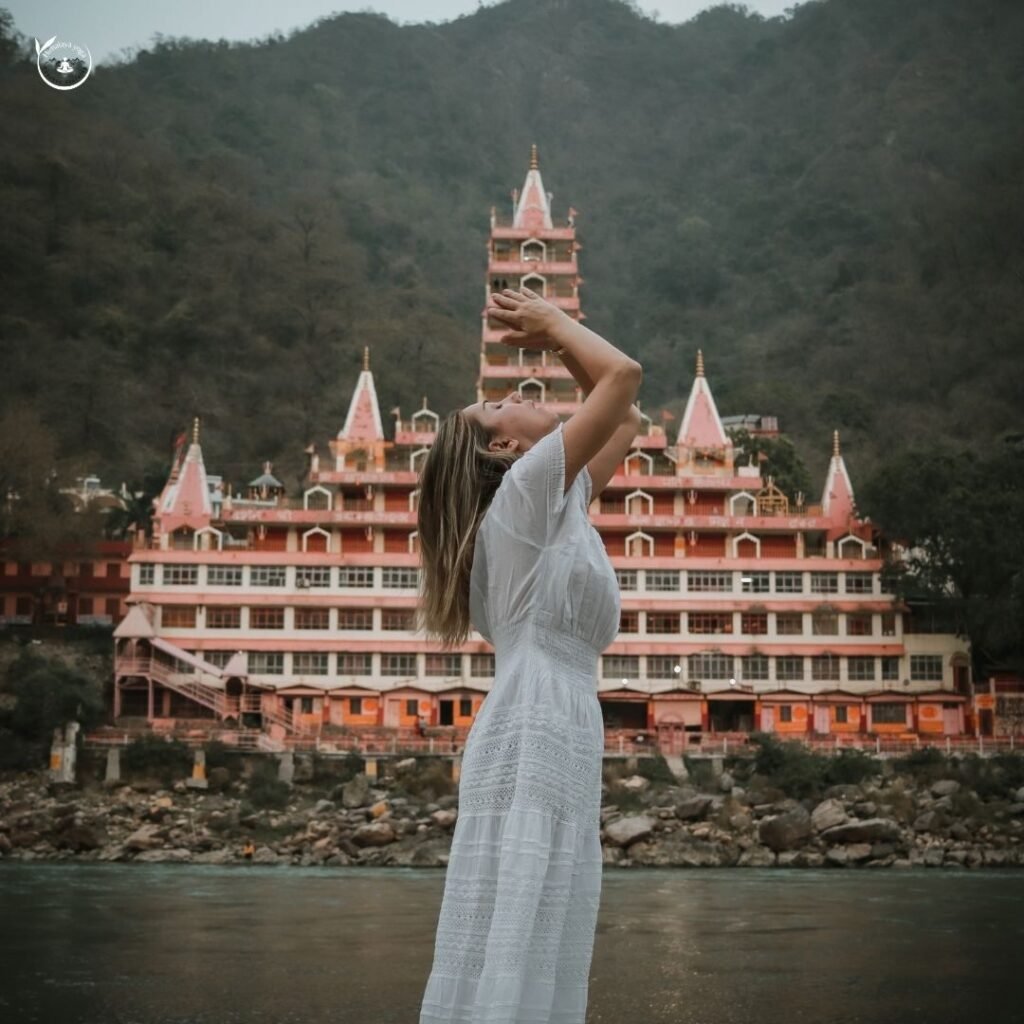
The heart of Rishikesh is the stretch of river between the two great suspension bridges. Ram Jhula links the busy western bank with Swarg Ashram on the east, a car-free area of ashrams, temples and cafés where cows wander. Upstream, the famous Laxman Jhula bridge was closed to the public in 2019 for safety. A new bridge, the Bajrang Setu, has been built beside it; check the latest status before you travel. Along the banks you will see sadhus, pilgrims bathing, and temples such as the 13-storey Tera Manzil (Trimbakeshwar) by Laxman Jhula.
Parmarth Niketan, one of the largest ashrams, sits on the riverbank in Swarg Ashram. It holds free yoga sessions in the morning and the town's best-known evening aarti on its river steps.
Hundreds of ashrams and schools offer yoga, from drop-in classes to month-long teacher training. On our tours, a certified teacher gives a private class at sunrise on a terrace or by the river, adapted to your level, from gentle breathing and stretching to a stronger practice. You can also join the free sessions at Parmarth Niketan, or try a meditation class or a sound-healing session. The International Yoga Festival, held each March, draws teachers and students from around the world. See our yoga and meditation page.
Every evening at sunset, the riverbanks fill with lamps and song. At Parmarth Niketan, the ashram's young students and residents sing bhajans beside a great statue of Shiva, a fire ritual burns, and lamps are passed through the crowd so that everyone can make an offering. It is gentle and musical, quite different from the grand spectacle in Varanasi. Triveni Ghat, on the western bank, has a more traditional, local aarti. See Ganga Aarti.
In February 1968, the Beatles spent several weeks at Maharishi Mahesh Yogi's ashram above the Ganges, and wrote many of the songs of the White Album there. Today the Beatles Ashram (Chaurasi Kutia) lies in ruins inside the Rajaji Tiger Reserve. Its stone meditation domes and halls are covered in murals and graffiti art, and it has a haunting, peaceful atmosphere. It is a place for a quiet walk and, with a teacher, a short meditation in one of the domes.
The Ganges above Rishikesh has some of India's best white-water rafting, from gentle family floats to grade III rapids, run by licensed operators from about October to June. Other activities include bungee jumping and zip-lining in the hills, and riverside camping on white-sand beaches. Short hikes lead to waterfalls such as Neer Garh. The forests of Rajaji National Park, on the edge of town, shelter elephants, leopards and many birds, and jeep safaris run in season.
Haridwar, one of the seven holiest cities of Hinduism, is 25 km south. Its evening aarti at Har Ki Pauri is a vast, joyful gathering, and we often combine it with an afternoon in Rishikesh. The Neelkanth Mahadev temple, a scenic drive of about an hour and a half into the hills, is a major Shiva shrine. For a sunrise over the Himalayan foothills, the Kunjapuri temple, about an hour away, has wide mountain views on clear mornings.
Rishikesh is one of the gentlest places in India to visit: smaller, cleaner and quieter than the big cities, with fresh air and almost no traffic in the riverside areas. Children enjoy the bridges, the monkeys (from a safe distance), a family raft on the calm Brahmpuri stretch and a swim from a river beach in season. Seniors appreciate the slower rhythm, but should note that the riverside paths have steps and slopes, and the walk to the Beatles Ashram is about 20 minutes on uneven ground. The evening aarti has seating on the steps.
Beyond yoga, Rishikesh has Ayurvedic clinics offering consultations and massages, meditation centres and sound-healing sessions. Choose established centres with qualified practitioners; we can recommend some. The bazaars near Ram Jhula and Laxman Jhula sell rudraksha beads, singing bowls, yoga clothing, books on philosophy and herbal products, with friendly bargaining.
Two nights lets you settle in: the evening aarti on arrival, yoga at sunrise, the Beatles Ashram and the bridges the next day, and a visit to Haridwar for its aarti. Three nights add rafting, a hike, Neelkanth or Kunjapuri, or simply time to rest by the river. Many travellers stay longer for yoga courses, which we can arrange.
Your yoga teacher meets you at 6:30 am for an hour's class on a terrace above the river, followed by breakfast. Mid-morning, your guide walks you across Ram Jhula into Swarg Ashram, through the ashrams and temples, and up to the Beatles Ashram while it is still cool. After lunch at a riverside café you have the afternoon free. At about 5 pm you walk to Parmarth Niketan for the evening aarti, sitting on the steps as the lamps are lit. It is a calm, restorative day.
Your own car and driver bring you from Delhi or Dehradun airport and stay with you for the drives to Haridwar and the hills. Within the riverside area, much of Rishikesh is car-free, so your local guide explores on foot with you across the bridges. Yoga teachers are certified and experienced with beginners. Rafting is booked with licensed operators that use proper safety equipment and trained guides.
Two nights is ideal for a first visit: the evening aarti, a sunrise yoga class, the Beatles Ashram, the bridges and a trip to Haridwar's aarti. Add a third night for rafting, a hike or a temple in the hills, or longer for a yoga course.
The original Laxman Jhula bridge has been closed to the public since 2019 for safety. A new bridge, the Bajrang Setu, has been built beside it. Ram Jhula is open and is the main crossing; check the latest status before you travel.
October to April is best, with clear days and the rafting season open. March brings the International Yoga Festival. May and June are hot but popular for rafting. In the monsoon, from July to September, rafting stops and landslides can affect mountain roads.
Yes. Many classes are for beginners, and on our tours a certified teacher gives a private session adapted to your level. You can also join the free morning sessions at Parmarth Niketan.
Yes. The ashram, now in ruins inside the Rajaji Tiger Reserve, is open to visitors with a ticket during the day. Its meditation domes and murals make a peaceful walk of one to two hours.
With a licensed operator, rafting in Rishikesh is safe and well organised: helmets, life jackets, a safety briefing and trained guides. Choose the stretch to suit your experience; families can do the gentle Brahmpuri section.
No. Rishikesh is a holy town, and alcohol and meat are banned within the town limits. Restaurants and cafés serve excellent vegetarian food, fresh juices and herbal teas.
By road it is about 240 km, or 6 hours. Trains run to Haridwar in 4–5 hours, followed by a 45-minute drive. The nearest airport, Dehradun, is about 45 minutes away, with flights from Delhi of under an hour.
 12 Hours
 6 HRS
 1 Day
 1 Day
 1 Day
 1 Day
 1 Day
 1 Day
 1 Day
 1 Day