The Golden Fort
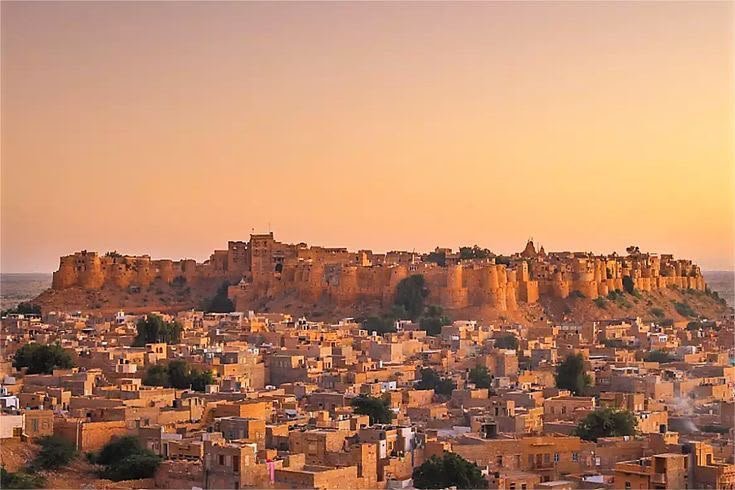
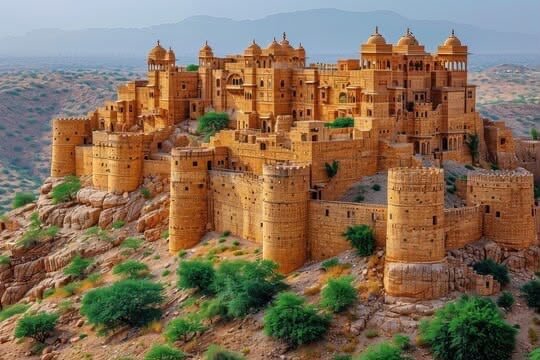
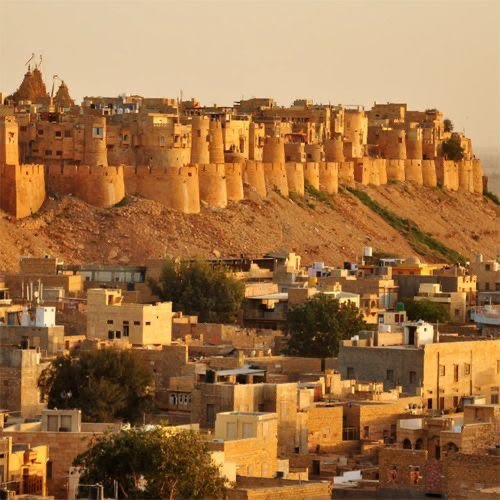
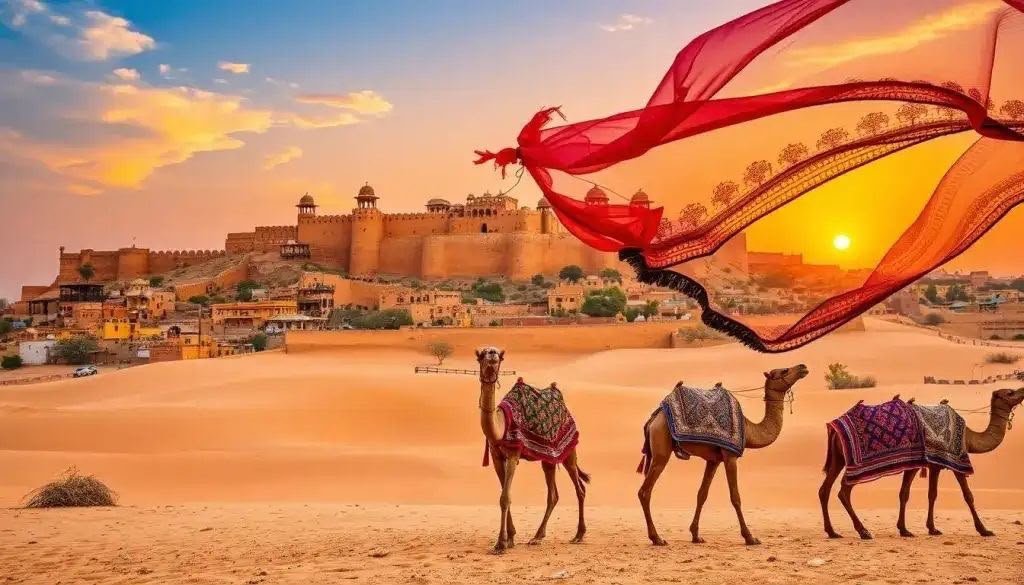
Jaisalmer Fort crowns Trikuta hill in the middle of the Thar Desert, its walls and 99 bastions built from yellow sandstone that turns gold in the late afternoon sun, which is why it’s called Sonar Qila, the Golden Fort. Rawal Jaisal, a Bhati Rajput ruler, founded it in 1156, and for centuries it guarded the caravan routes between India, Persia and Central Asia. It’s part of the Hill Forts of Rajasthan UNESCO World Heritage Site, inscribed in 2013.
A living fort
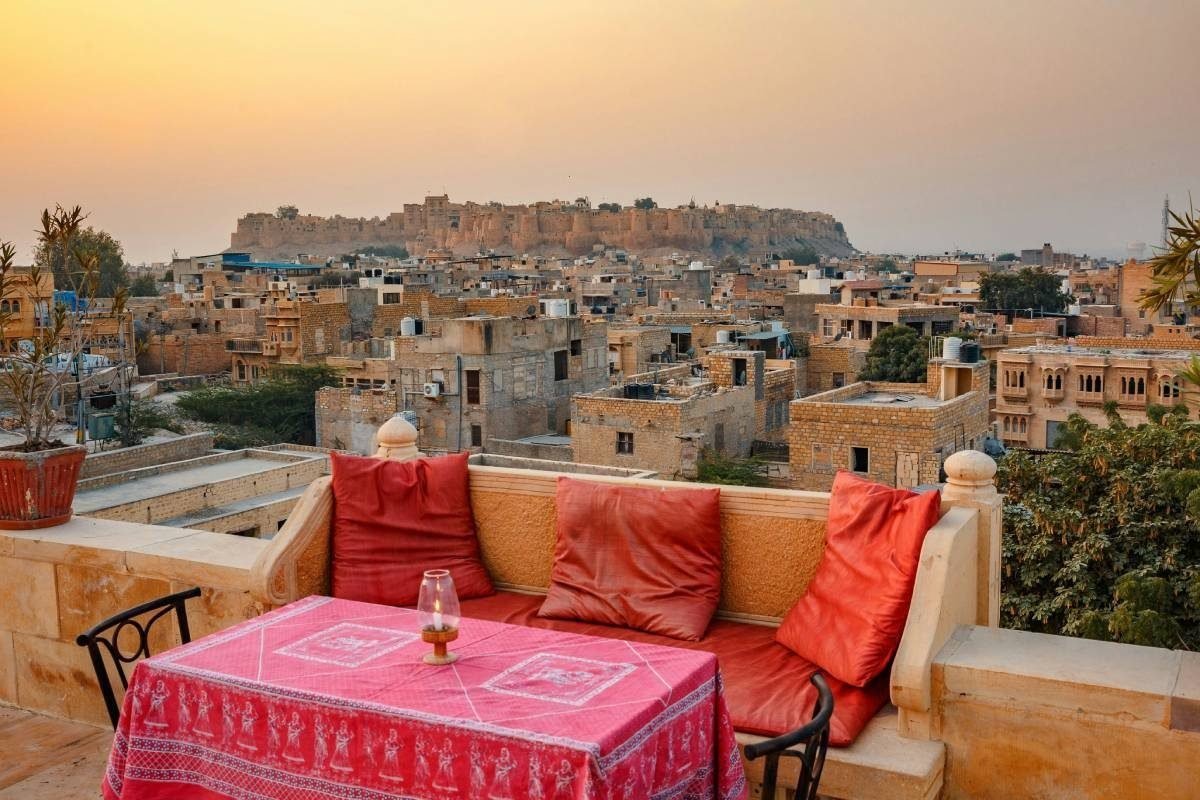
Unlike most Indian forts, Jaisalmer is still very much alive. Around a quarter of the old city’s people live inside the walls, in houses, shops, guesthouses and temples packed along narrow, winding lanes. Cows wander past carved doorways, children play in the squares, and shopkeepers sell textiles and silver. Because of this, the fort is fragile: water use and new building have damaged its foundations, and conservation groups encourage visitors to stay in hotels outside the walls.
What it’s like to visit
You enter through a series of massive gates, climbing to the main square, Dussehra Chowk. From here:
- Raj Mahal (Royal Palace): the seven-storey palace of the Maharawals, now a museum with royal rooms, carved balconies and rooftop views over the desert. An audio guide is available.
- Jain temples: a group of seven interconnected temples from the 12th to 16th centuries, with extraordinarily fine sandstone carving. They open to visitors in the morning; leather isn’t allowed.
- Laxminath Temple: a Hindu temple with silver-decorated doors.
- The ramparts: walk along the walls and bastions, lined with old cannonballs, for views over the city and the desert.
Allow 2–3 hours, ideally in the morning for the Jain temples, with a return at sunset to see the fort glow from outside.
Plan your visit
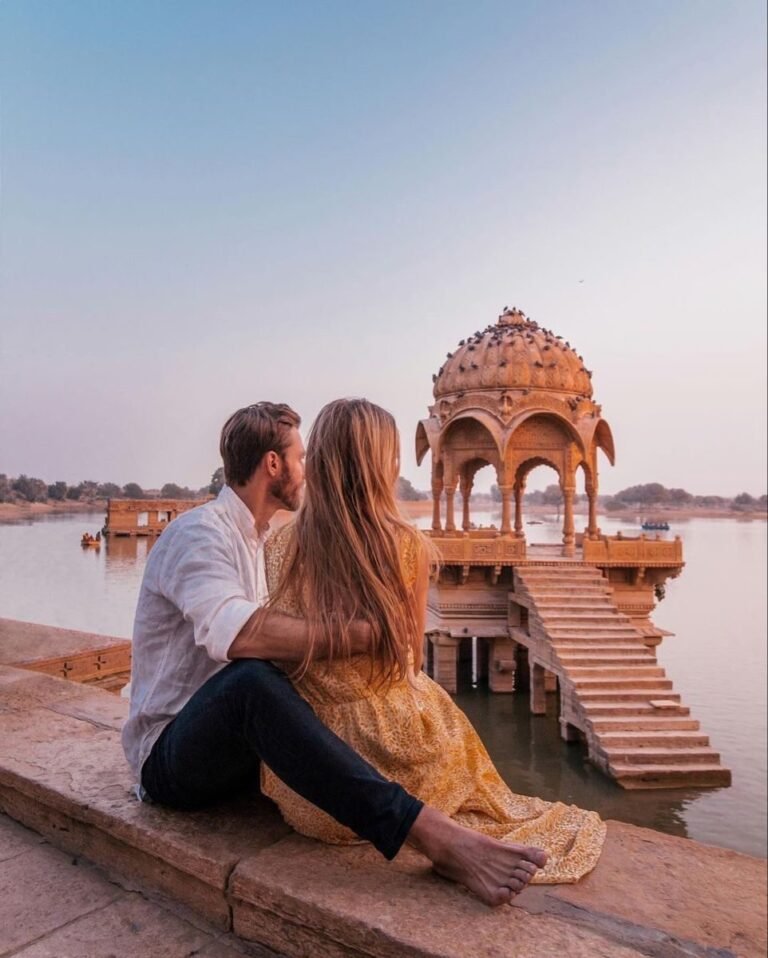
Combine the fort with Patwon ki Haveli in the old town, sunset at Gadisar Lake, and a night in the Thar Desert dunes. Read our Rajasthan travel guide for more.