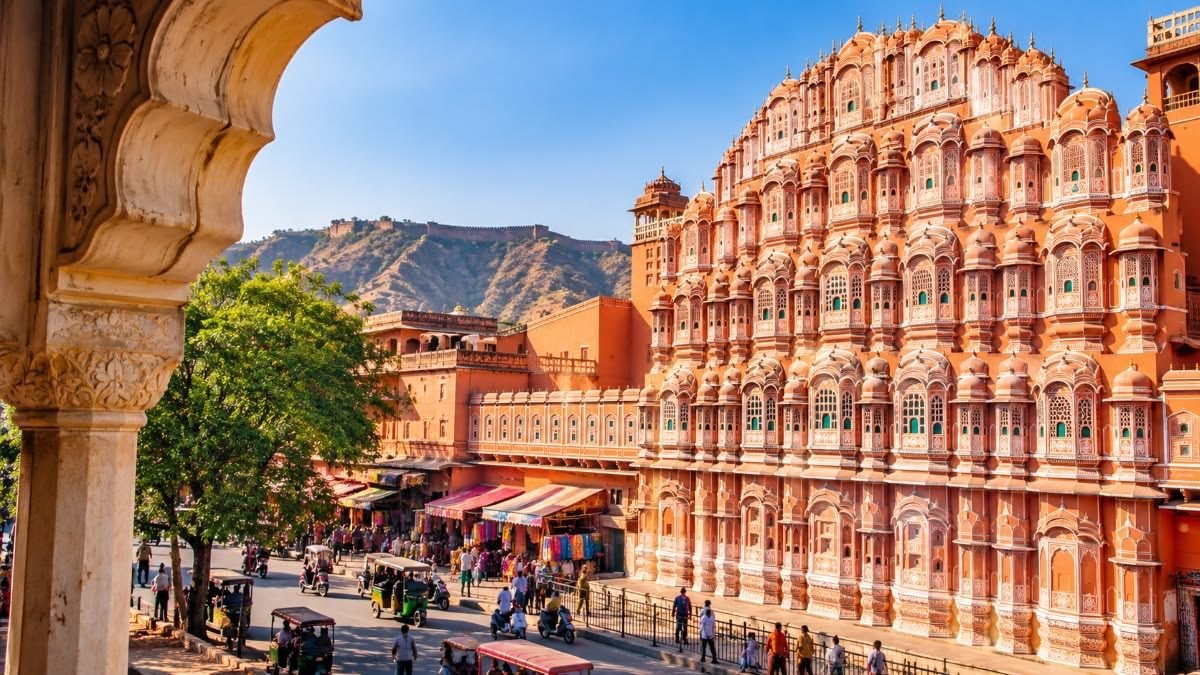
The Palace of Winds
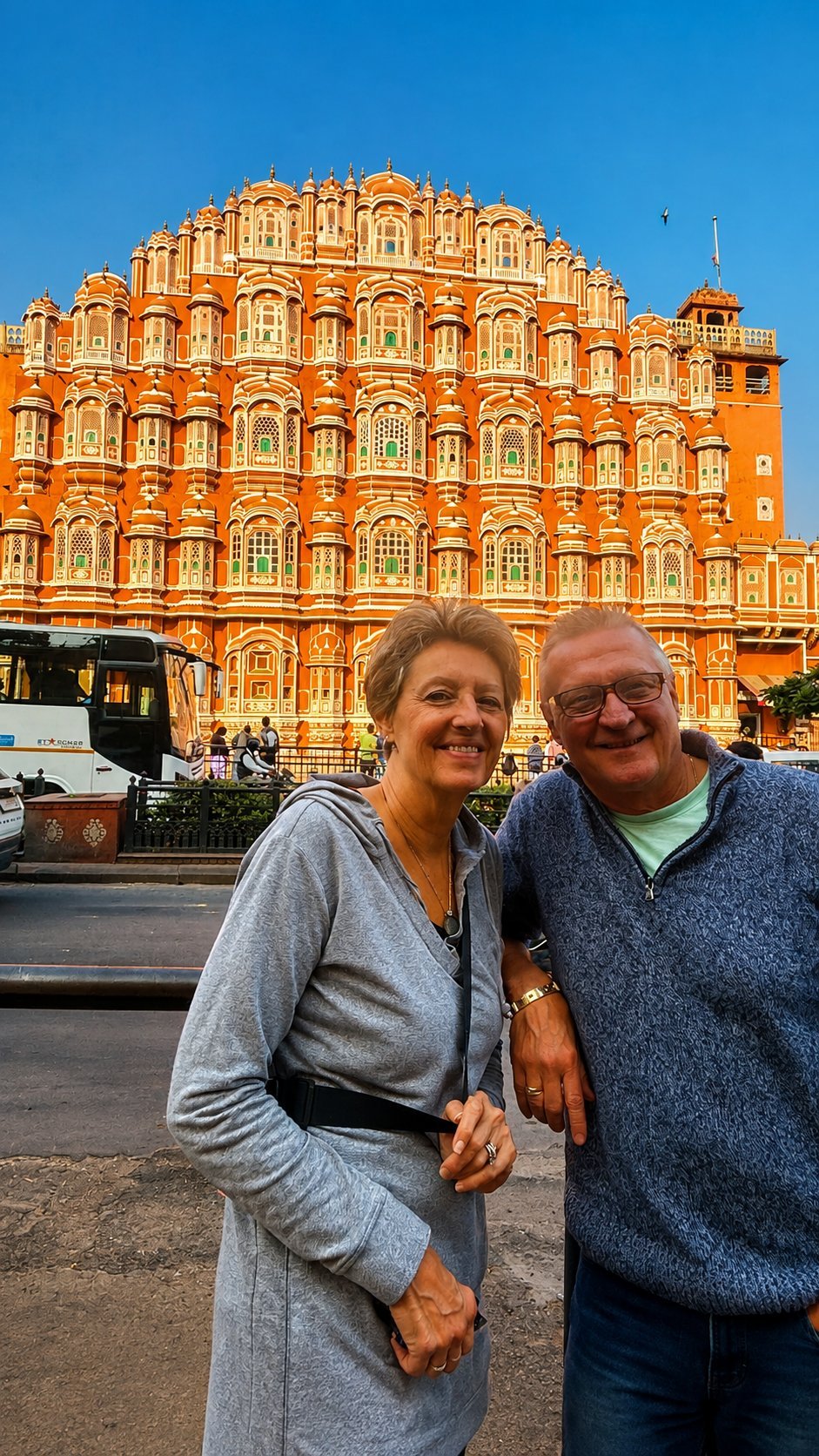
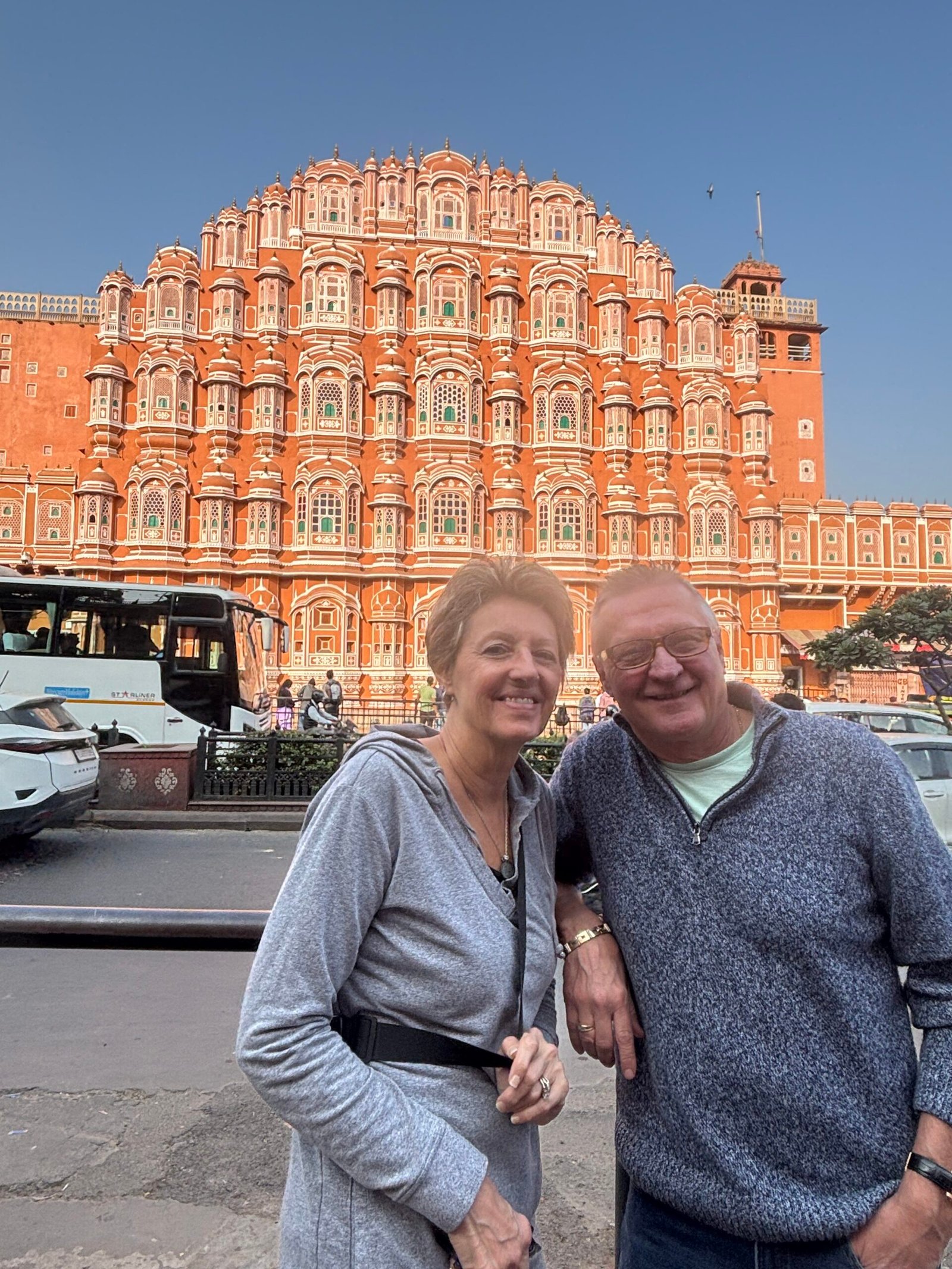
Hawa Mahal rises over Badi Chaupar, the main crossroads of Jaipur’s walled Pink City, like a giant pink honeycomb. Its five-storey facade is only about one room deep, a screen of 953 small latticed windows (jharokhas) and balconies stacked in a pyramid. The shape is said to echo the crown of Lord Krishna, to whom the Maharaja was devoted. The name means “Palace of Winds”: the latticework funnels breezes through the building, keeping it cool even in summer.
History
Maharaja Sawai Pratap Singh built Hawa Mahal in 1799 as an extension of the City Palace’s women’s quarters. It was designed by the architect Lal Chand Ustad. Royal women lived in purdah, hidden from public view, and the screened windows allowed them to watch festivals, processions and everyday life in the bazaar below without being seen. Like the rest of the old city, it was painted pink, the colour of hospitality, when the Prince of Wales visited Jaipur in 1876.
What it’s like to visit
The famous facade is the back of the palace, facing the street. To go inside, you walk round to the entrance in a side lane behind it. Courtyards and small chambers lead to ramps (there are no stairs to the upper levels) that climb through the top three storeys: the Vichitra Mandir, the Prakash Mandir and, at the top, the Hawa Mandir. Coloured glass windows throw patches of light on the floors, and from the narrow upper balconies you look down on the busy street and out over the rooftops to the City Palace, Jantar Mantar and Nahargarh Fort on the ridge. A small museum displays miniature paintings and royal objects.
Inside takes 30–45 minutes. The rooms are small and the top levels narrow, so it can feel crowded at midday.
The best view
The facade faces east and glows in the early morning sun. For the classic photo, cross the road: the rooftop cafés directly opposite look straight onto the facade and open early. From the street, stand on the far side of Hawa Mahal Road or on the pavement at Badi Chaupar. Mornings are also quieter, before the traffic and market crowds build.
Plan your visit
Hawa Mahal is a 10-minute walk from the City Palace and Jantar Mantar, and on the edge of Johari Bazaar and the old markets. Our Jaipur tours usually stop for photos early, before Amber Fort, and return to the old city in the afternoon. Read our Rajasthan travel guide for more.