A well like no other
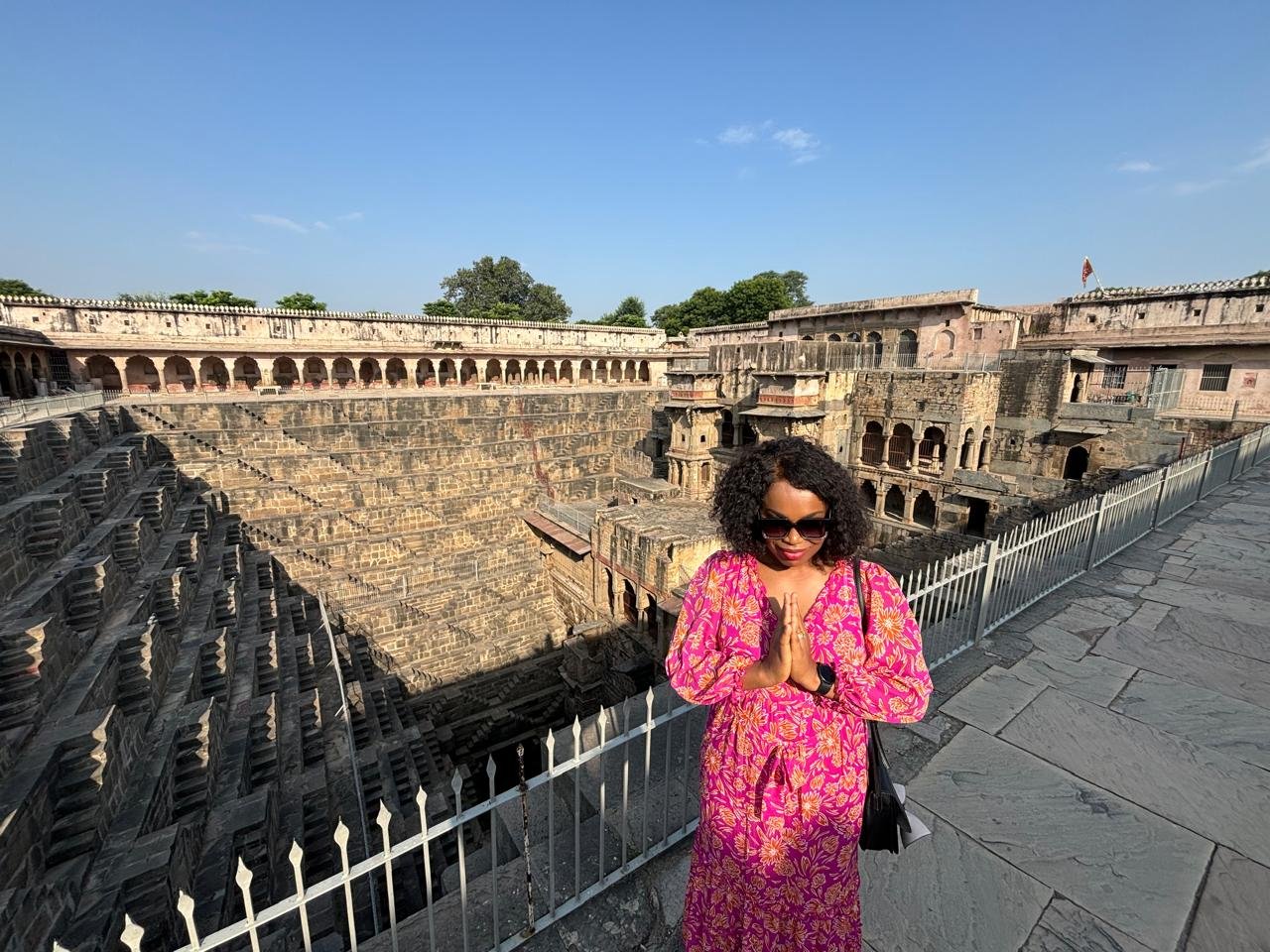
Chand Baori is a huge square stepwell in Abhaneri, a small village about 90 km east of Jaipur, just off the main road to Agra. On three sides, flights of steps descend in a criss-cross pattern through thirteen storeys to a pool about 30 metres below ground. There are around 3,500 steps in all. Standing at the edge and looking down is unforgettable: the steps seem to repeat endlessly, like an optical illusion. Its striking shape has made it a favourite location for films.
History
The stepwell is usually dated to the 8th or 9th century and linked to King Chanda of the Nikumbha dynasty, after whom it’s named. In this dry region, it stored monsoon rainwater for the whole year, and its depth kept the air at the bottom several degrees cooler than at the surface, so villagers and travellers gathered here to rest. The fourth side, with its arched galleries and pavilions, was added much later, in the Mughal period.
Harshat Mata Temple
Next to the stepwell stand the ruins of the Harshat Mata Temple, dedicated to the goddess of joy and happiness and built around the same time. Although much of it was destroyed centuries ago, the platform and walls still carry finely carved figures of gods, dancers and musicians, and many carved fragments are displayed around the stepwell’s galleries.
What it’s like to visit
You walk round the top edge of the well and through the covered galleries on the pavilion side, looking down into the steps from different angles. For safety and conservation, visitors can’t walk down the steps. Allow 30–45 minutes, plus time for the temple. Mornings and late afternoons give the best light and shadows on the steps.
Plan your visit
Abhaneri is about 1.5 hours from Jaipur and 3 hours from Agra, so most visitors stop here on the drive between the two, often after Fatehpur Sikri. Our Golden Triangle tours build it in as a leg-stretch and photo stop. For a smaller stepwell in Jaipur itself, see Panna Meena ka Kund near Amber Fort. Read our Golden Triangle tour guide for more.