An observatory of stone
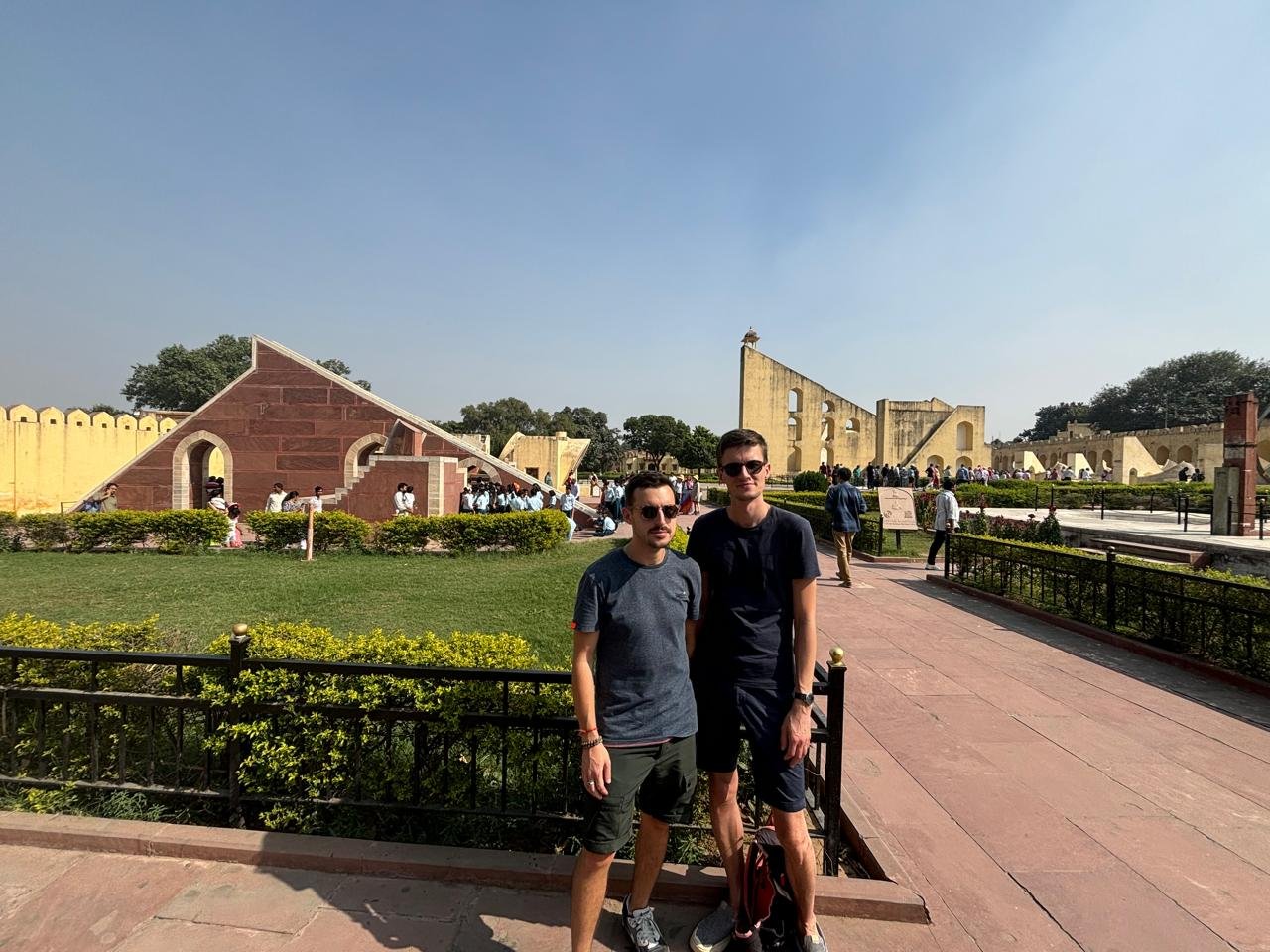
Jantar Mantar sits beside the City Palace in the heart of Jaipur’s old city, a courtyard filled with strange, beautiful geometric structures: ramps, arcs, bowls and staircases that seem to lead nowhere. Each is an astronomical instrument, built at a giant scale so it could measure time and the positions of the sun, moon, planets and stars with the naked eye. Maharaja Sawai Jai Singh II, a keen astronomer and mathematician, built it between about 1728 and 1734. It’s the largest and best preserved of the five observatories he built in north India, and a UNESCO World Heritage Site since 2010.
History
Jai Singh II, who founded Jaipur, studied Hindu, Islamic and European astronomy and found that the brass instruments of his time were too small to be accurate. His answer was to build them in stone and masonry, so large that their scales could be read to fractions of a degree. He built observatories in Delhi, Jaipur, Ujjain, Varanasi and Mathura; the one at Mathura has disappeared. The Jaipur instruments were restored in the early 20th century and some are still used to forecast the monsoon and calculate festival dates.
What it’s like to visit
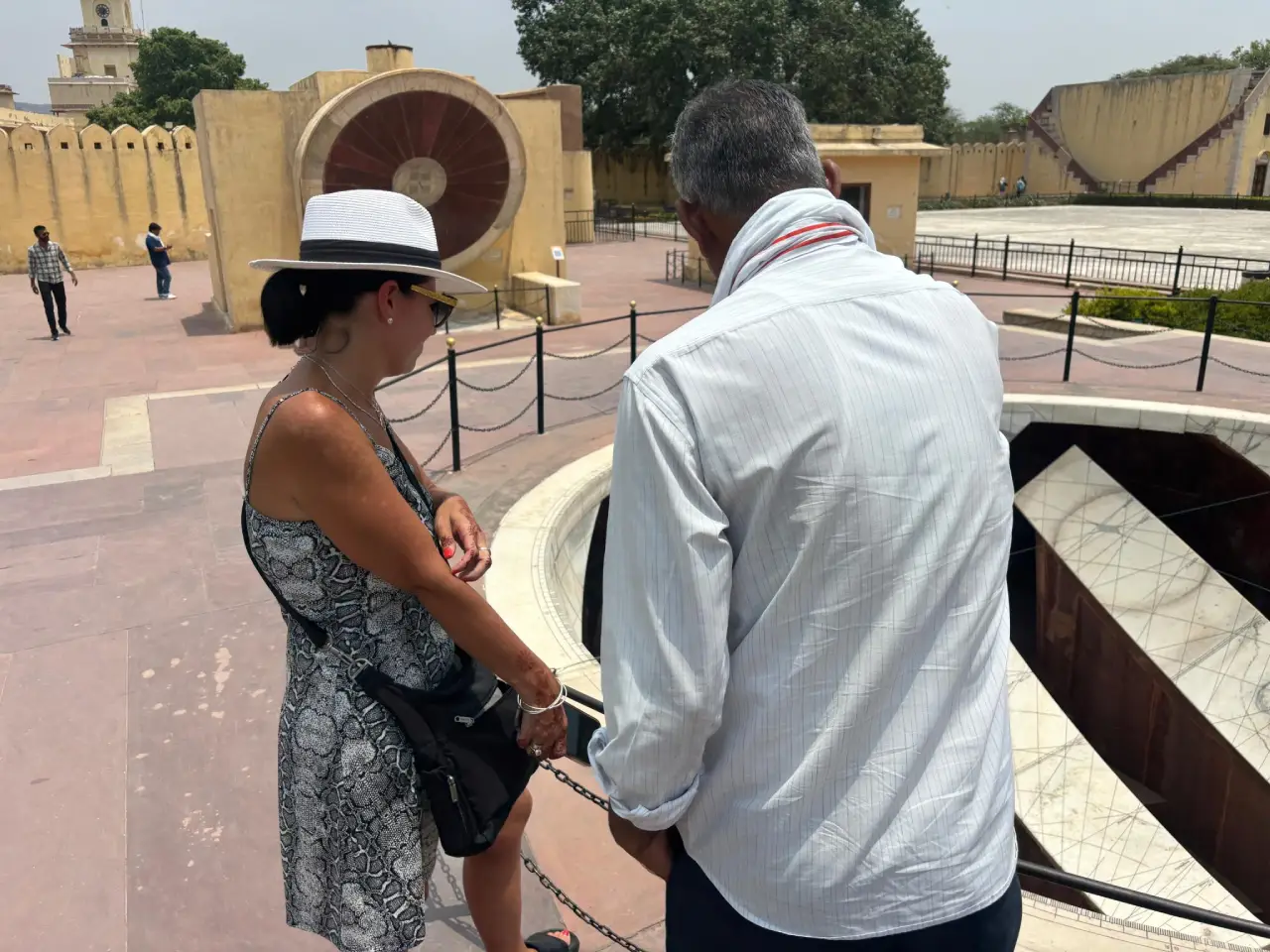
The site has 19 main instruments. With a guide, the highlights are:
- Samrat Yantra: the “supreme instrument”, a giant sundial with a triangular wall about 27 m high. Its shadow moves across the curved scales at about 6 cm a minute, telling local time to within about two seconds. It’s the largest stone sundial in the world.
- Laghu Samrat Yantra: a smaller sundial, accurate to about 20 seconds, where it’s easier to watch the shadow move.
- Jai Prakash Yantra: two sunken hemispheres marked with a map of the sky, used to find the positions of the sun and stars.
- Ram Yantra: two cylindrical structures for measuring the height and direction of celestial objects.
- Rashivalaya Yantras: twelve instruments, one for each sign of the zodiac, each angled to that sign’s position.
Allow about an hour. There’s little shade, so mornings are best. Without a guide or audio guide, the instruments are hard to understand, so it’s well worth having one.
Plan your visit
Jantar Mantar is right next to the City Palace and a 10-minute walk from Hawa Mahal, so the three make a natural half day in the old city, often after Amber Fort in the morning. Read our Rajasthan travel guide for more.