The royal square
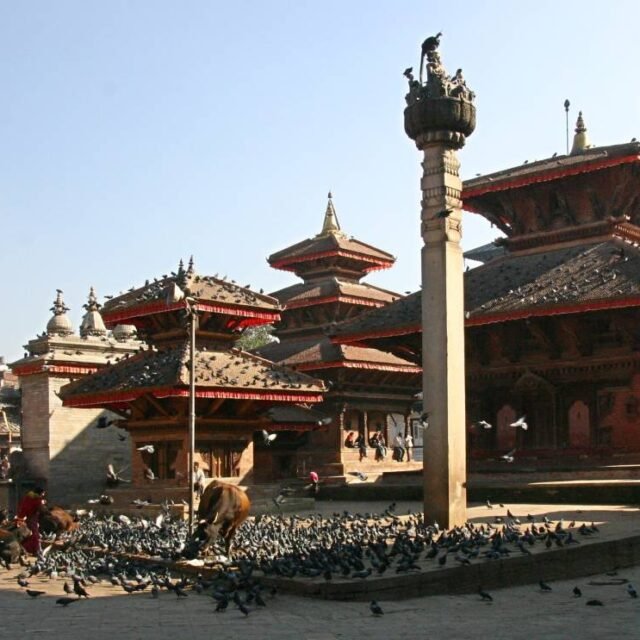
Kathmandu Durbar Square (durbar means palace) lies in the old heart of Nepal’s capital, a cluster of squares packed with temples, shrines, statues and palace buildings, most dating from the 16th to 18th centuries under the Malla kings and their successors, the Shah dynasty. Nepal’s kings were crowned here until the 20th century. With the royal squares of Patan and Bhaktapur, it’s part of the Kathmandu Valley UNESCO World Heritage Site, inscribed in 1979.
The 2015 earthquake badly damaged several buildings, and restoration has been continuing since; some temples have been rebuilt, others are still under scaffolding, but the square remains one of the most atmospheric places in Nepal.
What to see
- Hanuman Dhoka Palace: the old royal palace, named after the statue of the monkey god Hanuman at its gate, with courtyards, carved windows and a museum, and the Basantapur tower.
- Kumari Ghar: the 18th-century house of the Kumari, a young girl worshipped as a living goddess. In its carved courtyard, she sometimes appears briefly at a window; photographing her is forbidden.
- Taleju Temple: a towering temple to the royal goddess, opened to the public only on one day a year.
- Kasthamandap: a wooden pavilion said to have given Kathmandu its name, rebuilt after the earthquake.
- Kal Bhairav: a huge, fearsome stone image of Shiva in his destructive form.
What it’s like to visit
The square is lively from early morning, with locals worshipping, pigeons, flower and vegetable sellers, rickshaws and tourists. Foreign visitors pay an entry fee at the edge of the square (keep your ticket). Allow 2–3 hours, ideally with a guide to explain the many temples. The streets around, such as Indra Chowk and Asan, are among Kathmandu’s oldest bazaars.
Plan your visit
Combine the square with Swayambhunath, Pashupatinath and Boudhanath. Bhaktapur is about an hour away. See our 9-day Nepal tour.