The city of devotees
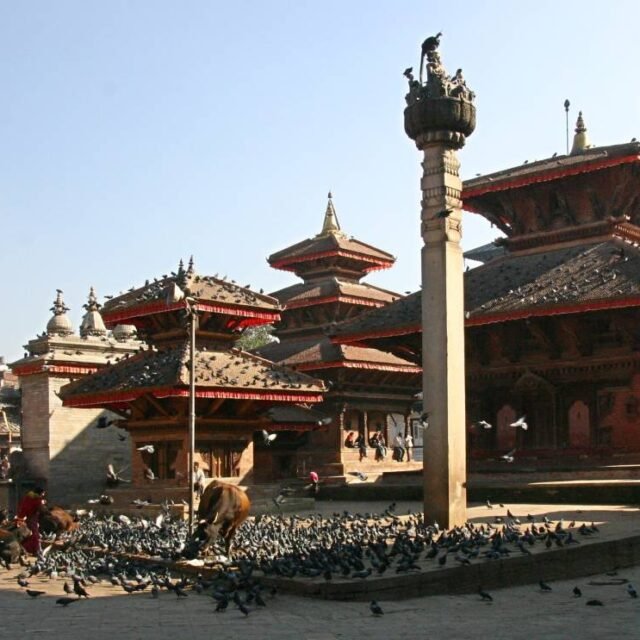
Bhaktapur, “city of devotees”, lies about 13 km east of Kathmandu. From the 14th to the late 15th century it was the capital of the whole Kathmandu Valley under the Malla kings, and it remained an independent kingdom until the 18th century. Much of the old town is closed to traffic, and its brick houses, carved wooden windows, temple squares and courtyards make it feel like a living museum of Newar culture. Its Durbar Square is part of the Kathmandu Valley UNESCO World Heritage Site. The 2015 earthquake damaged several monuments, many of which have been carefully restored.
What to see
- Durbar Square: the royal square, with the Golden Gate (1754), a gilded doorway that’s one of the finest pieces of metalwork in Nepal, the Palace of 55 Windows with its carved wooden balcony, temples and statues.
- Taumadhi Square: home to the Nyatapola Temple (1702), a five-tiered pagoda and the tallest in Nepal, guarded on its steps by pairs of stone wrestlers, elephants, lions and goddesses. It survived the great earthquakes of 1934 and 2015.
- Pottery Square: where potters throw clay on wheels and set rows of pots out to dry in the sun.
- Dattatreya Square: one of the oldest parts of the city, with a temple said to be built from the wood of a single tree and the Peacock Window, a masterpiece of woodcarving.
What it’s like to visit
Foreign visitors pay an entry fee covering the whole old city (keep the ticket). Wander the lanes at your own pace, step into courtyards, watch woodcarvers and potters, and stop at a rooftop café overlooking a square. Don’t leave without tasting juju dhau, Bhaktapur’s famous creamy “king curd”, served in clay bowls. Allow at least half a day; the city is magical in the early morning and at dusk. During the Bisket Jatra festival in April, huge chariots are pulled through the streets.
Plan your visit
Combine Bhaktapur with sunset at Nagarkot, about 45 minutes away. In Kathmandu, see Kathmandu Durbar Square and Swayambhunath.