Welcome back, ! Continue planning: Not you?
New Book Your Taj Mahal Tickets
Gatore Ki Chhatriyan
Monument · Jaipur

Gatore Ki Chhatriyan

The royal cenotaphs of Jaipur's Maharajas in a quiet valley below Nahargarh Fort: carved marble and sandstone chhatris, few crowds and fine detail. Timings and tips.

  • 09:00 – 17:00
  • Tickets from ₹30
  • 30–45 minutes
Plan your visit

Visiting Gatore Ki Chhatriyan

Opening hours

Opens9:00 amCloses5:00 pm

09:00 – 17:00

About 09:00–17:00 every day

  • Time needed30–45 minutes
  • Closed onOpen every day
  • Best seasonNov – Feb

Best time to visit

  1. January: Best time
  2. February: Best time
  3. March: Good
  4. April: Possible
  5. May: Possible
  6. June: Possible
  7. July: Good
  8. August: Good
  9. September: Good
  10. October: Best time
  11. November: Best time
  12. December: Best time
  • Best timeWinterNov – Feb

    8–24°C

  • GoodSpringMar

    15–33°C

  • PossibleSummerApr – Jun

    Up to 44°C

    Go late afternoon

  • GoodMonsoonJul – Sep

    25–34°C, humid

    Green hills behind

  • Best timeAutumnOct

    18–33°C

Good to know

Best seasonOctober to March
Best monthsNovember to February
Best timelate afternoon, for warm light on the marble
Alternative timemorning, for complete quiet
Best photographythe chhatris framed against the hills and Nahargarh's walls
Recommended visit duration30–45 minutes
Avoidmidday in summer

Address

Jaipur–Nahargarh Fort Road, Krishna Nagar, Brahampuri, Jaipur, Rajasthan 302002 Directions

Entry tickets

Entry ticket prices
AdultsSmall entry fee (rate to confirm); camera fee may apply₹30

Prices are set by the authorities and can change.

The story

About Gatore Ki Chhatriyan

The royal cenotaphs

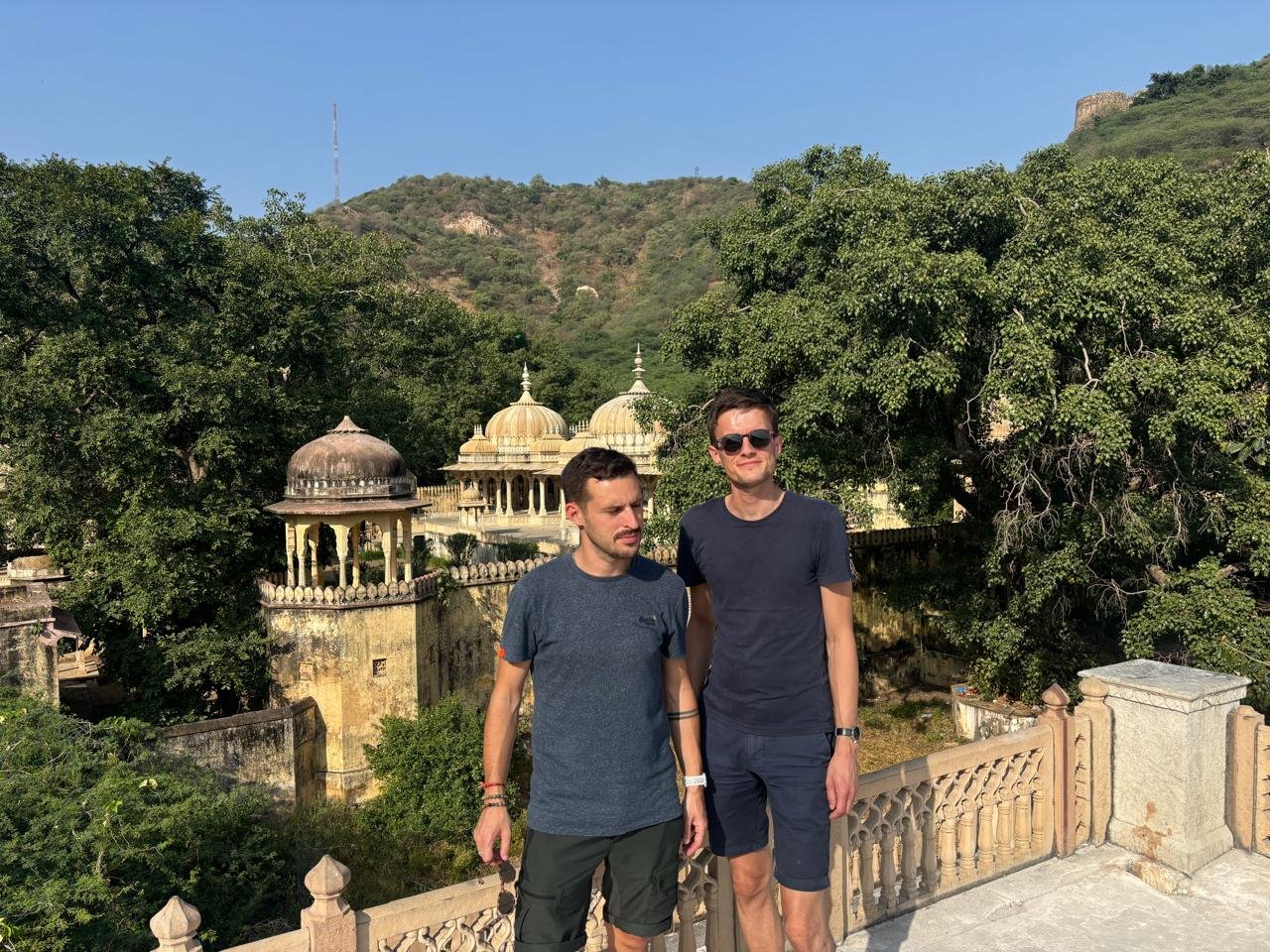
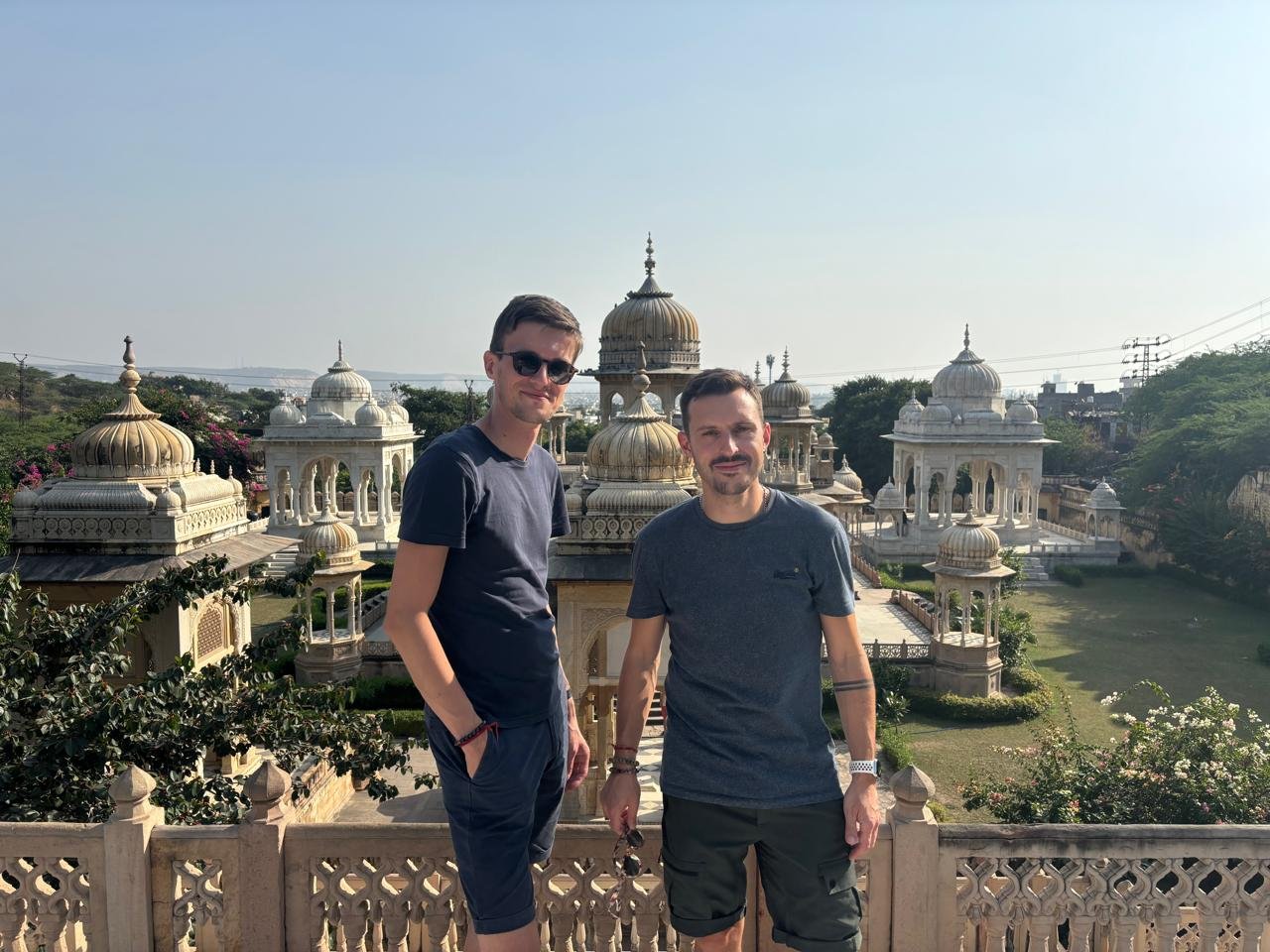
Gatore Ki Chhatriyan lies in a small, walled valley at the foot of the Nahargarh hills, just north of Jaipur’s old city. This is where the Kachhwaha Maharajas of Jaipur were cremated, and over each cremation site stands a chhatri, a domed, open pavilion on carved pillars that serves as a memorial (it isn’t a tomb, as Hindus are cremated). The result is a peaceful courtyard of white marble and pale sandstone memorials, each finer than the last, with Nahargarh’s walls on the ridge above.

History

The site was chosen after Sawai Jai Singh II founded Jaipur in 1727. His own chhatri, built after his death in 1743, is the grandest: a white marble pavilion on twenty carved pillars, decorated with scenes from Hindu mythology. The cenotaphs of later rulers, including Sawai Madho Singh II and Sawai Pratap Singh, stand around it, built in styles that mix Rajput and Mughal forms. The royal women have their own memorials at Maharani ki Chhatri, on the road to Amber.

What it’s like to visit

Few tourists come here, so it’s usually quiet, with only birds, a few visitors and the occasional photographer. Walk between the chhatris to see the carved friezes of dancers, musicians, elephants and gods on the pillars and domes, and the delicate marble lattice. Peacocks sometimes wander through the courtyards. The rocky hills and the walls of Nahargarh above make a dramatic backdrop, especially in the warm light of late afternoon. Allow 30–45 minutes.

Photography

  • Late afternoon light brings out the carving on the marble.
  • Frame the chhatris against the hills and Nahargarh’s walls.
  • It’s a place of remembrance, so please be respectful.

Plan your visit

Gatore Ki Chhatriyan is on the road up towards Nahargarh Fort, so it combines naturally with a sunset visit there. It’s also on the way to Jal Mahal and Amber Fort. Read our Rajasthan travel guide for more.
Highlights

Don’t miss

  1. 01

    Sawai Jai Singh II's chhatri

    White marble on twenty carved pillars

  2. 02

    The carved friezes

    Dancers, musicians, elephants and gods

  3. 03

    The setting

    Nahargarh's walls on the ridge above

  4. 04

    The quiet

    One of Jaipur's least crowded monuments

Good to know

Know before you go

  • A place of remembrance; be respectful
  • Few facilities; bring water
  • Shoes may need to be removed on some platforms
  • Combine with Nahargarh Fort on the same road

Things to do in Gatore Ki Chhatriyan

1

Study the carvings

Look closely at the pillars and domes for mythological scenes.

2

Photograph in late light

The marble glows in the late afternoon.

3

Pair it with Nahargarh

Continue up the road for sunset at the fort.

4

Enjoy the quiet

A peaceful break from Jaipur's busy sights.

When to visit

October to March, in the late afternoon before heading up to Nahargarh for sunset. It's open every day and rarely crowded.

Getting there & around

Gatore Ki Chhatriyan is about 15 minutes by car from Hawa Mahal, on the road towards Nahargarh Fort and Jal Mahal. Cars and auto-rickshaws can drop you at the gate.

Where to stay

Stay in Jaipur's old city, C-Scheme or Civil Lines, 15–20 minutes away.

Food & where to eat

There's no food here. Bring water, and eat in the old city or at Nahargarh's café.

Gatore Ki Chhatriyan travel tips

Go before Nahargarh

Visit in the late afternoon, then drive up for sunset.

Bring water

There are few facilities on site.

Be respectful

It's a royal memorial ground.

Read before you go

Guide

Rajasthan Travel Guide

Rajasthan travel guide — palaces, forts and desert cities. Article content to be added.

Frequently asked questions

What is Gatore Ki Chhatriyan?

The royal cremation ground of Jaipur's Maharajas, with domed memorials (chhatris) over each cremation site.

Is there an entry fee?

A small fee, around ₹30; confirm at the gate.

What are the timings?

About 9 am to 5 pm every day.

Are the rulers buried here?

No. Hindu rulers were cremated; the chhatris are memorials, not tombs.

Is it worth visiting?

Yes, for the fine carving and the quiet, especially combined with Nahargarh Fort.

How long do I need?

About 30–45 minutes.

Visit it with us

Tours that include Gatore Ki Chhatriyan

Experiences

Experiences in Jaipur

Delhi, Agra, Varanasi, Jaipur, Mumbai 2–3 hours

Street Food Walk

Taste your way through India's old cities with a guide who knows the best stalls

Jaipur A full day on 14 January (plus kite markets in the days before)

Kite Festival

A sky full of kites over the City, rooftop parties and lanterns at dusk

Agra, Jaipur, Udaipur, Delhi, Varanasi 2–3 hours

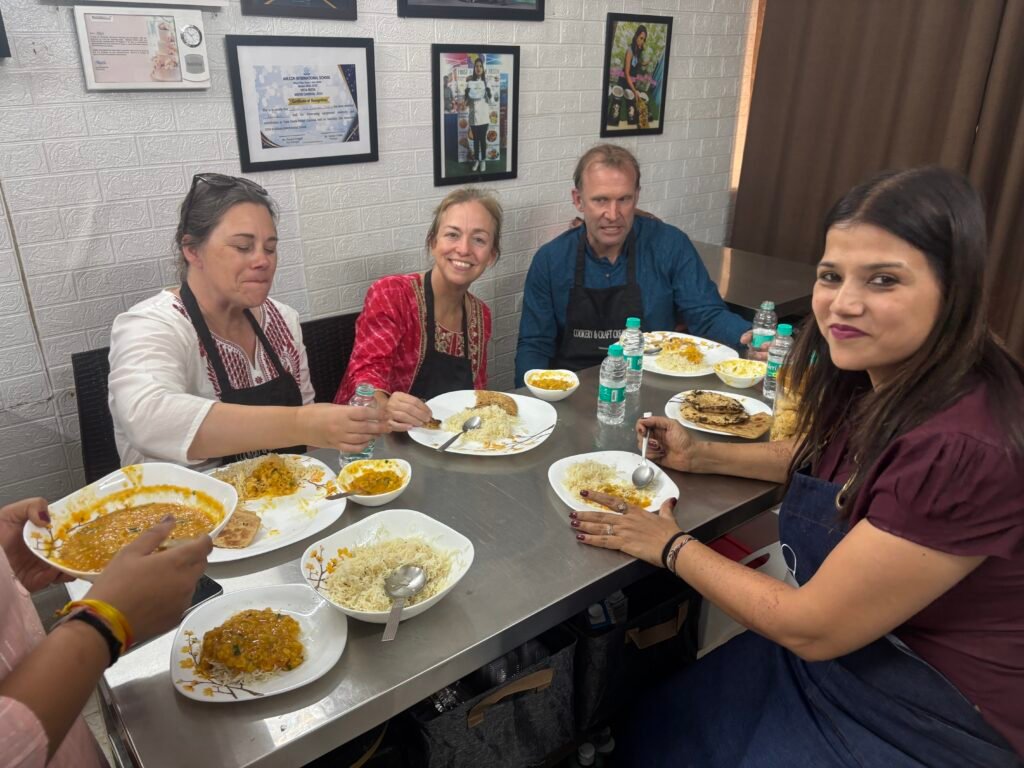
Indian Cuisine Cooking Classes

Cook a home-style Indian meal with a local family, then sit down and eat it

Nearby

More places in Jaipur

Museum

Albert Hall Museum

Jaipur

Jaipur's oldest museum, an Indo-Saracenic landmark from 1887: miniature paintings, carpets, arms and an Egyptian mummy. Beautifully lit at night.…

Monument

Amber Fort (Amer Fort)

Jaipur

The hilltop palace-fort of Jaipur's kings, above Maota Lake: painted gates, marble courtyards and the Sheesh Mahal mirror palace. Timings,…

Monument

Chand Baori Stepwell, Abhaneri

Jaipur

A 1,000-year-old stepwell at Abhaneri with 13 storeys and about 3,500 steps, one of India's deepest. A great stop between…

Monument

City Palace, Jaipur

Jaipur

Jaipur's royal palace, still home to the former royal family: the four painted gates, the giant silver urns, textile and…

Temple & sacred site

Galta Ji (Monkey Temple)

Jaipur

Jaipur's Monkey Temple: 18th-century temples and spring-fed sacred pools in a gorge, hundreds of monkeys and a Sun Temple with…

Monument

Hawa Mahal (Palace of Winds)

Jaipur

Jaipur's iconic Palace of Winds: a pink honeycomb facade of 953 windows from 1799. Timings, 2026 tickets, the best viewpoint…

Viewpoint

Jal Mahal (Water Palace)

Jaipur

Jaipur's Water Palace in the middle of Man Sagar Lake, on the road to Amber Fort. Not open inside, but…

Monument

Jantar Mantar

Jaipur

Jai Singh II's 18th-century stone observatory in Jaipur, with the world's largest stone sundial. A UNESCO site next to City…

Tailor-made India

Plan your visit to Gatore Ki Chhatriyan

Private guide, skip-the-line help and hotel pickup – tell us your date and we will plan it.

India Number:- +91 74539 55609

Compare tours

WhatsApp