The saint of Delhi
Hazrat Nizamuddin Auliya (1238–1325) was one of the great saints of the Chishti Sufi order, a spiritual descendant of Khwaja Moinuddin Chishti of Ajmer. Living in what was then a village outside Delhi, he taught love of God, humility and service to all, feeding the poor from his kitchen and welcoming people of every faith. Sultans feared and courted him, and his shrine, rebuilt many times, has drawn pilgrims for seven centuries.
Khusrau, Ghalib and the Basti
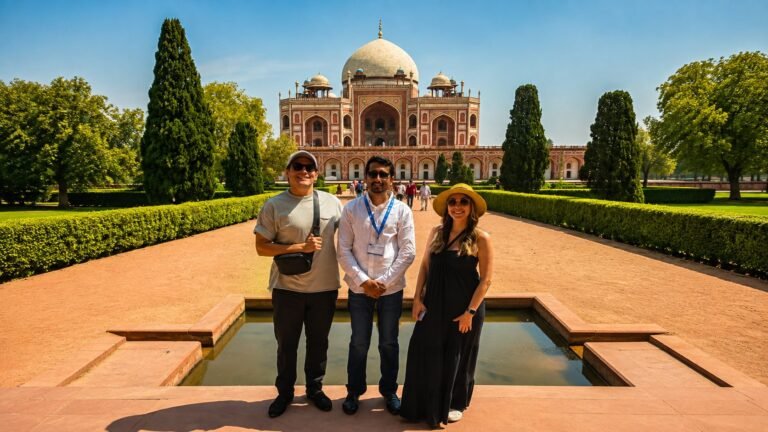
Around the shrine lies Nizamuddin Basti, a living medieval village of narrow lanes, rose and chadar sellers and kebab stalls. In the dargah complex is the tomb of Amir Khusrau, the saint’s beloved disciple, poet and musician, credited with shaping qawwali. Nearby lie the tomb of the poet Mirza Ghalib, the Mughal princess Jahanara and the baoli, a stepwell built in defiance of a sultan. Humayun’s Tomb stands just across the road.
The qawwali
Every evening after the sunset prayer, and above all on Thursdays, qawwals sit in the marble courtyard and sing the devotional songs of Khusrau, with harmonium, tabla and clapping, to a crowd of pilgrims and visitors. Cover your head, remove your shoes, dress modestly and keep valuables close in the crowds. Women may not enter the inner tomb chamber but can sit close by. Politely decline anyone asking for large donations.