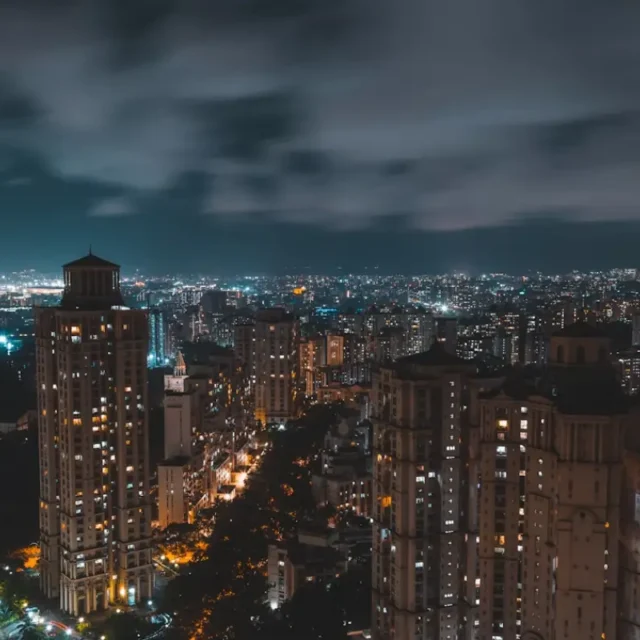
Mani Bhavan is a two-storey house on Laburnum Road in Gamdevi, a residential neighbourhood of central Mumbai. It belonged to Revashankar Jagjivan Jhaveri, a friend of Mahatma Gandhi, and between 1917 and 1934 Gandhi stayed here whenever he was in Bombay. Some of the key moments of India’s independence movement were planned in this house: Gandhi launched campaigns of non-cooperation and civil disobedience from here, and it was here that he first learned to use the charkha (spinning wheel), which became a symbol of self-reliance and the freedom struggle.
The museum
Since 1955, the house has been a memorial and museum run by the Mani Bhavan Gandhi Sangrahalaya. Inside:
- Gandhi’s room: on the second floor, preserved as it was, seen through a glass partition, with his mattress on the floor, his spinning wheels and a few simple belongings.
- Dioramas: a gallery of small, detailed tableaux showing scenes from Gandhi’s life, from his childhood and years in South Africa to the Salt March and his death.
- Photographs and documents: images of Gandhi through the decades, and letters he wrote and received, including correspondence with world figures.
- Library: a large collection of books by and about Gandhi.
From the terrace, you can see the street where Gandhi was arrested in 1932. Visitors from around the world come here, including Martin Luther King Jr. in 1959 and Barack Obama in 2010. The house is calm and moving, a contrast to the busy city outside. Allow about an hour.
Visiting tips
- Start on the ground floor with the library and photographs, then climb to the dioramas and Gandhi’s room upstairs.
- The house is small; visit early on a weekday to avoid tour groups.
- A shop sells books on Gandhi and khadi (hand-spun cloth) products.
Plan your visit
Mani Bhavan is about 15 minutes from Marine Drive and Chowpatty and 10 minutes from Haji Ali. Combine it with Dhobi Ghat on a central Mumbai tour. In Delhi, see Raj Ghat, Gandhi’s memorial.