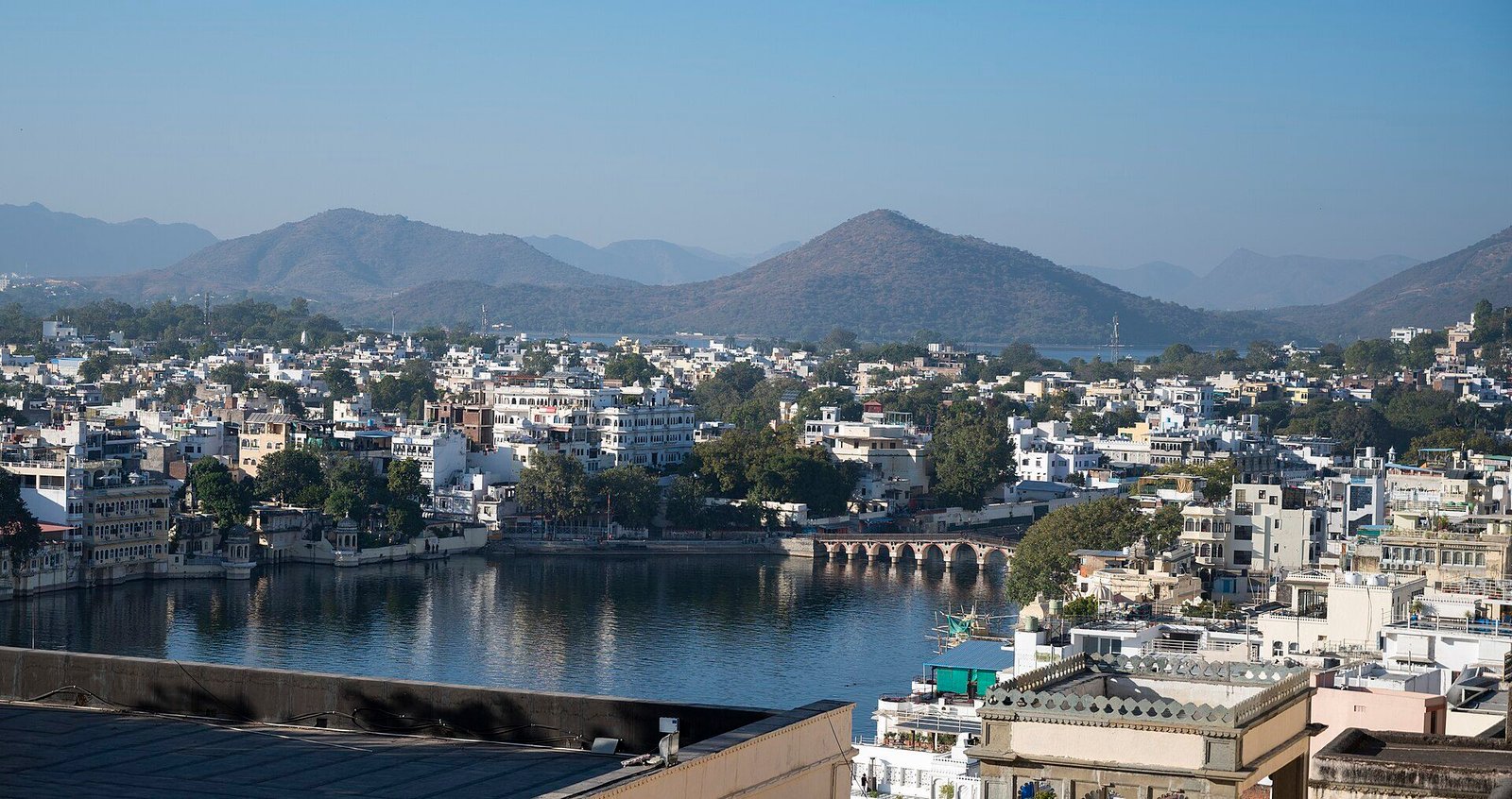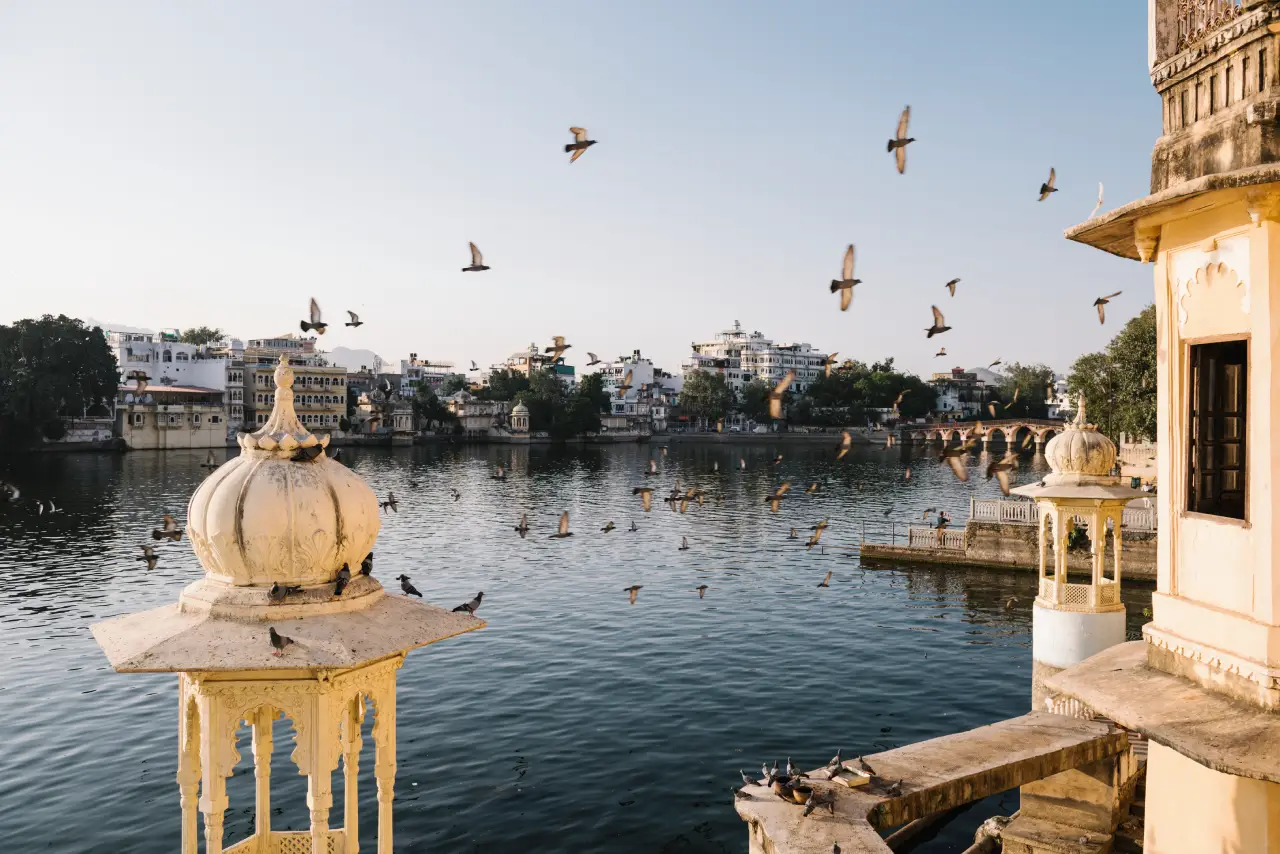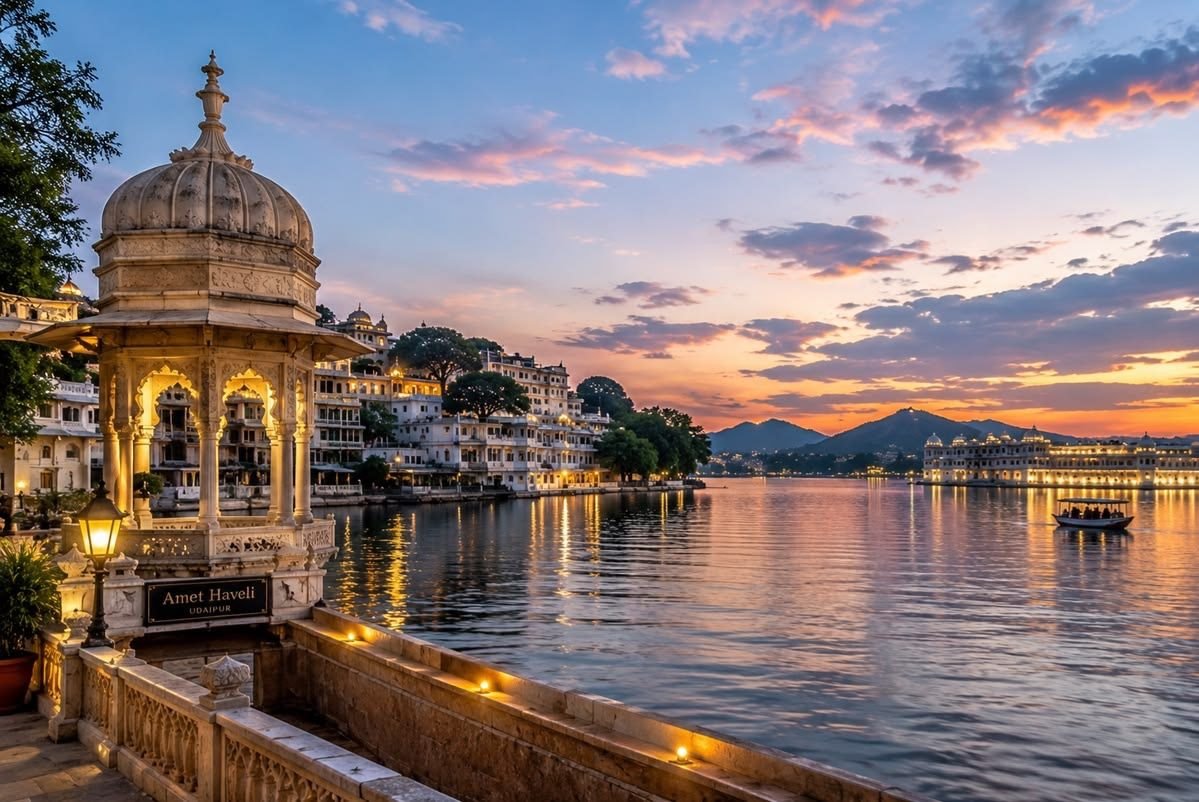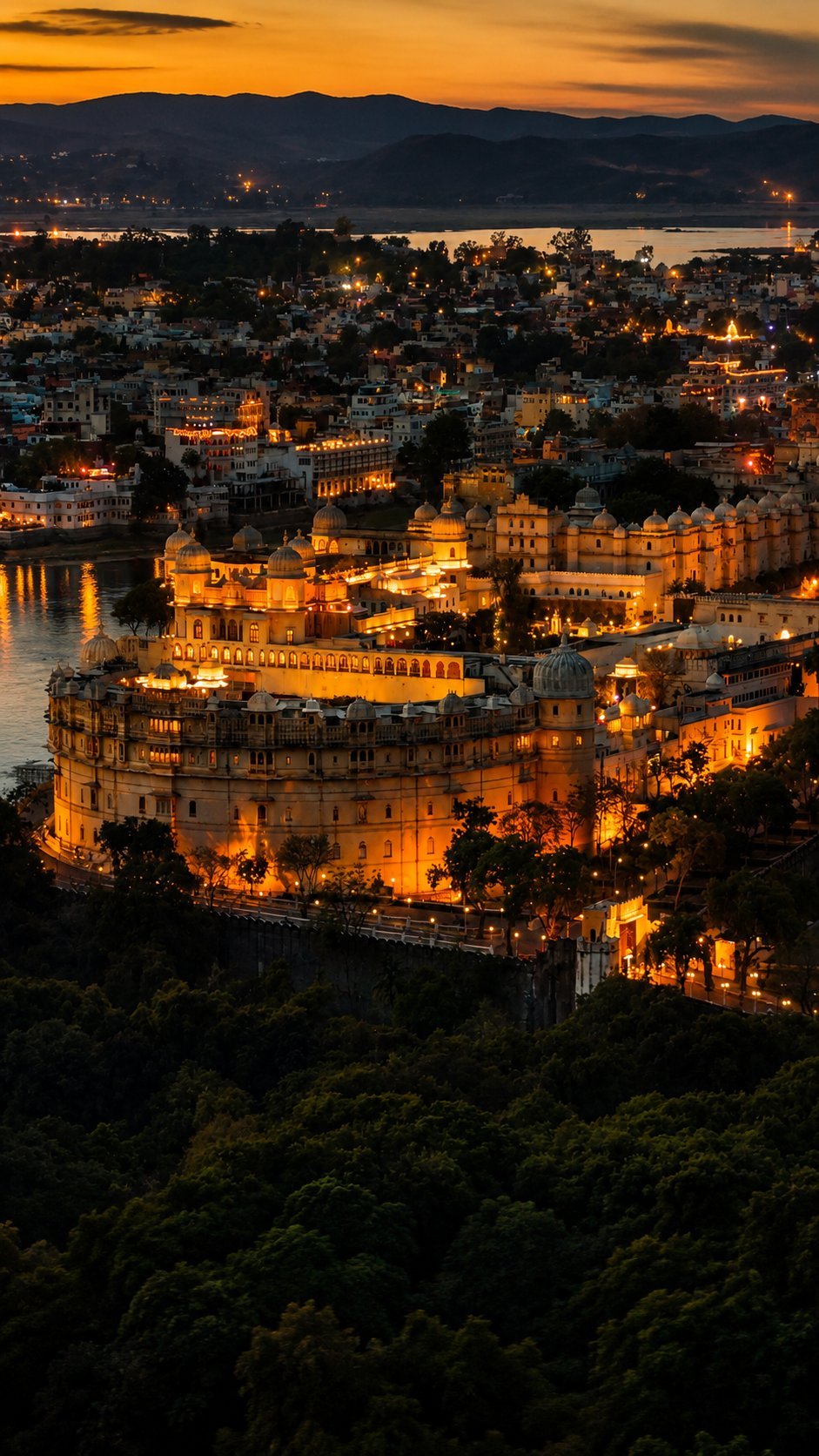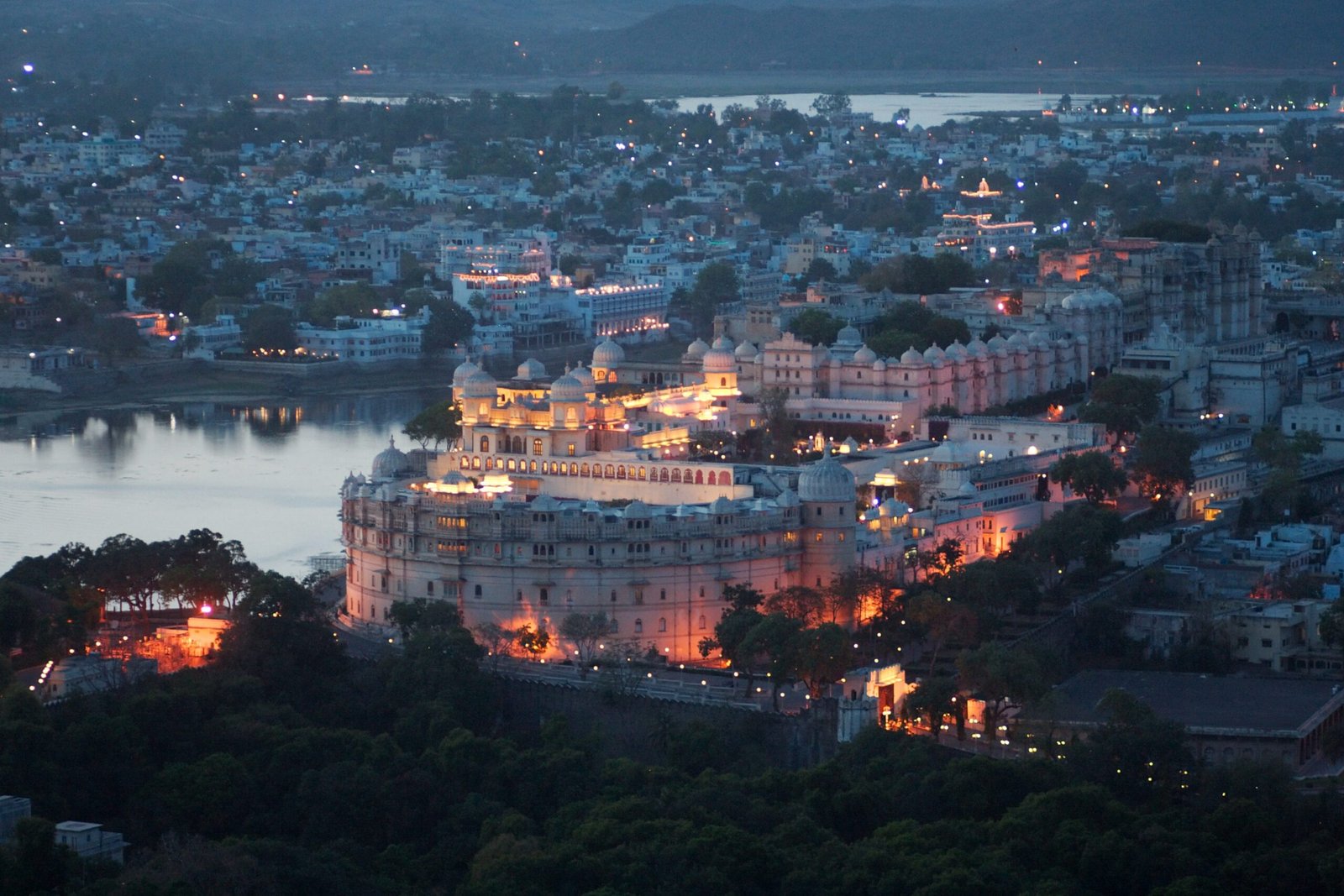
Lake Pichola spreads across the western side of Udaipur’s old city, about 4 km long, with the white walls of the City Palace rising along its eastern shore and the Aravalli hills all around. Two island palaces seem to float on it: the Jag Niwas, now the Taj Lake Palace hotel, and the Jag Mandir, with its gardens and stone elephants. Old havelis, temples and bathing ghats line the water, and at sunset the whole scene glows gold and pink. It’s the reason Udaipur is called one of the most romantic cities in India.
History
The lake is said to have been created in the 14th century, when a dam was built here and named after a nearby village, Picholi. When Maharana Udai Singh II founded Udaipur on its shores in 1559, he enlarged it, and his successors built palaces around and upon it. Jag Mandir, completed in the 17th century, sheltered the Mughal prince Khurram, the future Shah Jahan, when he rebelled against his father. The white marble Jag Niwas was built in the 1740s as a royal summer palace and became one of the world’s most famous hotels.
What it’s like to visit
The best way to see the lake is by boat. Boats leave from the jetties near the City Palace and elsewhere around the lake, gliding past the palace walls, the ghats and the Taj Lake Palace (guests only), and some stop at Jag Mandir, where you can walk in the gardens and have a drink. The sunset departure is the most popular. On foot, head to Gangaur Ghat and the arched Bagore ki Haveli, cross the little bridge to Ambrai Ghat on the far shore for the classic view of the City Palace across the water, or climb to a rooftop café in the old city as the lights come on.
The water level depends on the monsoon; after a weak monsoon, parts of the lake can be low.
Plan your visit
Combine the lake with the City Palace and the Jagdish Temple in one day, then end with the Dharohar folk show at Bagore ki Haveli. For sunset from above, drive up to Sajjangarh. See our boat rides page and Rajasthan travel guide.