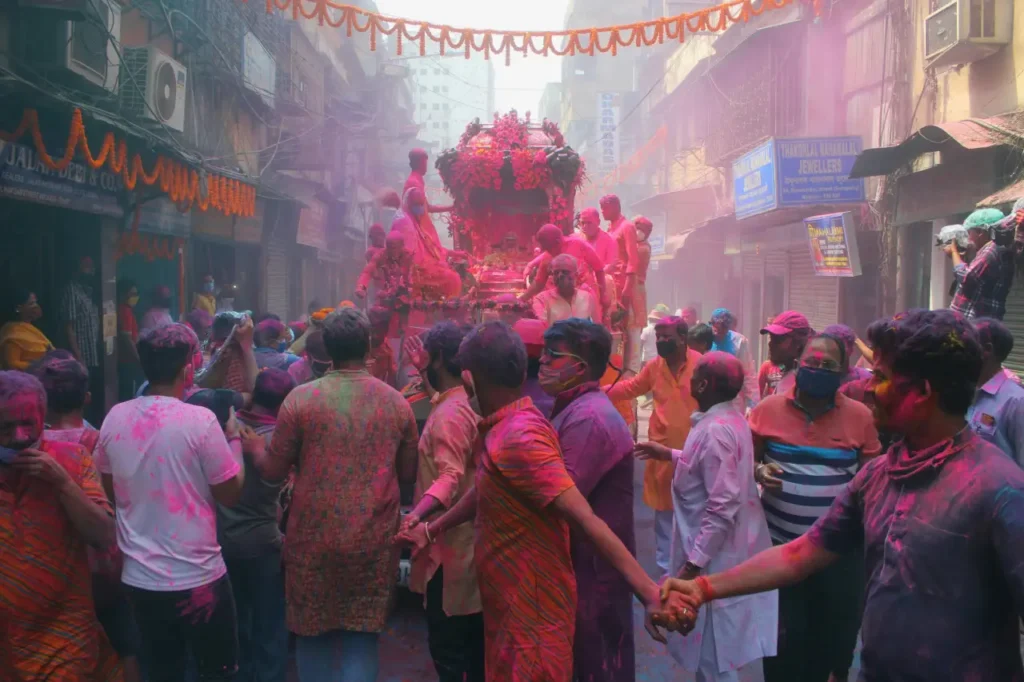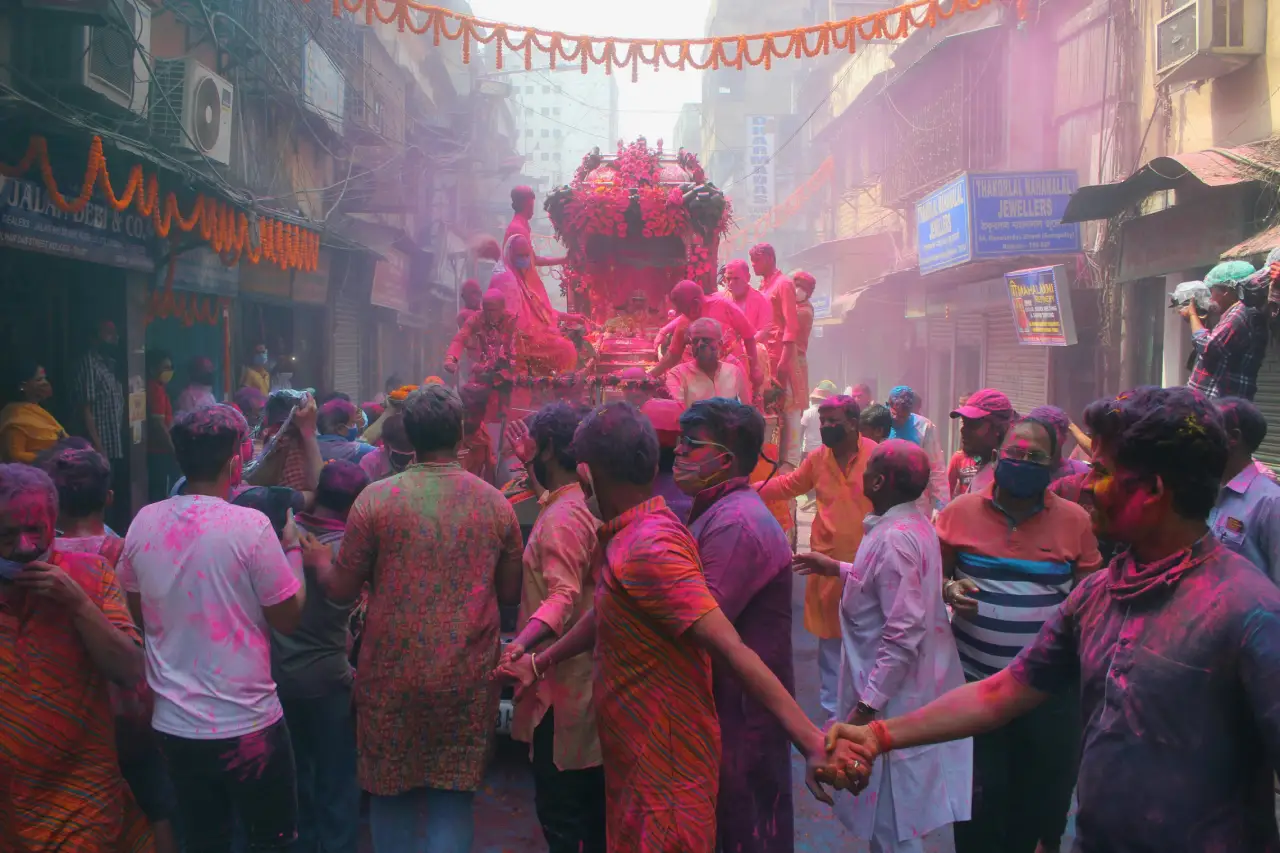

Holi marks the end of winter and the arrival of spring, and celebrates the triumph of good over evil and the playful love of Krishna and Radha. On the night before, communities light bonfires for Holika Dahan. The next morning, the streets fill with people throwing coloured powder and water at friends, family and strangers, singing, dancing and sharing sweets such as gujiya. Everyone is welcome to join, and by noon the whole country seems to be pink, green and yellow.
The most famous celebrations take place in Braj, the region between Agra and Delhi where Krishna is said to have grown up, and they last for days before Holi itself. In Lathmar Holi, the women of Radha’s village, Barsana, playfully beat the men of Krishna’s village, Nandgaon, with sticks while the men shield themselves, and the next day the roles are reversed in Nandgaon. At the Banke Bihari temple in Vrindavan, priests shower worshippers with flower petals, and Mathura fills with processions and music. These celebrations are loud and very crowded, so they are best enjoyed from rooftop viewpoints with a guide.
For a gentler Holi, many travellers prefer a private party in a hotel garden or family home in Jaipur or Agra, with music, safe natural colours, food and drinks among guests and friendly locals, all the fun without the crush of the streets.
Wear old white clothes you can throw away and sunglasses, and rub coconut oil into your hair and skin beforehand so the colour washes off easily. Keep your phone in a waterproof pouch. Women travellers should celebrate in a group or at a private party, as the streets can get rowdy, and note that monuments may open only in the afternoon on Holi day. Our Holi tours cover Barsana and Nandgaon, small-group Holi and private Holi in Jaipur.