Raj Ghat is the national memorial to Mohandas Karamchand Gandhi, the Mahatma, who led India’s non-violent struggle for independence. On 30 January 1948, he was shot dead at Birla House in New Delhi. The next day he was cremated here, on the bank of the Yamuna, in front of a vast crowd. The spot is marked by a plain square platform of black marble, open to the sky, with an eternal flame burning at one end. The words Hé Ram, said to be his last, are carved on it.
Its simplicity is the point. There’s no statue and no tomb, just the platform, the flame and the lawns, in keeping with the way Gandhi lived. Visiting heads of state lay wreaths here, and every year on 2 October (his birthday) and 30 January (the day of his death), prayer meetings are held.
What it’s like to visit
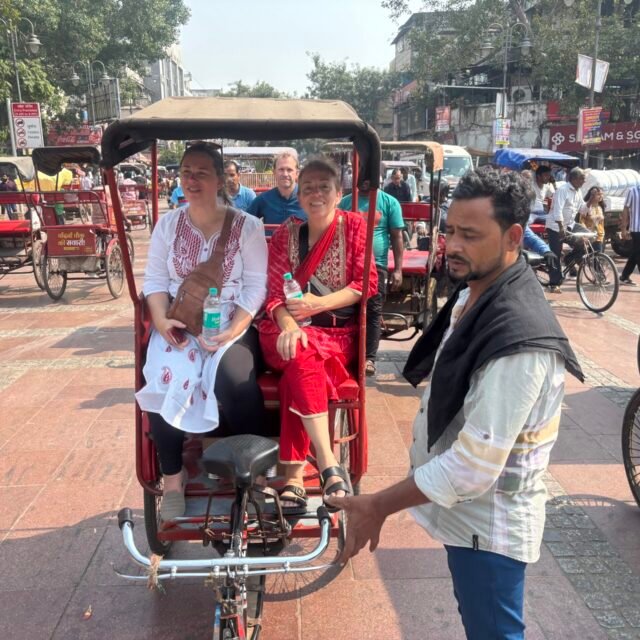
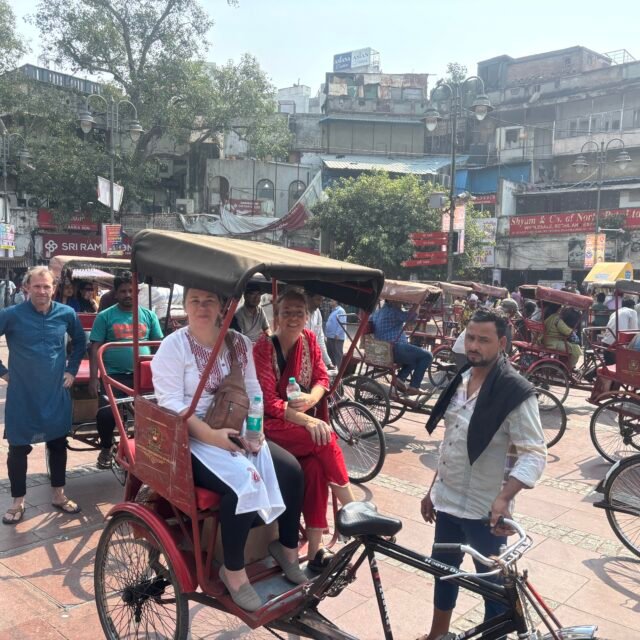
From the entrance on Ring Road, a path leads through landscaped lawns and trees to a walled enclosure. You leave your shoes at the counter and walk barefoot down to the platform, which sits below the level of the surrounding walkway. Many visitors place flowers or simply stand in silence for a moment. It’s a peaceful, green place, and a good pause after the noise of Chandni Chowk and the Red Fort, which are 10–15 minutes away.
A visit takes 20–30 minutes. There’s no entry fee. On Friday evenings, a prayer meeting is held in Gandhi’s memory, marking the day of the week on which he died.
Memorials nearby
The lawns along the river hold memorials to other national leaders, each in its own garden: Shanti Van for Jawaharlal Nehru, India’s first Prime Minister; Vijay Ghat for Lal Bahadur Shastri; Shakti Sthal for Indira Gandhi; Veer Bhumi for Rajiv Gandhi; and Sadaiv Atal for Atal Bihari Vajpayee.
Across the road, the National Gandhi Museum displays some of Gandhi’s personal belongings, including his spectacles, walking stick and spinning wheel, along with photographs and letters (closed on Mondays). For the full story, Gandhi Smriti in New Delhi, the house where he spent his last days and where he was killed, has a museum and the footsteps marking his last walk.
Plan your visit
Raj Ghat is open every day, so it’s the stop we add to Old Delhi tours on Mondays, when the Red Fort is closed. It also fits well between Old Delhi and India Gate. Read our India tour guide for more on Delhi’s history.