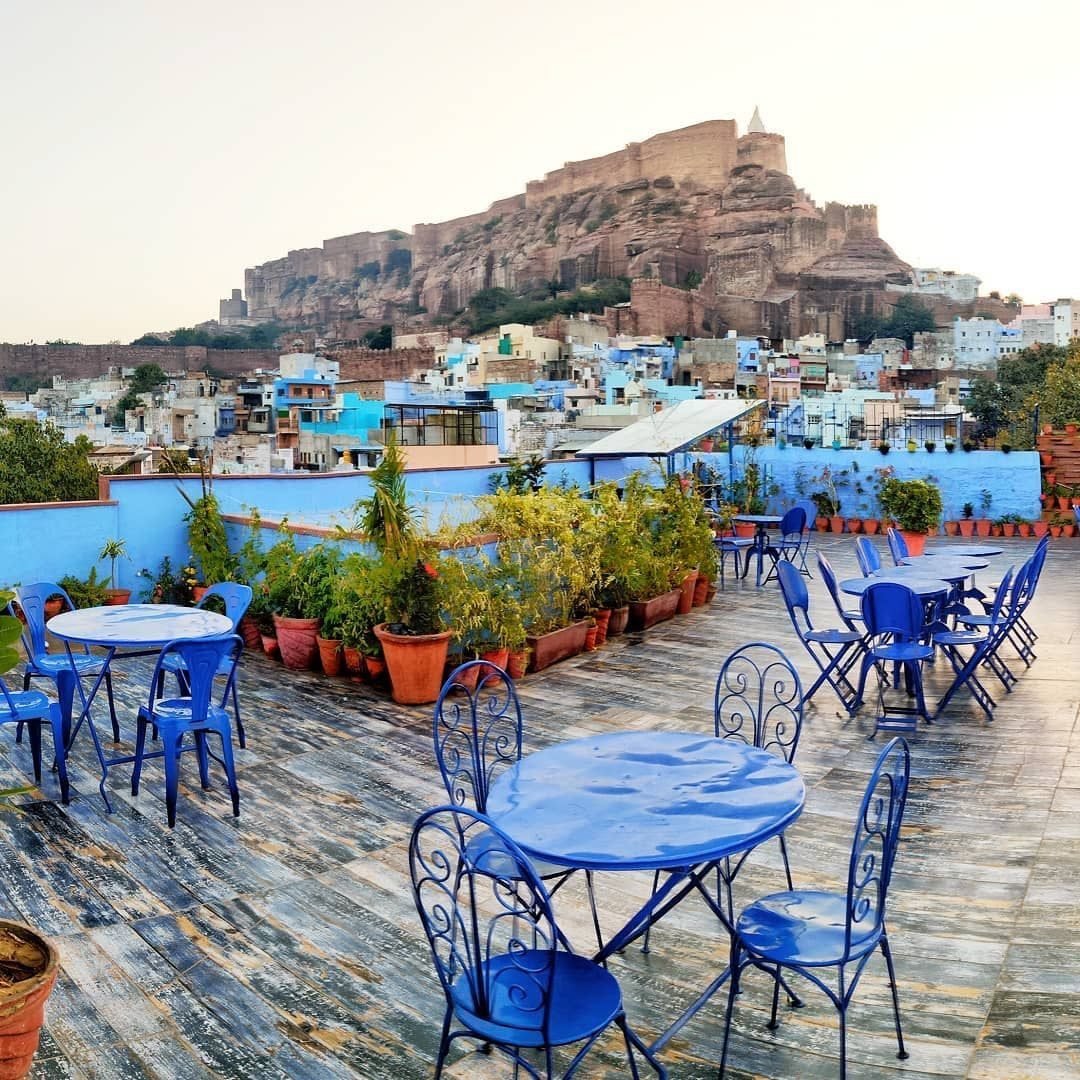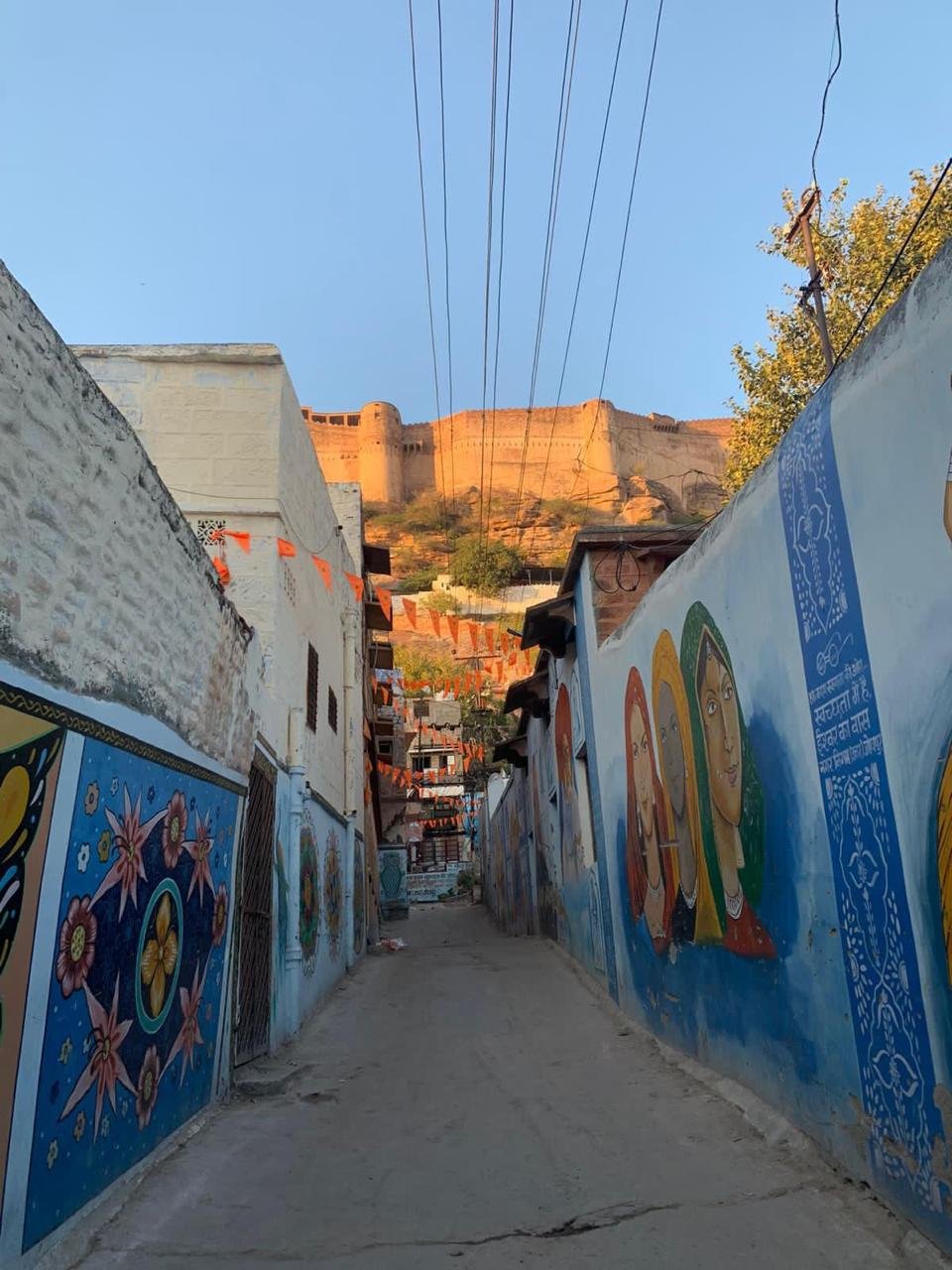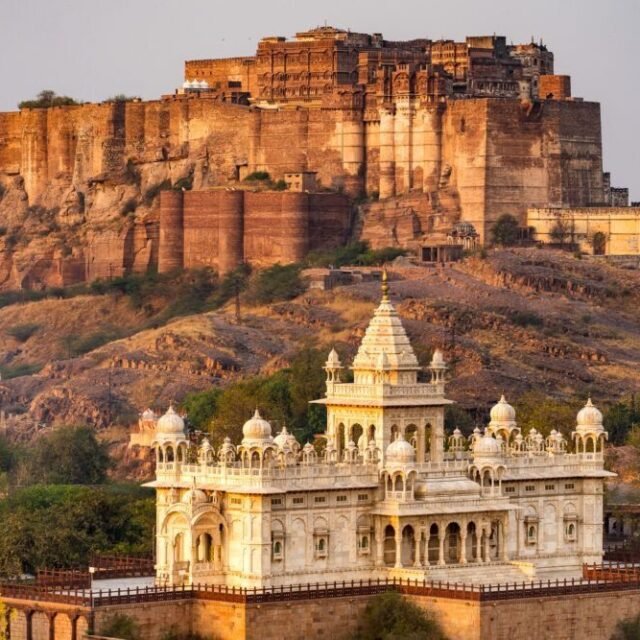

Mehrangarh Fort crowns a sandstone hill about 125 metres above Jodhpur, its walls rising up to 36 metres straight out of the rock. From below, it looks almost impossible to attack, and it never fell to a siege. Rao Jodha, the Rathore ruler who founded Jodhpur, began it in 1459, and his descendants added palaces and gates over the next five centuries. Today it’s run by the royal family’s trust as one of the best-kept and best-presented forts in India.
The gates
The climb up to the palace passes through seven gates. Jai Pol was built by Maharaja Man Singh in the early 19th century to celebrate a victory; the walls near Fateh Pol still show the marks of cannonballs. Beside Loha Pol, small handprints on the wall are a sombre memorial to royal widows who committed sati on their husbands’ funeral pyres. A lift can take you up part of the way.
The palaces and museum
Inside, the fort opens into courtyards surrounded by palaces with intricately carved sandstone screens. The museum is one of the finest in Rajasthan:
- Moti Mahal (Pearl Palace): the hall of private audience, with a ceiling of mirrors and gold.
- Phool Mahal (Flower Palace): a dazzling room of gold leaf and paintings, used for celebrations.
- Sheesh Mahal: a mirrored hall.
- Takhat Vilas: the bedroom of Maharaja Takhat Singh, painted from floor to ceiling.
- Galleries of royal palanquins, elephant howdahs, weapons, textiles and miniature paintings.
Allow 2–3 hours. The audio guide is excellent.
The ramparts
From the walls, lined with old cannons, the view is unforgettable: the blue-painted houses of the old city tumble down the hill below, with the Umaid Bhawan Palace and the desert stretching beyond. At the southern end, the Chamunda Mata temple honours the fort’s protective goddess. For a thrill, a zip-line operator runs flights over the walls and lakes nearby.
Plan your visit
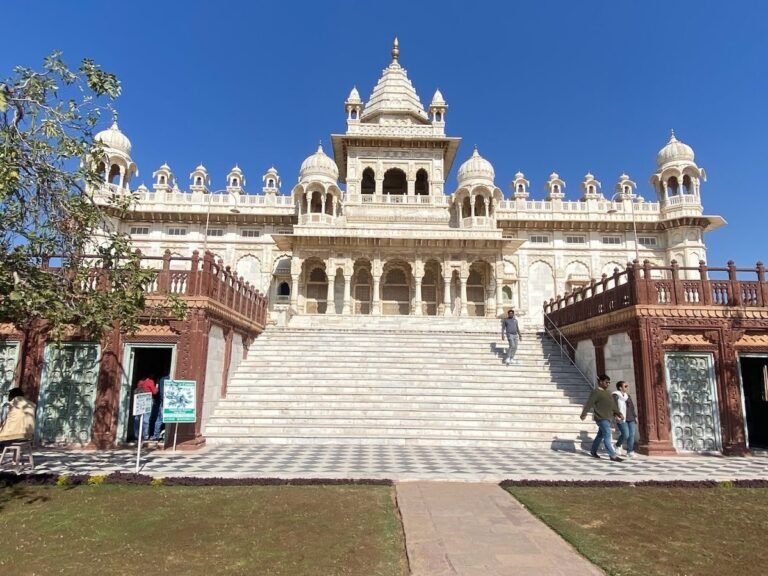
Combine the fort with Jaswant Thada next door, the old city’s Clock Tower market and the Umaid Bhawan Palace. Read our Rajasthan travel guide for more.