The tomb that led to the Taj
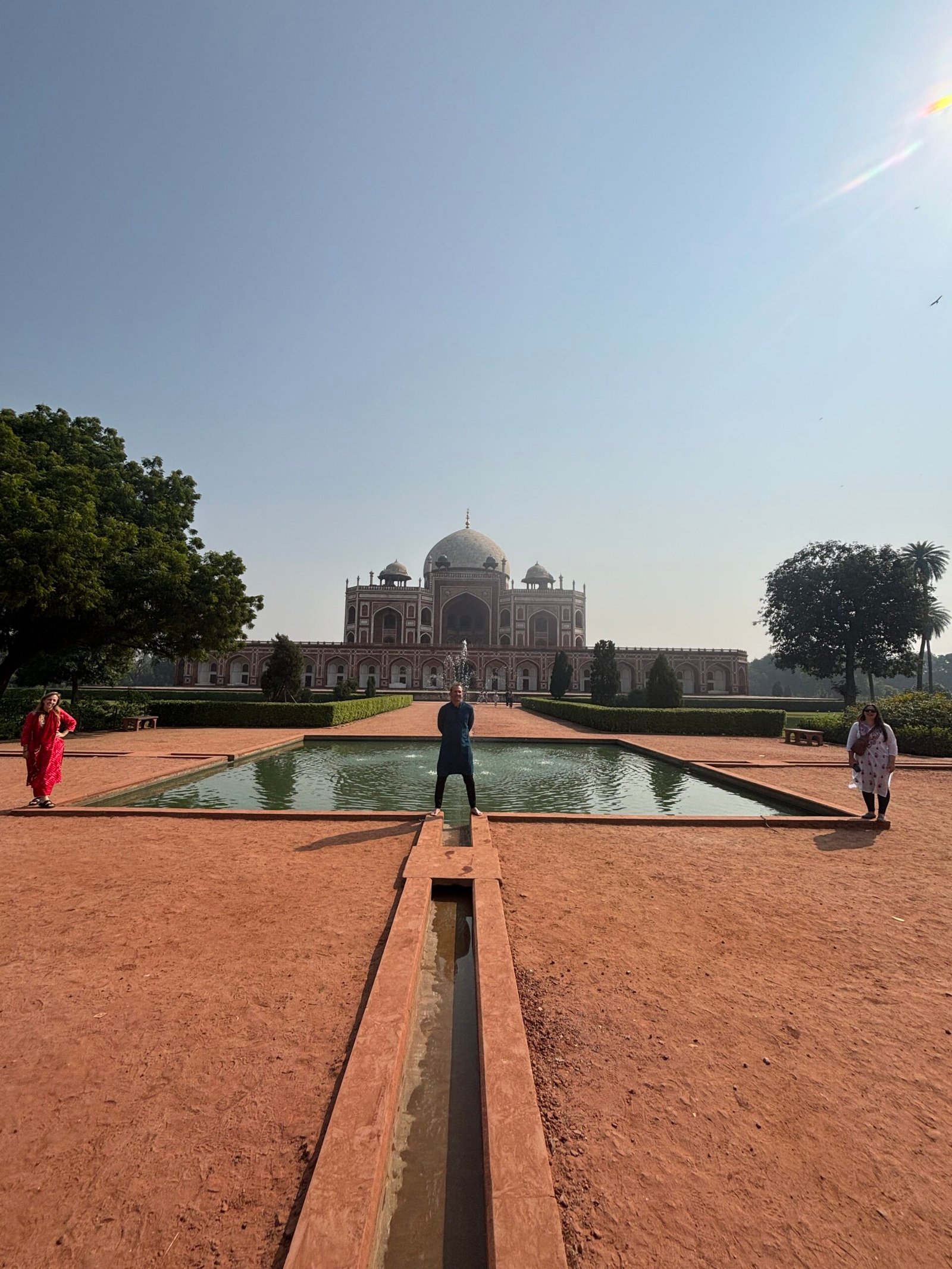
Humayun’s Tomb stands in a vast walled garden in Nizamuddin, south-east Delhi. It holds the grave of Humayun, the second Mughal emperor, and was the first garden tomb on the Indian subcontinent: a grand mausoleum set in the middle of a charbagh, a Persian-style garden divided into four by water channels. Its red sandstone walls, white marble trim, raised platform and double dome set the pattern that Shah Jahan’s architects would perfect at the Taj Mahal about seventy years later. It became a UNESCO World Heritage Site in 1993.
History
Humayun died in 1556 after a fall down the steps of his library in Delhi’s Purana Qila. Work on his tomb began around 1565, led by his widow Bega Begum during the reign of their son Akbar, and was finished in about 1572. The architects, Mirak Mirza Ghiyas and later his son, came from Persia and blended Persian design with Indian craftsmanship.
Over the following centuries, more than a hundred members of the Mughal family were buried in its chambers and on its terrace, which is why it’s sometimes called the “dormitory of the Mughals”. In 1857 the last emperor, Bahadur Shah Zafar, took refuge here before he was captured by the British. Between 2009 and 2013, a major restoration by the Aga Khan Trust for Culture and the Archaeological Survey of India brought back the water channels, the gardens and the original lime plaster.
What it’s like to visit
Inside the complex, you first pass the octagonal tomb of Isa Khan, an Afghan noble, built in 1547, before the Mughal tomb itself, with its own sunken garden. Beyond the Bu Halima garden and the west gate, a long walkway leads into the main charbagh, and the tomb appears ahead on its broad arcaded platform.
Climb the steep steps to the platform and walk inside. Humayun’s white marble cenotaph lies in the high octagonal central chamber, lit through carved stone screens; the real grave is in a crypt below. Smaller rooms around it hold the cenotaphs of other family members. Walk around the terrace for views over the gardens, then explore the corners of the complex: the Barber’s Tomb, the Nila Gumbad with its blue-tiled dome, and the Arab Serai gateway.
The gardens are shaded and quiet, especially early in the morning, and the whole site is far less crowded than the Taj Mahal. Allow 1.5–2 hours. Near the entrance, the new underground site museum tells the story of the Mughals and the restoration.
Nearby
Next to the tomb, Sunder Nursery is a restored 16th-century garden and park, and across the road is the Nizamuddin Dargah, the shrine of a Sufi saint, where qawwali music is sung on Thursday evenings. Lodi Gardens is 10 minutes away.
Plan your visit
Humayun’s Tomb is open every day, so it’s our Monday choice when the Red Fort is closed. It pairs well with India Gate and Qutub Minar on a New Delhi day. If you’re going on to Agra, see it first: it makes the Taj even more meaningful.