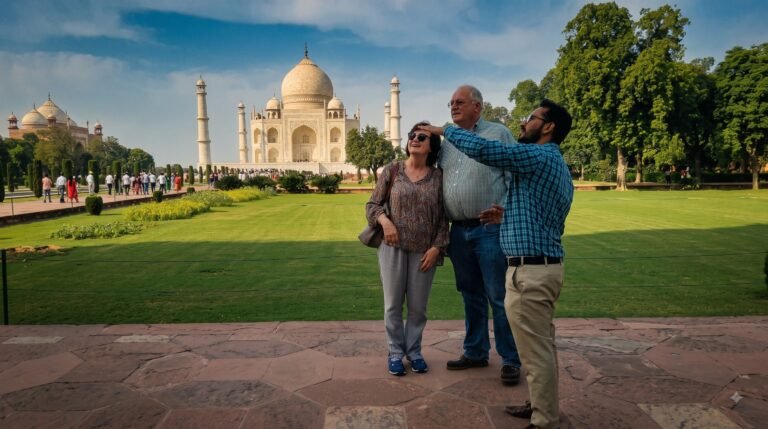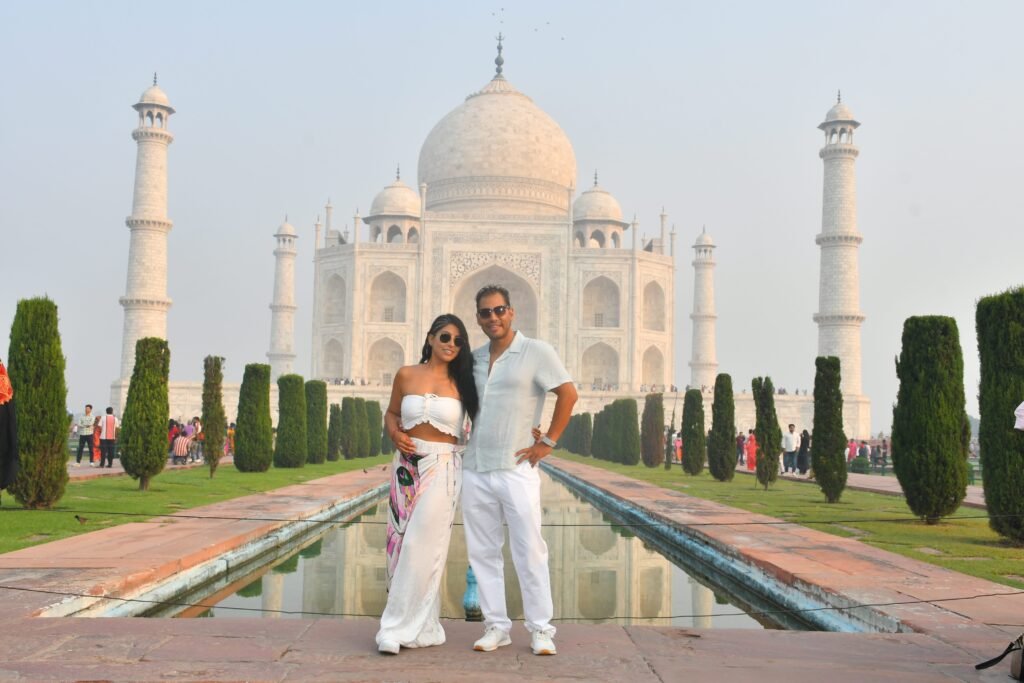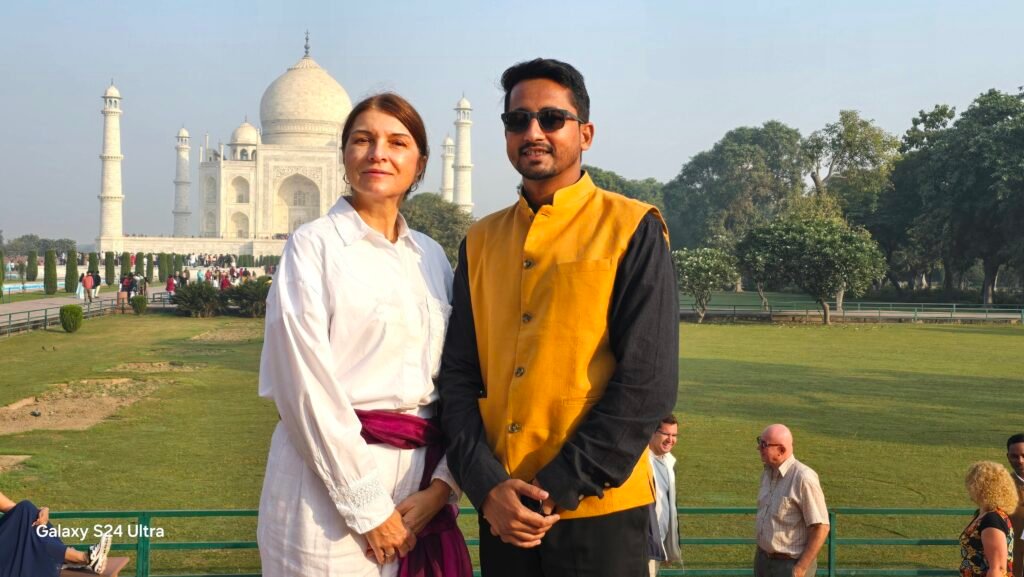
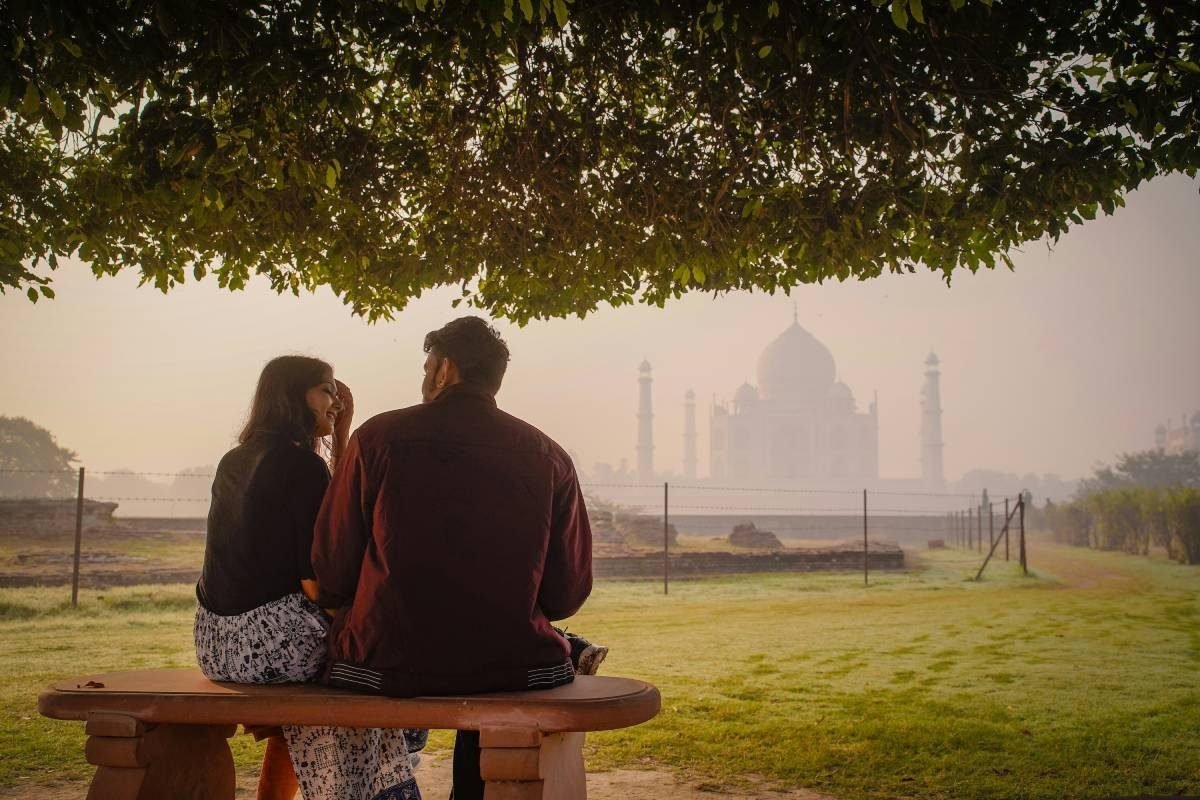
Mehtab Bagh (“Moonlight Garden”) is a square Mughal garden on the north bank of the Yamuna, exactly opposite the Taj Mahal. Its central axis lines up with the Taj, so from the riverside terrace the tomb sits perfectly framed across the water, with no wall, crowd or ticket queue in between. It’s the place to see the Taj as a whole, at sunset, in peace.
History
The garden is the last of a chain of eleven gardens built along the east bank of the Yamuna, a riverside landscape first laid out by the Mughals from the time of Babur. Shah Jahan rebuilt Mehtab Bagh as part of the Taj Mahal plan: a garden for viewing the tomb by moonlight, with an octagonal pool that once mirrored the white dome.
Floods later buried the garden under silt, and by the 20th century it was a sandbank. Excavations by the Archaeological Survey of India in the 1990s uncovered the pool, walkways, a pavilion and traces of the original planting, and the garden was replanted with the fruit trees and flowering plants described in Mughal texts. A popular legend says Shah Jahan planned a “Black Taj” here for himself; the excavations found no trace of it, only the garden.
What it’s like to visit
From the gate, a straight path leads through lawns, young trees and flowering shrubs to the riverside terrace. The ruins of the octagonal pool and the remains of a sandstone tower are near the river. Beyond the low wall, the Yamuna flows slowly, buffaloes graze on the sandbanks, and the Taj rises on the far bank. Most visitors simply sit and watch the light change. An hour is enough, but many stay longer.
It’s a garden and a viewpoint rather than a monument, so there’s little shade or seating at midday. Late afternoon is best: the sun sets behind you, lighting the marble gold and then pink. In winter, haze can soften the view; after the monsoon, the air is often crystal clear.
The Friday plan
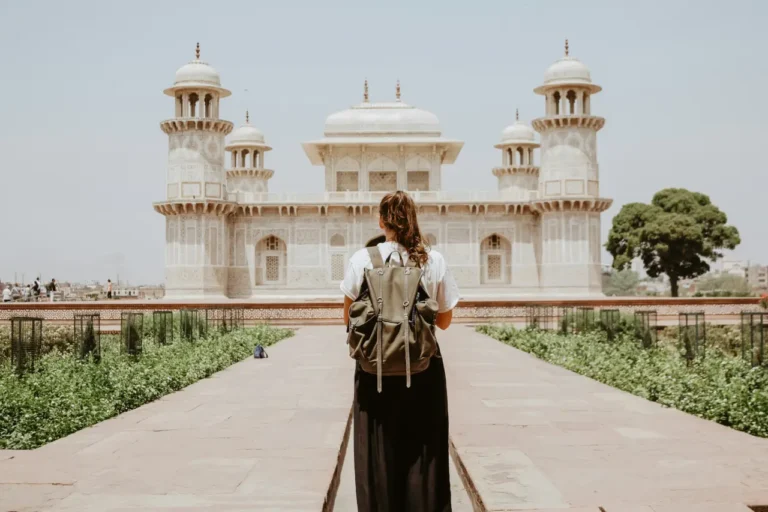
The Taj Mahal is closed on Fridays, but Mehtab Bagh is open, so you can still see the Taj that day. It pairs well with Itimad-ud-Daulah, the “Baby Taj”, about 10 minutes away on the same bank, and with Agra Fort across the river.
Photography
- The classic shot is from the riverside terrace, with the Taj centred over the water.
- A zoom lens brings the dome and minarets closer; a wide lens shows the river and sandbanks.
- Stay until the sun has set: the sky behind the Taj often turns pink 10–15 minutes later.
- Drones are not allowed.
Plan your visit
Most of our Agra tours finish the first day here at sunset and visit the Taj Mahal at sunrise the next morning, so you see it in both lights. Read our Taj Mahal tour guide for more ideas.