The fort
The Red Fort, or Lal Qila, rises over the eastern edge of Old Delhi, its red sandstone walls running for more than 2 km. Emperor Shah Jahan built it between 1639 and 1648 as the palace of his new capital, Shahjahanabad, when he moved the Mughal court from Agra to Delhi. It’s the same emperor and, as is often said, the same architect, Ustad Ahmad Lahauri, as the Taj Mahal. The Red Fort Complex became a UNESCO World Heritage Site in 2007.
History
For two centuries this was the seat of the Mughal emperors. Its halls held the legendary Peacock Throne until the Persian ruler Nadir Shah carried it off in 1739. In 1857, during the uprising against British rule, the last emperor, Bahadur Shah Zafar, was proclaimed leader here; after the revolt was crushed, the British exiled him, pulled down many of the palace buildings and built barracks inside the walls.
On 15 August 1947, Prime Minister Jawaharlal Nehru raised the flag of independent India above the Lahori Gate. Every Independence Day since, the Prime Minister has hoisted the flag and addressed the nation from the same ramparts, making the fort a symbol of the nation as well as of the Mughals.
What it’s like to visit
You enter through the Lahori Gate and walk straight into the Chhatta Chowk, a covered arcade of shops that once sold silks and jewels to the court and now sells souvenirs. Beyond the Naubat Khana, the drum house where musicians announced the emperor, a lawn opens up in front of the Diwan-i-Am, the hall of public audience, with its marble canopy where the emperor sat to hear petitions.
Further east, along the old riverfront (the Yamuna has since moved away), are the private palaces: the Rang Mahal, the Khas Mahal and the Diwan-i-Khas, the hall of private audience, where a Persian couplet on the wall reads “If there is paradise on earth, it is this, it is this, it is this.” A channel called the Nahr-i-Bihisht, the “Stream of Paradise”, once ran through them all. Nearby are the royal baths, Aurangzeb’s small white Moti Masjid and the Hayat Bakhsh garden.
The British-era barracks now hold museums on India’s freedom struggle, Subhas Chandra Bose, the Jallianwala Bagh massacre and Indian art. Allow 1.5–2 hours for the main buildings, longer if you visit the museums.
Monday and other closures
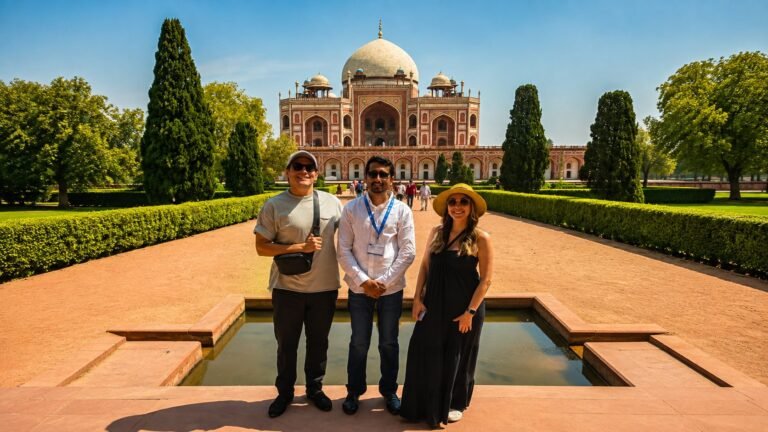
The fort is closed on Mondays, and it also closes to visitors for some days around Independence Day (15 August) and for security events. On a Monday, see Raj Ghat or Humayun’s Tomb instead.
Plan your visit
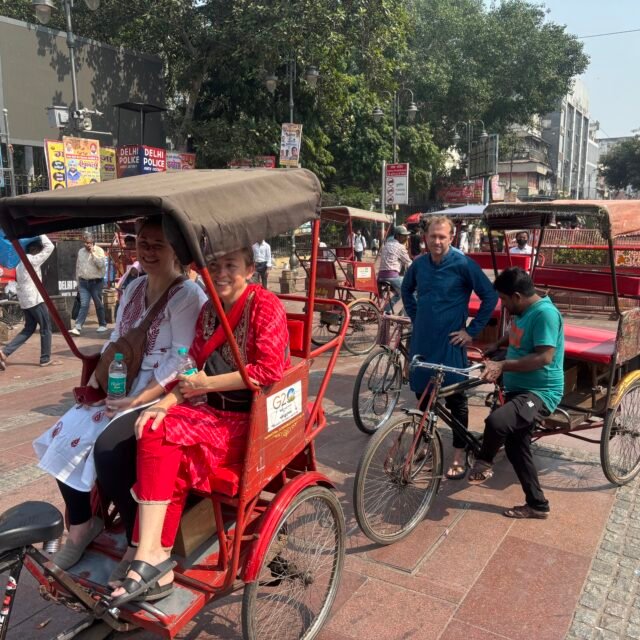
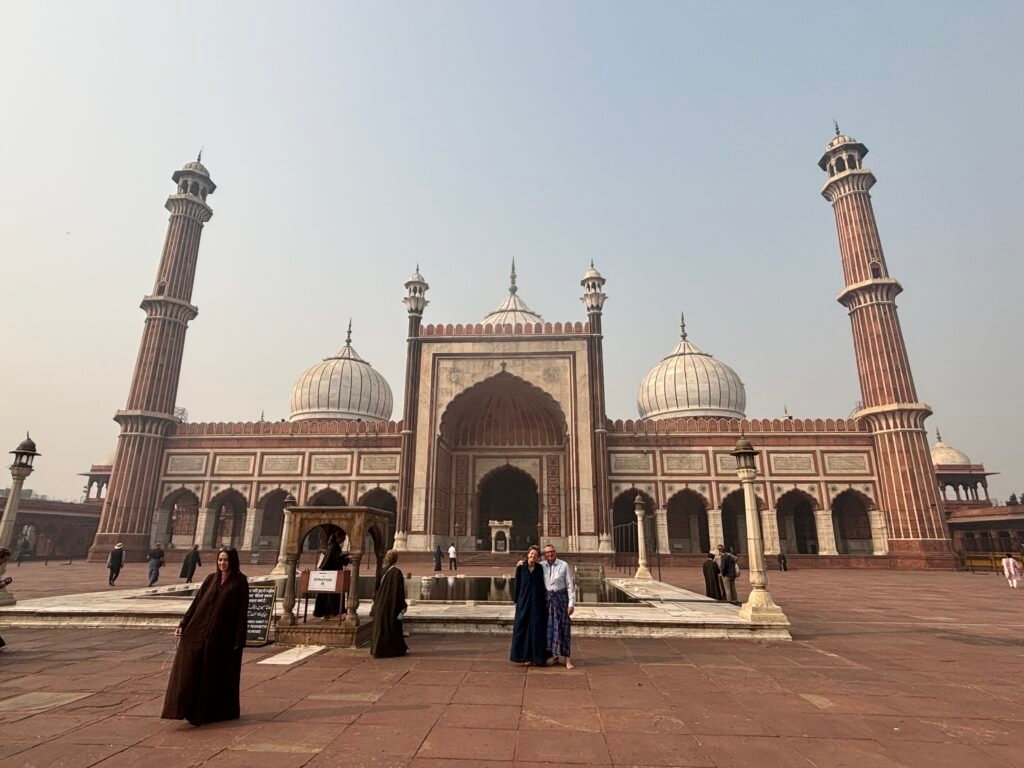
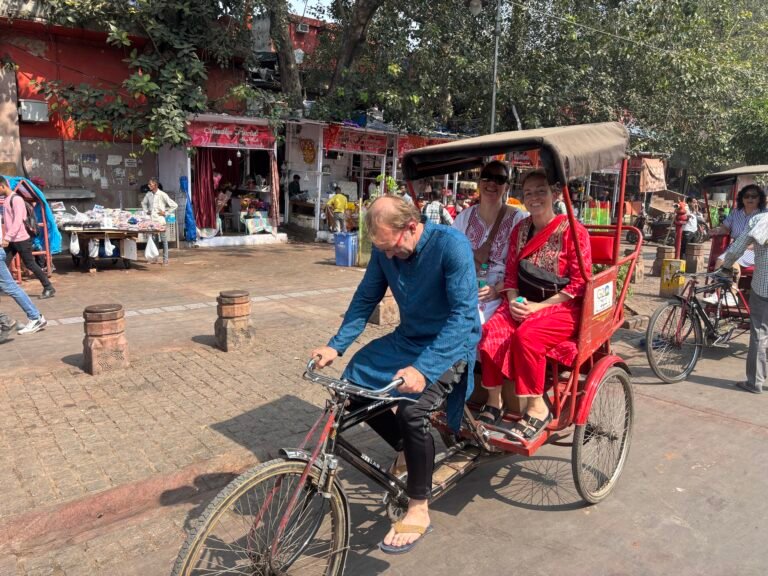
The Red Fort sits at the end of Chandni Chowk, Shah Jahan’s grand avenue, and a short walk from the Jama Masjid, so the three make a perfect Old Delhi morning, ideally with a cycle-rickshaw ride. Read our Golden Triangle tour guide for how Delhi fits with Agra and Jaipur.