Welcome back, ! Continue planning: Not you?
New Book Your Taj Mahal Tickets
Taj Mahal
Monument · Agra

Taj Mahal

The world's most famous monument to love: a white-marble mausoleum on the Yamuna in Agra. Timings, tickets, rules, the best time to visit and what to see inside.

  • 06:09 – 16:56
  • Closed Friday
  • Tickets from ₹50
  • 2–3 hours
Plan your visit

Visiting Taj Mahal

Opening hours

Opens6:09 amOpens 30 min before sunriseCloses4:56 pmCloses 30 min before sunset

Today: sunrise 6:39 am · sunset 5:26 pm

06:09 – 16:56

30 min before sunrise to 30 min before sunset; closed Fridays; night viewing on 5 nights around the full moon

  • All year now1 Jan – 31 DecOpens 30 min before sunriseCloses 30 min before sunset
  • Time needed2–3 hours
  • Closed onFriday
  • Best seasonNov – Feb

Best time to visit

  1. January: Best time
  2. February: Best time
  3. March: Good
  4. April: Avoid if you can
  5. May: Avoid if you can
  6. June: Avoid if you can
  7. July: Possible
  8. August: Possible
  9. September: Possible
  10. October: Best time
  11. November: Best time
  12. December: Best time
  • Best timeWinterNov – Feb

    6–24°C, cool and mostly dry

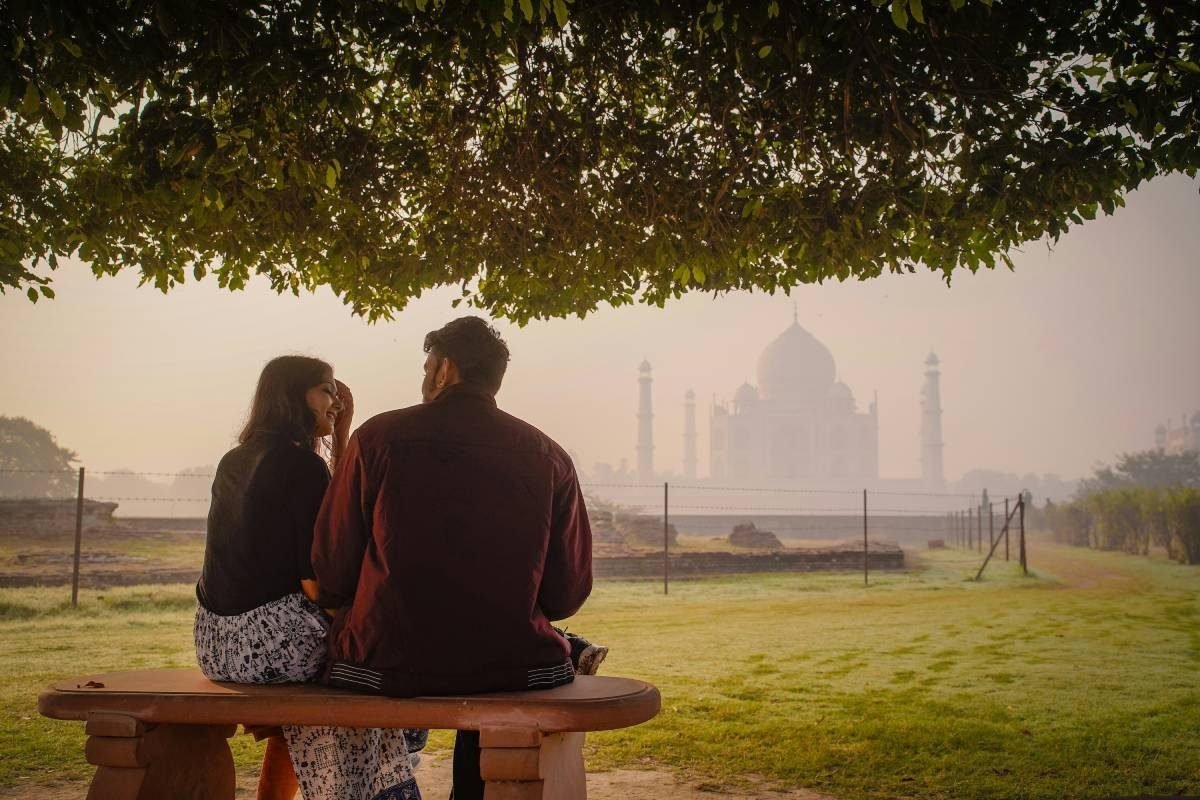
    Fog can hide the Taj at dawn in late December and January

  • GoodSpringMar

    15–33°C

    Clear mornings; Holi week is busy

  • Avoid if you canSummerApr – Jun

    Up to 45°C

    Go only at sunrise and carry water

  • PossibleMonsoonJul – Sep

    27–35°C, humid, showers

    Green gardens and dramatic skies; rain between showers

  • Best timeAutumnOct

    18–33°C, clear

    Clear air after the rains

Good to know

Best seasonOctober to March
Best monthsNovember, February and March
Best timesunrise (gates open 30 min before)
Alternative time8:00–10:00 am on a weekday
Best photographysunrise, from the central platform
Recommended visit duration2–3 hours
AvoidFridays (closed), April–June midday heat, foggy dawns in late Dec–Jan

Address

Dharmapuri, Forest Colony, Tajganj, Agra, Uttar Pradesh 282001 Directions

Entry tickets

Entry ticket prices
Foreign tourists – adults+ ₹200 for the main mausoleum (optional, recommended by ATP guides); includes shoe covers and water₹1,100
SAARC & BIMSTEC citizens – adultsSAARC and BIMSTEC citizens; + ₹200 for the main mausoleum (optional, recommended)₹540
Indian citizens – adults+ ₹200 for the main mausoleum (optional, recommended)₹50
Children (up to 15 yrs)Children under 15 enter freeFree
Book Taj Mahal tickets

Prices are set by the authorities and can change.

The story

About Taj Mahal

The Taj Mahal is a white-marble mausoleum on the south bank of the Yamuna in Agra. The Mughal emperor Shah Jahan built it for his wife Mumtaz Mahal, who died in 1631 giving birth to their fourteenth child. Work began in 1632; the tomb was finished around 1643 and the whole complex, with its mosque, guest house, gardens and gates, by about 1653. Some 20,000 craftsmen worked on it, from masons and calligraphers to inlay artists. It became a UNESCO World Heritage Site in 1983.

Shah Jahan himself was later buried beside his wife. His cenotaph is the only thing in the building that breaks its perfect symmetry.

What makes it special

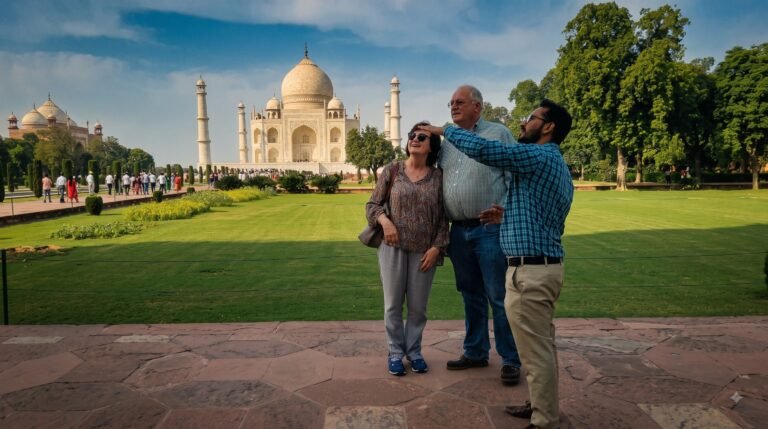
The design is a carefully balanced plan. The tomb stands on a raised marble platform at the far end of a charbagh, a Persian-style garden divided into four by water channels, so that it rises against open sky rather than behind trees. Four minarets frame it and lean very slightly outward. The red sandstone mosque on the west side has a matching building on the east, the jawab, built purely for balance.

Up close, the white Makrana marble is covered in detail: verses from the Quran in black marble calligraphy that grows larger as it rises, so it looks the same size from the ground, carved flowering plants, and pietra dura inlay of semi-precious stones set into the marble. The colour of the stone changes through the day: soft pink at dawn, bright white at noon and gold in the late afternoon.

What it’s like to visit

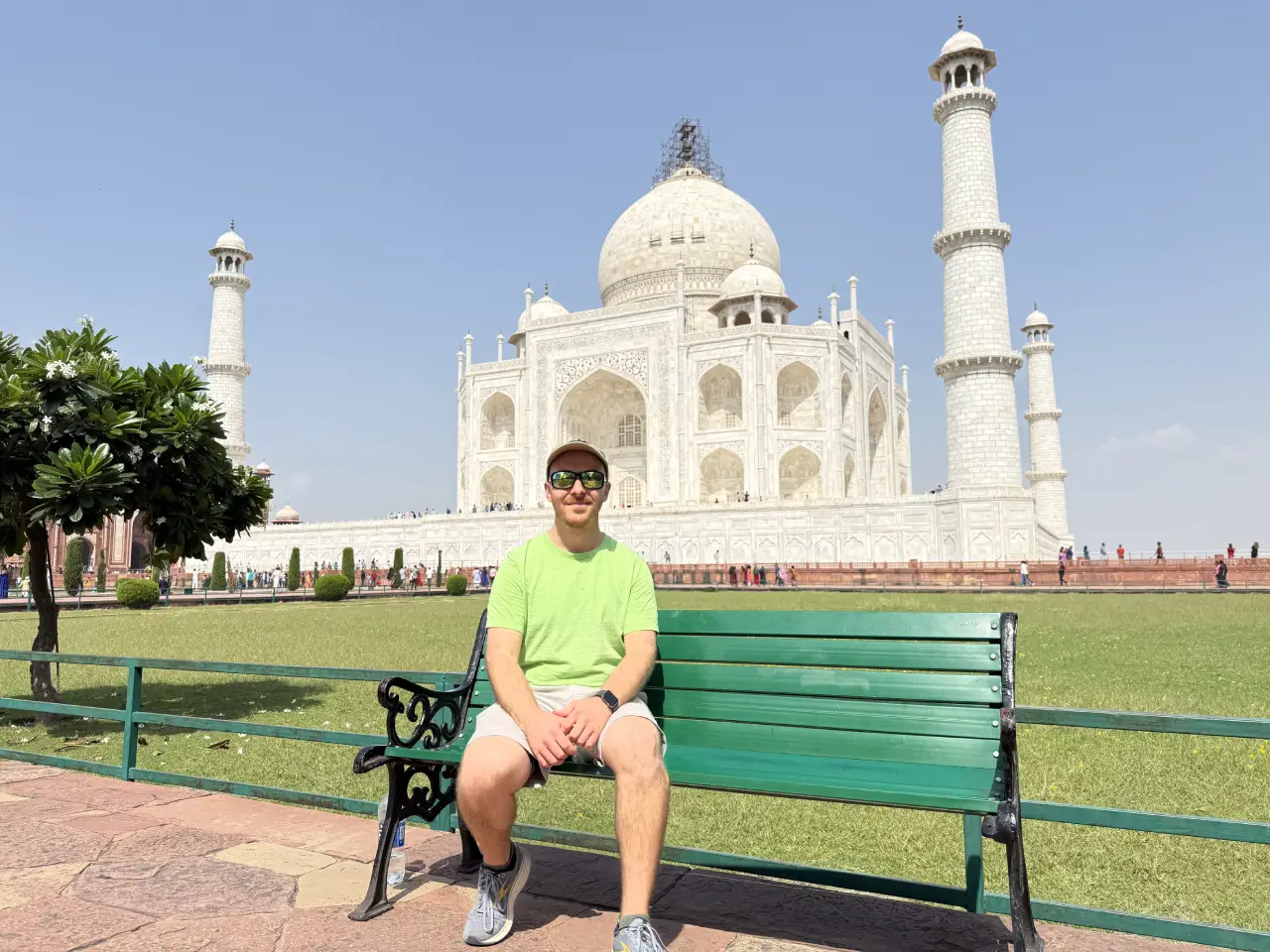
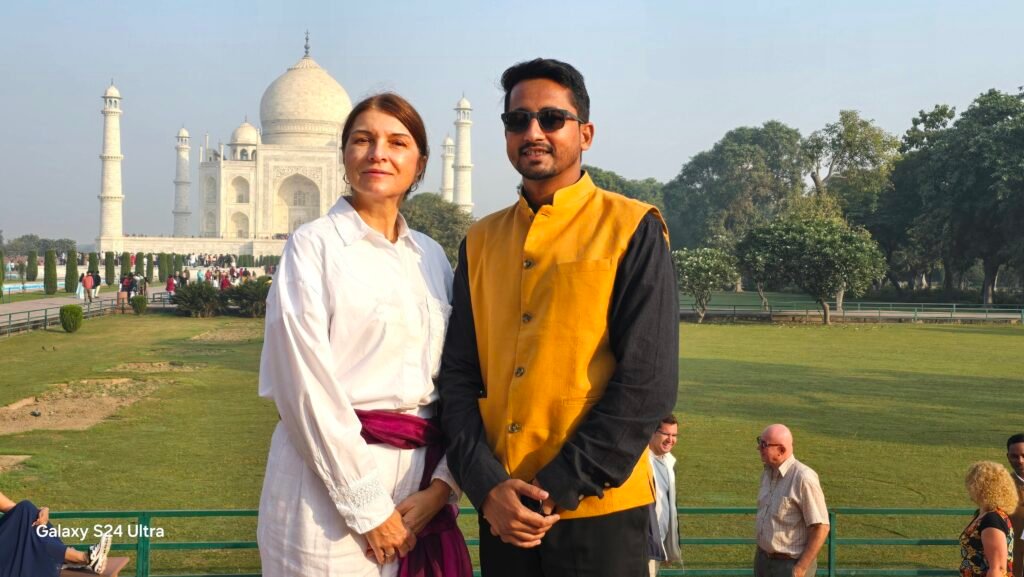
You enter through the East or West Gate, where security is strict and the queue moves quickly in the first hour. A short walk through the forecourt brings you to the Great Gate (Darwaza-i-Rauza), a red sandstone gateway inscribed with Quranic verses. Step through its arch and the Taj appears in full, reflected in the long central water channel. This is the view everyone remembers.

Walk the length of the garden to the platform, cover your shoes (covers are handed out with foreign tickets) and climb up to the tomb. Inside the octagonal main hall, the cenotaphs of Mumtaz Mahal and Shah Jahan sit behind a carved marble screen; the real graves lie in a crypt below. The main mausoleum needs a separate ₹200 ticket, and photography is not allowed inside. Afterwards, walk round the platform to the riverside terrace for views across the Yamuna to Mehtab Bagh and Agra Fort, then visit the mosque and the jawab.

Sunrise, sunset or moonlight?

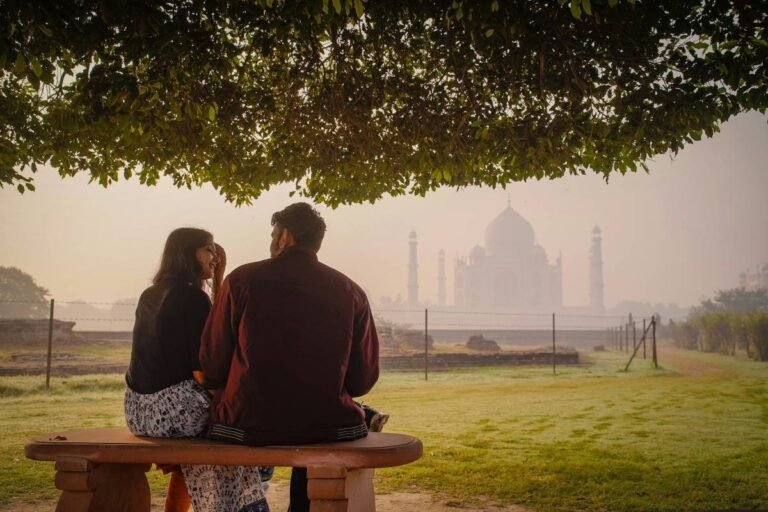
Sunrise is the best time: the gates open 30 minutes before sunrise, the light is soft, the marble turns pink and crowds are at their lowest. Late afternoon brings warm light but bigger crowds. On five nights around each full moon (not Fridays or during Ramadan), a small number of night tickets let you see the Taj from the Red Sandstone Platform near the gate, in 30-minute slots. For a sunset view without the crowds, cross the river to Mehtab Bagh, the moonlight garden directly opposite.

Photography tips

  • Take the classic reflection shot from the central platform in the garden; arrive at opening time to have it nearly to yourself.
  • The Great Gate frames the Taj perfectly from inside its archway.
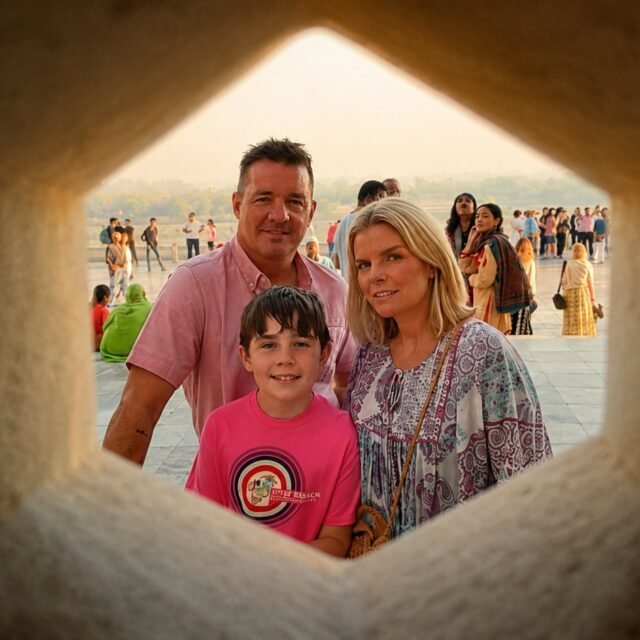
  • The mosque’s arches on the west side make natural frames with far fewer people.
  • Tripods and drones are not allowed; phones and cameras are fine outside the main hall.

Plan your visit

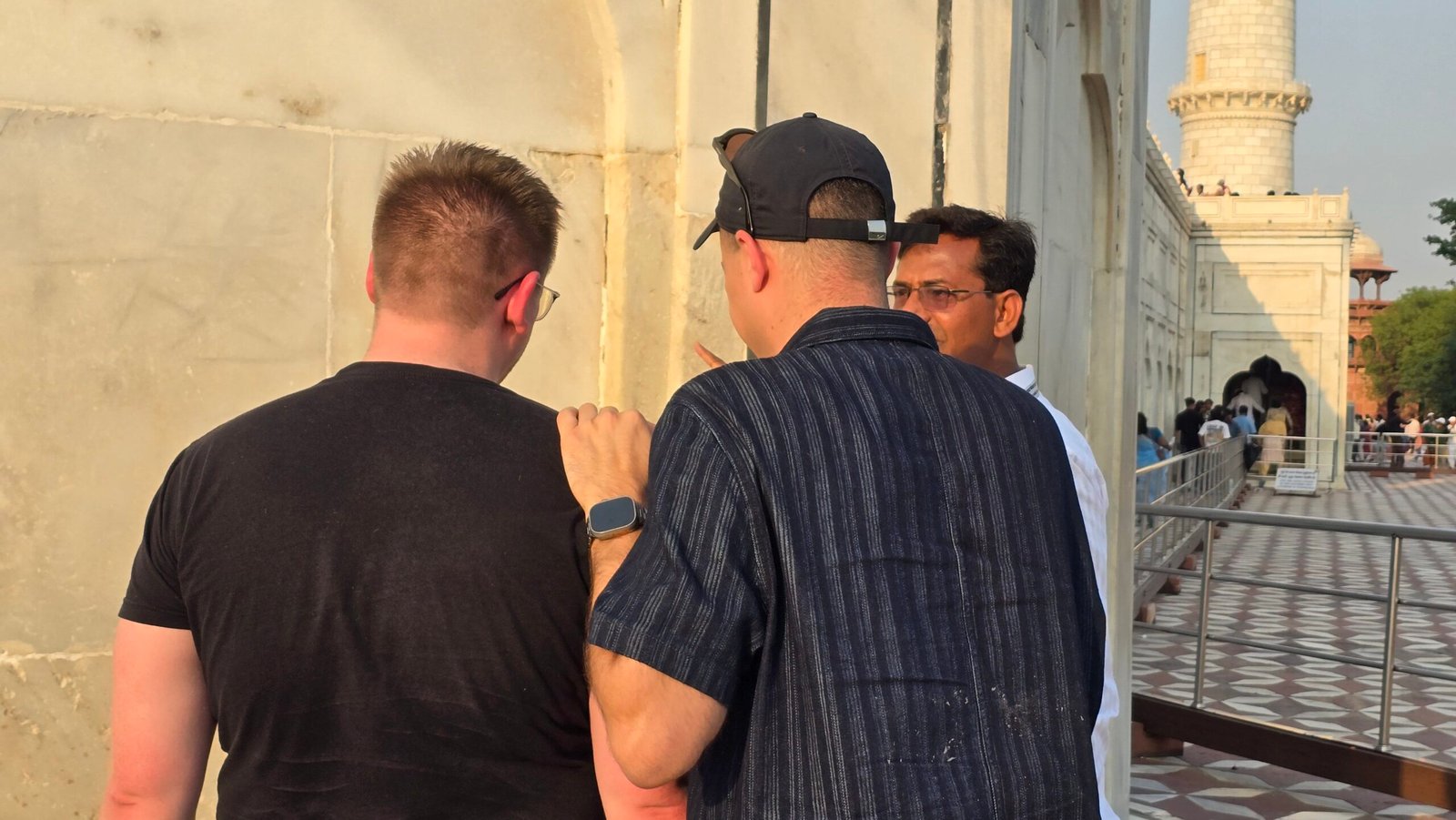
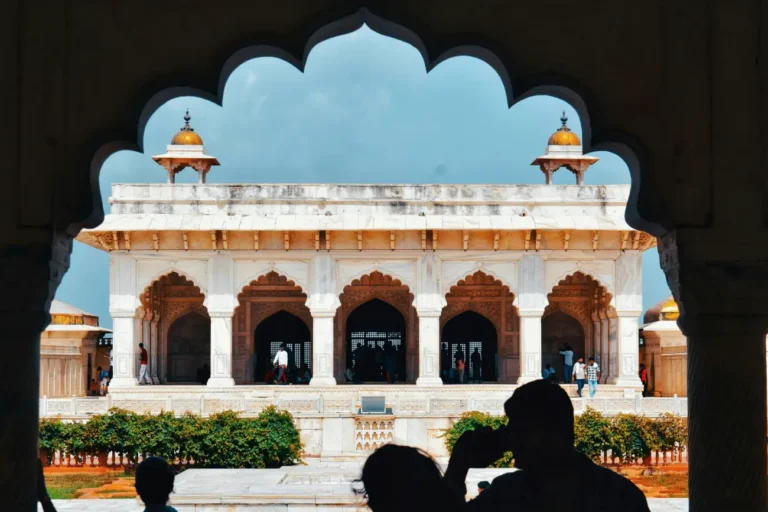
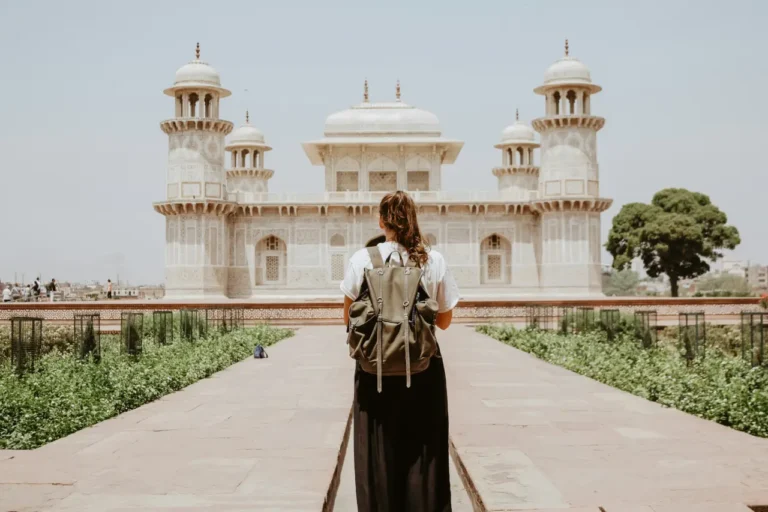
Allow 2–3 hours. Combine the Taj at sunrise with Agra Fort, where Shah Jahan spent his last years looking at the tomb across the river, and the delicate Itimad-ud-Daulah (the “Baby Taj”). The Taj Mahal is closed on Fridays, so plan Agra Fort, Mehtab Bagh or Fatehpur Sikri for that day. For the full story of planning a trip, read our Taj Mahal tour guide.

Highlights

Don’t miss

  1. 01

    The first view through the Great Gate

    The Taj appears in full, framed by the arch

  2. 02

    The reflection in the central channel

    The classic photo, best at opening time

  3. 03

    The main mausoleum

    The cenotaphs behind a carved marble screen (₹200 ticket)

  4. 04

    Pietra dura inlay

    Semi-precious stones set into marble flowers

  5. 05

    The riverside terrace

    Views over the Yamuna to Agra Fort and Mehtab Bagh

  6. 06

    The mosque and the jawab

    Twin red sandstone buildings, quiet even at busy times

Good to know

Know before you go

  • Closed every Friday
  • No food, tobacco, lighters, large bags, tripods or drones; lockers at the gates
  • Small water bottles and phones are allowed
  • Photography is not allowed inside the main mausoleum
  • Entry is through the East or West Gate; petrol vehicles stop about 500 m away and electric carts run to the gates
  • Your ticket is valid for about 3 hours inside
  • Dress modestly; shoe covers are needed on the marble platform

Things to do in Taj Mahal

1

Be there at opening time

The gates open 30 minutes before sunrise. The first hour has the softest light and the fewest people.

2

See the cenotaphs inside

Buy the ₹200 mausoleum ticket to enter the main hall and see the carved marble screen and inlaid cenotaphs.

3

Walk the riverside terrace

Go round the back of the tomb for views across the Yamuna to Agra Fort and Mehtab Bagh.

4

Visit the mosque and the jawab

The twin red sandstone buildings frame the white tomb and are far quieter than the main garden.

5

Watch the sunset from Mehtab Bagh

The garden across the river faces the Taj directly and is calm at sunset.

6

Book a full-moon night visit

On five nights around the full moon, small groups can see the Taj by moonlight in 30-minute slots.

When to visit

October to March is the best season, with cool, dry days. December and January mornings can be foggy, so the Taj may stay hidden until mid-morning. April to June is very hot (up to 45°C); visit only at sunrise. The monsoon (July to September) brings green gardens and short showers.

Go at sunrise on a weekday. The Taj is closed every Friday.

Getting there & around

Agra is about 230 km from Delhi: around 3–3.5 hours on the Yamuna Expressway, or 1 hr 40 min on the Gatimaan Express (not on Fridays) to Agra Cantt station, 6 km from the Taj. Petrol and diesel vehicles must stop about 500 m from the gates; battery buses and golf carts run from the Shilpgram parking (East Gate) and the West Gate parking. Agra Airport has a few domestic flights.

Where to stay

Stay in Tajganj or along Fatehabad Road to walk or take a short ride to the East Gate at dawn. Fatehabad Road has most 4- and 5-star hotels; a few luxury hotels have rooms that face the Taj. Budget guesthouses with rooftop views cluster in the lanes south of the South Gate.

Food & where to eat

No food is allowed inside. Have breakfast after a sunrise visit: many hotels serve it until 10:30. Agra is known for petha (a translucent sweet made from ash gourd), Mughlai curries and kebabs, and bedai with jalebi for breakfast in the old city.
Taj Mahal travel tips

Buy tickets online

Online tickets save time at the counter. Carry your passport; foreign visitors may be asked for it.

Plan around Friday

The Taj is closed on Fridays. Spend Friday at Agra Fort, Fatehpur Sikri or Mehtab Bagh instead.

Travel light

Leave big bags, food and tripods at the hotel. Lockers at the gates are basic.

Use a licensed guide

Agree on a licensed guide in advance rather than accepting offers at the gate.
Frequently asked questions

What are the Taj Mahal timings?

It opens 30 minutes before sunrise and closes 30 minutes before sunset, every day except Friday.
Is the Taj Mahal open on Fridays?

No. It is closed to visitors every Friday, when the mosque is used for prayers.

How much is the Taj Mahal ticket?

Foreign visitors pay ₹1,100, SAARC and BIMSTEC citizens ₹540 and Indian citizens ₹50, plus ₹200 to enter the main mausoleum. Children under 15 enter free. Check the ASI site for the latest rates.

How long do I need at the Taj Mahal?

Plan 2–3 hours, including security, the garden, the mausoleum, the riverside terrace and the mosque.

When is the best time to visit?

Sunrise between October and March: soft light, cool air and the fewest people.

Can I take photos inside?

Photography is allowed in the gardens and on the platform but not inside the main mausoleum. Tripods and drones are not allowed.

Guides & articles

Read before you visit Taj Mahal

Yoga and Meditation
Rishikesh, Varanasi, Agra 60–90 minutes

Yoga and Meditation

Morning yoga by the Ganges, in a garden near the Taj or on a Varanasi ghat, with a local teacher

Taj Mahal at Sunrise
Agra 2–2.5 hours

Taj Mahal at Sunrise

Be at the gates as they open and watch the white marble turn pink in the first light

Taj Mahal Moonlight Viewing
Agra 30 minutes (one viewing slot), plus about 1 hour for security and transfers

Taj Mahal Moonlight Viewing

See the Taj glow under the full moon on one of only five nights a month

Visit it with us

Tours that include Taj Mahal

Experiences

Experiences at Taj Mahal

Sunrise inside the Taj Mahal About 2.5–3 hours

Taj Mahal at Sunrise

The gates open about 30 minutes before sunrise, and those who enter first see the Taj…

Night viewing at the Taj Mahal 30-minute slot

Taj Mahal Moonlight Viewing

On the night of the full moon and the two nights either side, except Fridays and…

Sunrise yoga with a Taj view About 1 hour

Yoga and Meditation

Yoga is not allowed inside the Taj Mahal complex, but you can practise with the dome…

Nearby

More places in Agra

Monument

Agra Fort

Agra

Akbar's red sandstone fortress and Shah Jahan's marble palaces, 2.5 km from the Taj Mahal. Timings, tickets, history and what…

Monument

Fatehpur Sikri

Agra

Akbar's abandoned red sandstone capital near Agra: palaces, the Buland Darwaza, the Jama Masjid and Salim Chishti's tomb. Timings, tickets,…

Monument

Itimad-ud-Daulah (Baby Taj)

Agra

The "Baby Taj": Nur Jahan's jewel-box marble tomb for her father, the first Mughal building covered in pietra dura inlay.…

Shop & market

Kinari Bazaar

Agra

Agra's oldest market, behind the Jama Masjid near Agra Fort: wedding trims, saris, silver, spices, petha and street food. Timings,…

Viewpoint

Mehtab Bagh

Agra

The Mughal Moonlight Garden on the far bank of the Yamuna, facing the Taj Mahal. The best sunset view of…

Tailor-made India

Plan your visit to Taj Mahal

Private guide, skip-the-line help and hotel pickup – tell us your date and we will plan it.

India Number:- +91 74539 55609

Compare tours

WhatsApp