The riverfront of the holy city
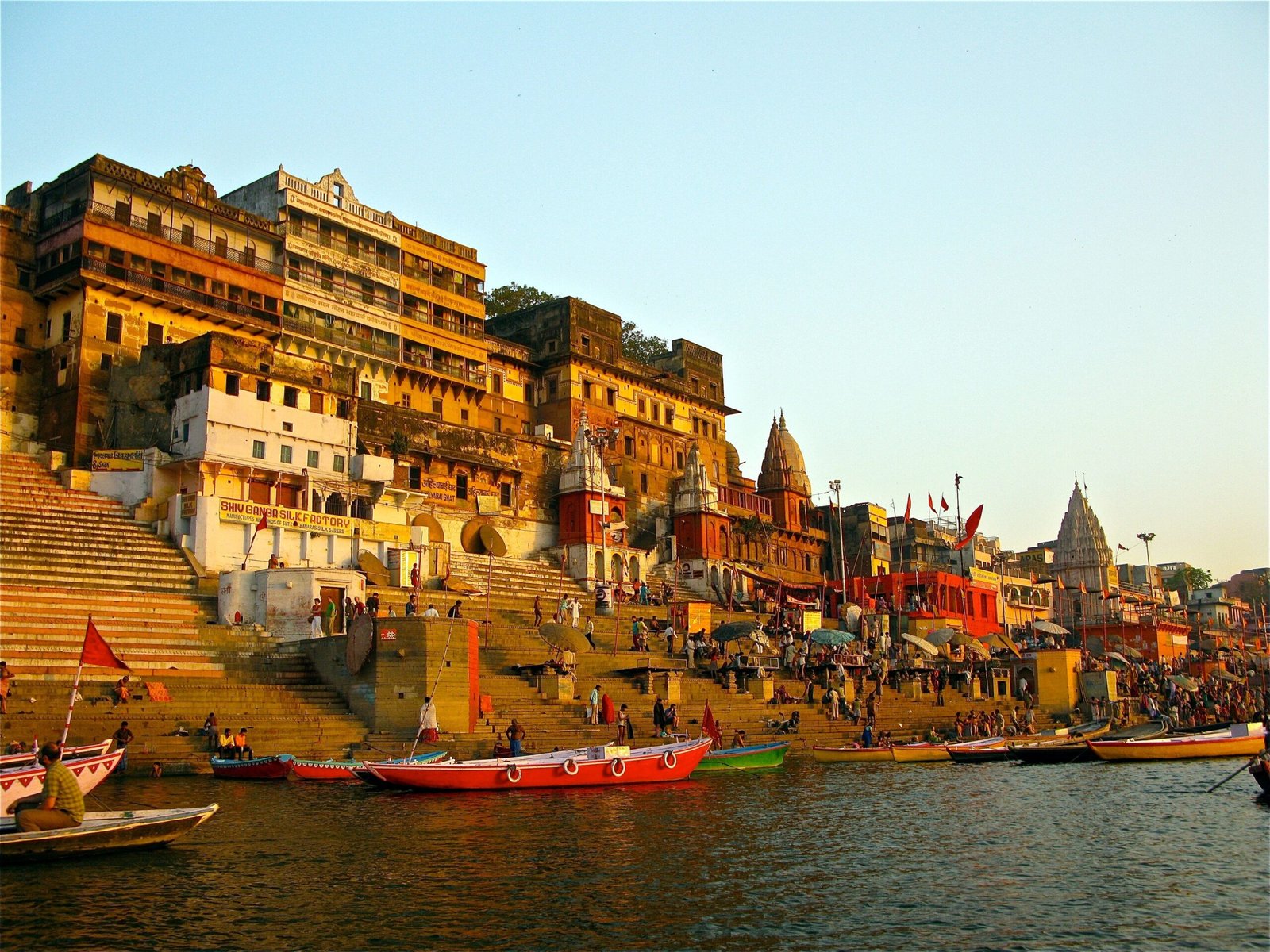
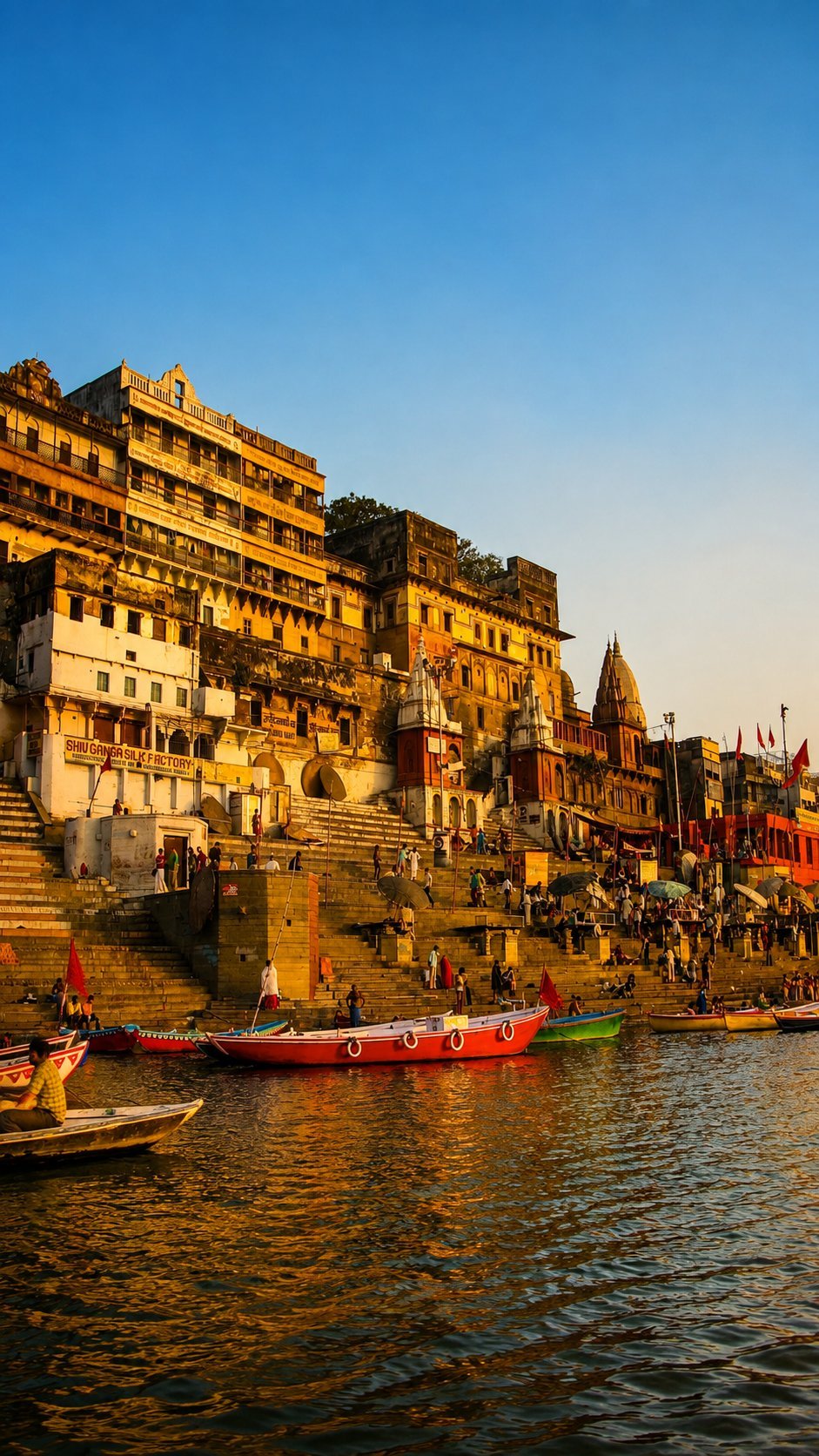
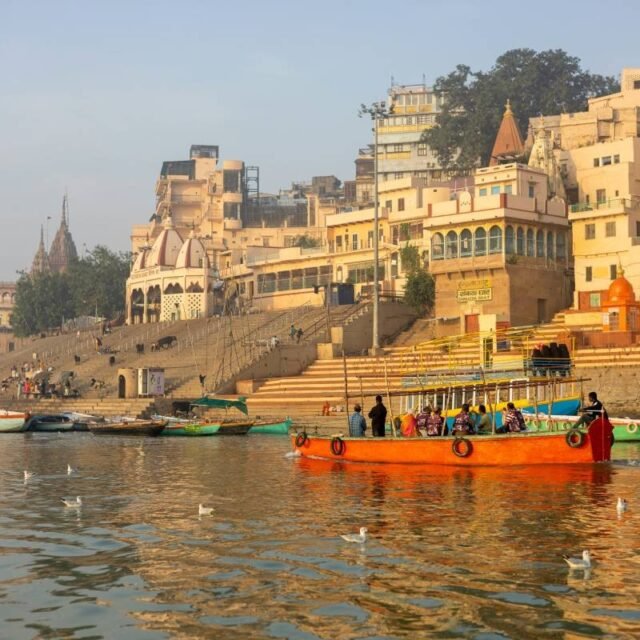
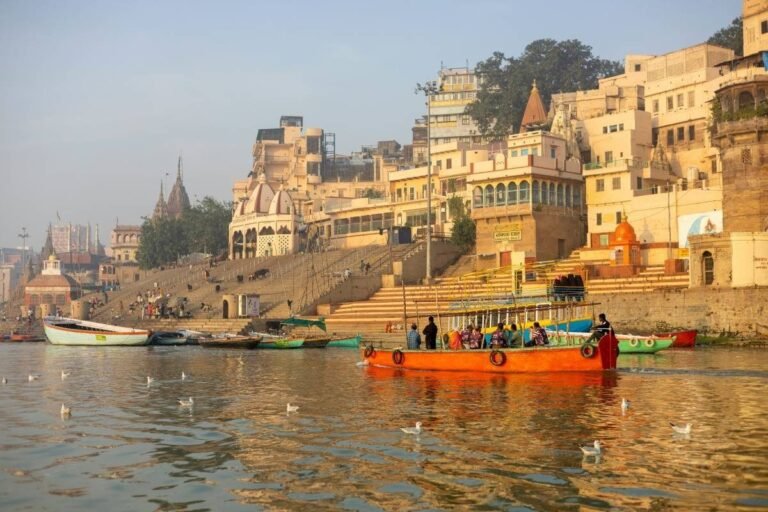
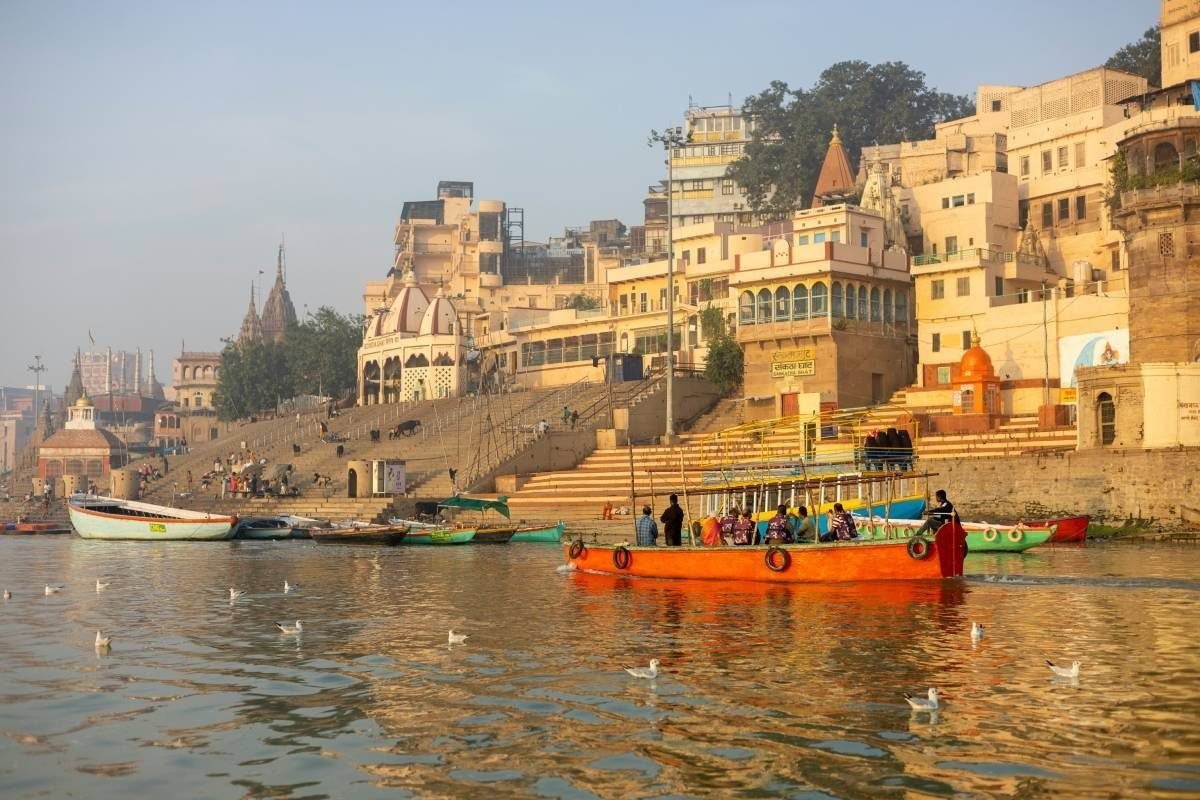
Varanasi, also called Kashi or Banaras, is one of the oldest continuously inhabited cities in the world and the holiest city in Hinduism. Its old town rises from the western bank of the Ganges in a long crescent of temples, palaces and houses, and along about 6 km of riverfront, more than 80 ghats, wide flights of stone steps, lead down to the water. Many were built by kings and nobles from across India in the 18th and 19th centuries, which is why palaces of Rajasthan and Maharashtra overlook the river here.
Life on the ghats
Hindus believe that bathing in the Ganges washes away sins and that dying in Varanasi brings liberation (moksha) from the cycle of rebirth. So the ghats are full of life from before dawn: pilgrims taking a holy dip, priests under umbrellas performing ceremonies, people doing yoga and meditation, washermen beating clothes, boatmen calling for passengers, cows, children playing cricket and sadhus sitting in silence.
The main ghats
- Assi Ghat: at the southern end, with a morning ceremony of music, prayers and yoga at sunrise.
- Dashashwamedh Ghat: the busiest and most important, scene of the grand evening Ganga Aarti.
- Manikarnika Ghat: the main cremation ghat, where fires burn day and night.
- Harishchandra Ghat: the second cremation ghat.
- Darbhanga, Scindia, Kedar and Panchganga Ghats: with grand palaces, a half-sunken temple and some of the most beautiful architecture.
How to see them
The best way is a boat at sunrise, drifting along the whole riverfront as the sun rises over the far bank. Afterwards, walk part of the ghats on foot. In the evening, return for the aarti at Dashashwamedh, from the steps or a boat.
Respect at the cremation ghats
Cremation is a sacred family ritual. Watch quietly from a distance, don’t take photos, and ignore anyone who demands money for “wood” or a guided visit.
Plan your visit
Combine the ghats with Dashashwamedh Ghat for the aarti, the Kashi Vishwanath Temple and Sarnath. See our boat rides and Ganga Aarti pages.