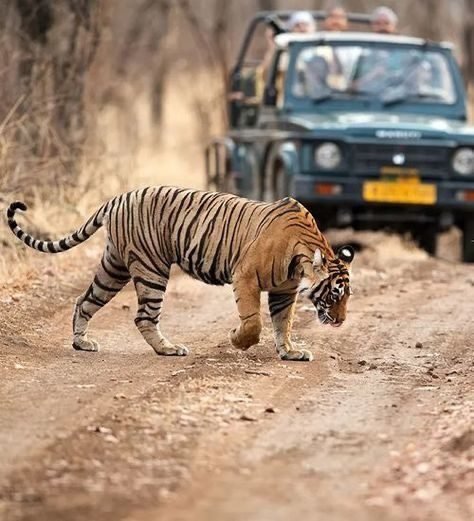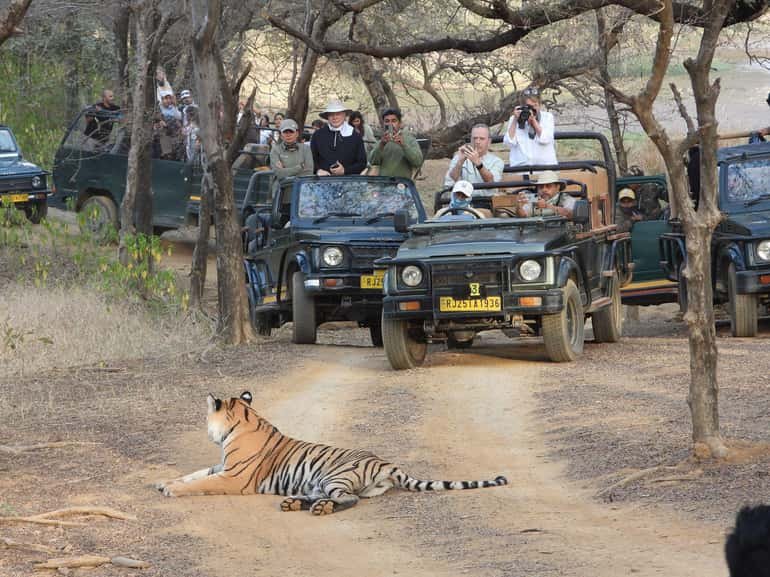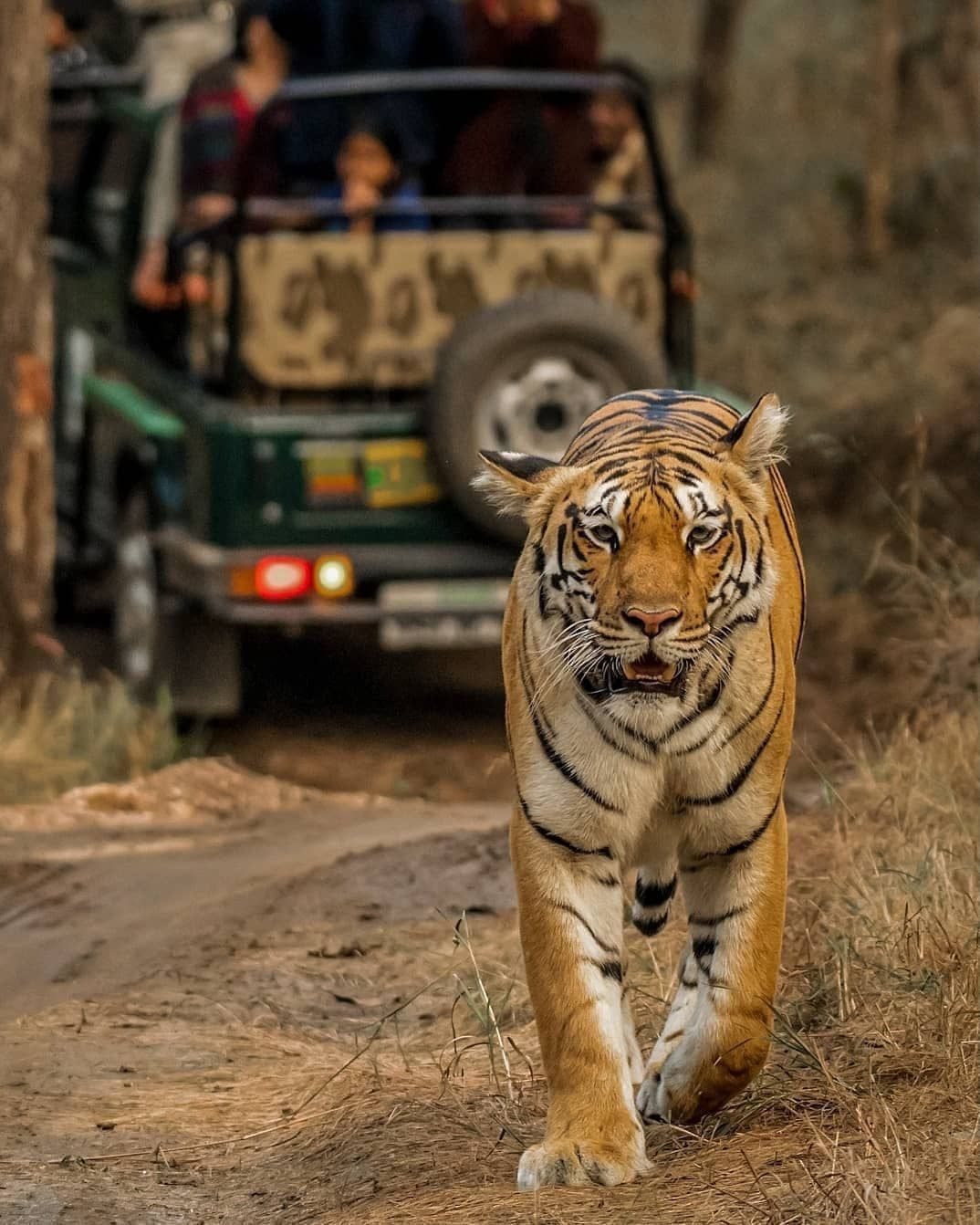


Few wildlife moments compare with a wild tiger stepping out of the forest a few metres from your jeep. Ranthambore National Park in Rajasthan is one of the best places in the world to see one: a dry forest of dhok trees, grassland and lakes, overlooked by a thousand-year-old fort, where tigers are often seen in daylight. Sightings are never guaranteed, but two or three safaris give you a good chance, and the park is beautiful whatever you see.
Safaris run twice a day, early morning and afternoon, for about three to three and a half hours each. You ride in an open six-seat jeep, called a gypsy, or a twenty-seat open truck, called a canter, with a driver and a Forest Department guide. The park is divided into zones, and your zone is allocated by the Forest Department when the permit is booked, not chosen on the day. Permits are booked online up to about 90 days ahead with each visitor’s passport or ID details, and they sell out in peak season, so book early.
Besides tigers, look for leopards, sloth bears, sambar and spotted deer, nilgai, wild boar, marsh crocodiles and langur monkeys, and over 300 species of birds. The ruined pavilions, old walls and lakes, especially Padam Talao and Rajbagh, make Ranthambore one of India’s most photogenic parks. October to March is pleasant, though mornings in open jeeps are cold; April to June is hot but brings the best sightings at the water; and the core zones close for the monsoon from July to September.
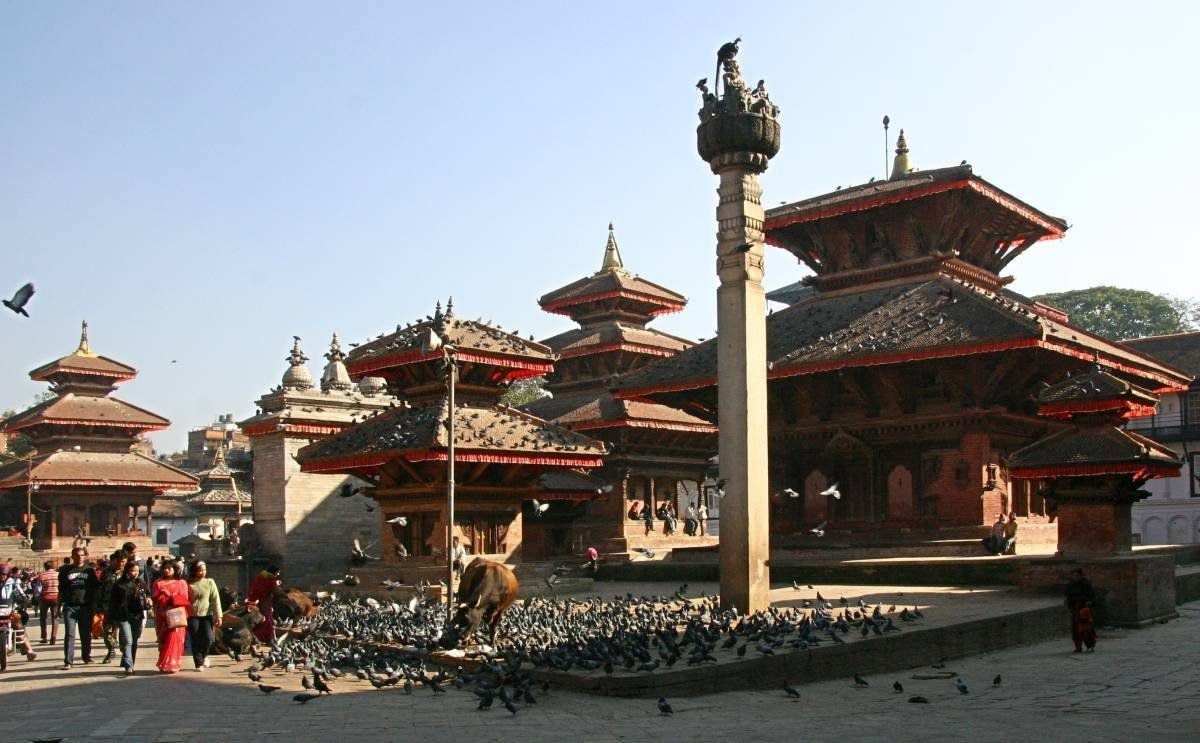
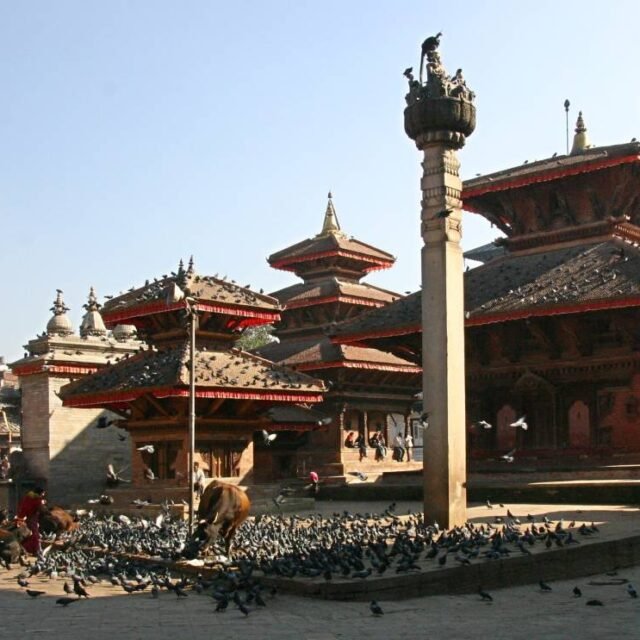
In Nepal, Chitwan National Park offers jeep safaris through grassland and forest, where the stars are one-horned rhinos, with canoe trips and walks with naturalists. Our Ranthambore, Adventure and Nepal tours all include safaris.