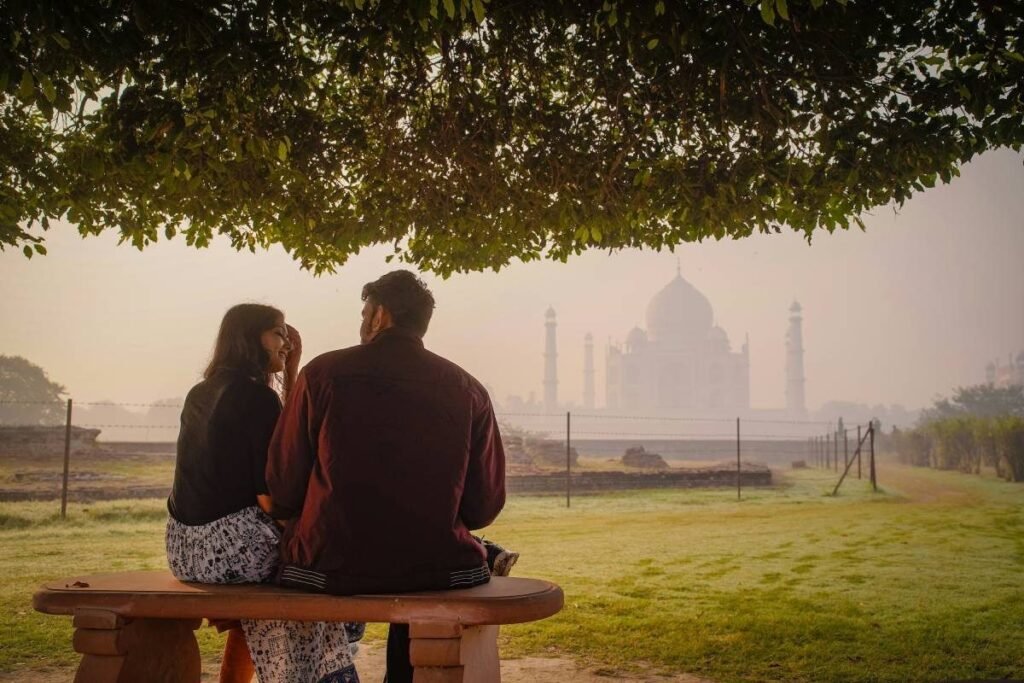


On a clear full-moon night, the white marble of the Taj Mahal seems to glow with a soft, silvery light of its own. For a small number of visitors each month, the Archaeological Survey of India opens the monument at night so they can see it this way. It is quiet, rare and unforgettable, and because places are very limited, it needs a little planning.
Night viewing runs on five nights a month: the night of the full moon and the two nights before and after it, except on Fridays, when the Taj is closed, and during Ramadan. There are eight 30-minute slots between 8:30 PM and 12:30 AM, each for up to 50 visitors. Tickets have traditionally been sold at the ASI office in Agra the day before, from 10:00 AM to 6:00 PM, with your passport or ID. On the night, visitors gather at the Shilpgram complex, pass security and travel to the East Gate by electric bus.
Night visitors stay on the red sandstone platform just inside the main gate, about 300 metres from the mausoleum; you do not walk through the gardens or go inside the tomb. From the platform the Taj rises at the end of the long garden, lit only by the moon. Bring binoculars if you have them. Photography is allowed, but without a tripod the subtle light is hard to capture, and on hazy winter nights the view can be faint, so it is worth having a daytime visit too.
October to March brings the clearest skies, though winter nights can be cold, while monsoon clouds often hide the moon from July to September. The December full moon falls close to Christmas, which is why our Christmas Golden Triangle tour is built around it. The best plan is to see the Taj by moonlight, then return for sunrise inside the next morning.