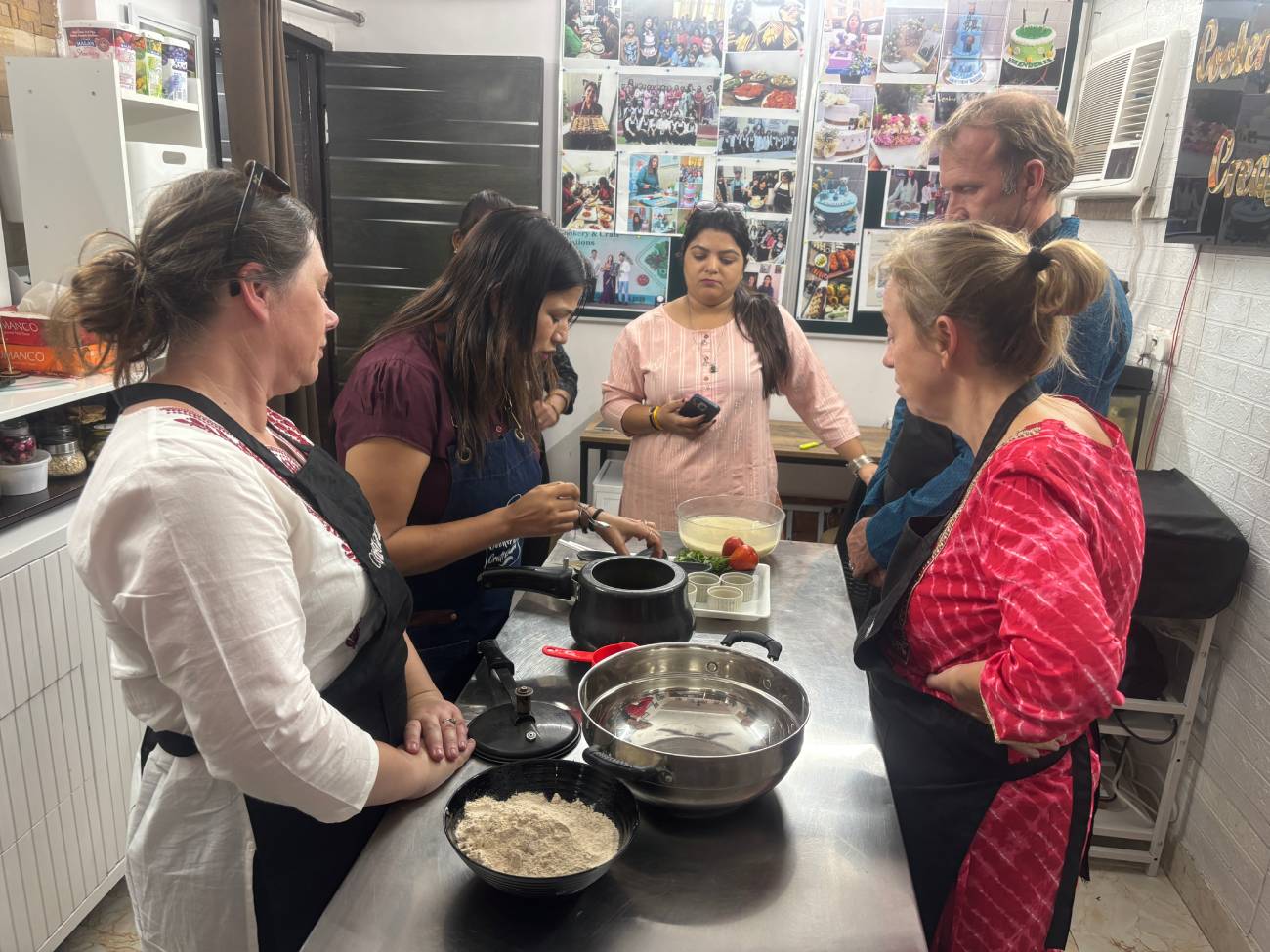
Travelers often come to India expecting grand monuments, vibrant markets, and iconic foods. But what many don’t realize, until they step inside a local home, is that the real soul of India lives in its kitchens. As a tour guide, I’ve spent years helping travelers explore India beyond guidebooks and bucket lists. One of the most meaningful ways we do this is through our Home Kitchen Experience, a cultural inclusion offered within our tour packages.
Recently, a guest from the USA participated in this experience, and watching their journey reminded me why we created this activity in the first place: to help travelers connect with India not just through sights, but through people, culture, and daily life.
Below is an inside look at this unique cultural experience, why we built it, what travelers can expect, and how it transforms their understanding of India.
Why This Experience Exists in the First Place
The idea was not born from commercial thinking; it came from countless conversations with travelers who felt disconnected from the “real India.” They could see the beauty of monuments and taste food in restaurants, but they lacked a genuine, personal moment inside Indian life.
I realized that opening the doors of a local home would bridge that gap. It would allow guests to see how Indian families live, cook, and interact with culture daily—not through curated performances, but through natural routines.
A Cultural Tool for First-Time International Travelers
For someone visiting India for the first time, everything feels new and unfamiliar: the spices, the smells, the lifestyle, the rhythm of home life. This experience helps ground them. It provides context, comfort, and clarity.
When a traveler stands in an Indian home kitchen, sees how everyday meals are prepared, and observes the simplicity behind traditions, it becomes easier to understand the larger cultural tapestry of India. The session becomes the anchor that helps them interpret everything else they see during their trip.
Authenticity, Not Staging or Commercial Setup
The biggest decision we made was to keep this experience rooted in authenticity. No studio, no staged décor, no scripted demonstrations. The kitchens our guests step into are real home kitchens lively, warm, modest, and full of daily character.
This honesty is what makes the experience powerful. Travelers often tell us that they appreciate the lack of pretense. They see India as it truly is, and that clarity is far more memorable than any polished, commercial cooking class could ever be.
The Setting: Inside a Local Agra Home Kitchen

The Indian home kitchen is not just a space for cooking; it is a cultural center, a conversation space, and a place where traditions quietly live and evolve. The home kitchens we take travelers into reflect this reality.
They are functional, simple, efficient, and filled with details that reveal how Indian households operate. For many foreign visitors, especially those coming from structured, modern kitchen environments, this setting becomes an unexpected window into daily Indian life.
The Environment: Practical, Warm, and Purpose-Driven
Indian kitchens prioritize practicality over presentation. Everything has a purpose: the placement of spices, the arrangement of utensils, the method of heating, the way ingredients are stored. When travelers step into this environment, they often notice how resourceful Indian homes are.
The environment demonstrates how tradition and modern life work together, how families retain old cooking techniques while adapting to contemporary needs. This blend of cultures and eras becomes one of the most fascinating aspects of the experience for visitors.
Learning from a Local Indian Woman Who Guides the Experience
Each kitchen session is led by a local Indian woman, someone who manages her home with skill, patience, and cultural knowledge passed down through generations. She is not performing; she is simply sharing what she already does every day.
Her presence is the soul of the experience. Travelers witness her ease, her techniques, and her approach to cooking, all of which reflect the adaptability and intuition of Indian home cooks. This is where culture becomes personal, not theoretical.
The Tools, Techniques, and Unspoken Traditions of Indian Households
The utensils used during this experience are the same ones found in most Indian homes: simple pots, pans, tongs, rolling boards, spice boxes, and traditional cooking vessels. These tools hold decades of everyday stories, worn edges, seasoned surfaces, and generations of repetition.
Travelers often find these details more meaningful than any structured demonstration. Observing these tools and techniques gives them insight into how Indian families maintain tradition, preserve flavor, and create dishes that are both simple and deeply rooted in culture.
The Guest’s Journey: From Observation to a Personal Cultural Milestone

Every traveler who joins this experience follows a similar emotional arc, curiosity, discovery, participation, and connection. During a recent session, our guest from the USA expressed how unique it felt to stand in a local kitchen and prepare food with their own hands.
It was their first time cooking an Indian meal, and more importantly, their first time tasting something they personally made in an Indian home. That moment captures the spirit of this experience.
From Watching to Doing: A Memorable Hands-On Milestone
Travelers begin by observing the cooking process, watching the home cook demonstrate steps, ingredients, and techniques. Soon after, they are invited to participate. This transition from observer to participant is powerful.
The hands-on element transforms the experience from passive watching to active cultural engagement. It becomes an accomplishment, one that travelers remember long after their trip ends.
Unexpected Emotional Impact: Pride, Surprise, and Joy
Many tourists assume they will simply learn something new or taste good food. What surprises them is the emotional depth. Preparing food in someone’s home makes them feel welcomed, included, and connected.
The guest from the USA described the moment as “unique” and “unforgettable,” not because of the complexity of the dish, but because of the personal sense of achievement and cultural closeness.
Connection Beyond Words or Forced Interaction
We do not script dialogues or force interactions. The environment naturally creates comfort. When a traveler stands in a home kitchen, follows the flow of daily routines, and tastes the result of their effort, a quiet cultural connection forms. It is sincere, unscripted, and far more meaningful than any commercial cooking workshop.
Why This Experience Matters for Understanding India

Travelers often misunderstand India when they view it only through monuments and curated tourist activities. True understanding requires stepping into lived spaces. Our kitchen experience helps travelers grasp the everyday reality of Indian life, its simplicity, complexity, warmth, and cultural rhythm.
Moving Beyond Sightseeing: Culture in its Purest Form
Tourists expect India to be visually rich, but they rarely expect the depth that exists beyond visuals. Stepping into a home shows them how families interact, how traditions are maintained, and how food shapes culture. It is a layer of India that cannot be captured in photographs.
A Bridge for First-Time Visitors Who Feel Overwhelmed
India can feel intense for newcomers, crowded streets, diverse foods, rich aromas, unfamiliar routines. This home experience acts as a gentle bridge. It helps travelers anchor themselves in the culture, dispelling misconceptions and easing uncertainties. They leave with clarity and comfort, not confusion.
Food as a Universal Cultural Connector
Even without discussing dishes or interactions, the act of sharing a kitchen builds connection. Food becomes the common ground. The kitchen becomes the stage where cultures meet without needing translation.
That shared moment is more impactful than many sightseeing activities combined.
Agra Trip Packages’ Philosophy and Commitment to Authentic Travel
As a Government Certified Tour Guide, my responsibility is not just to educate travelers about history but also to present India truthfully. Our home kitchen experience reflects that responsibility. It is included in selected packages because authenticity should never be treated as a luxury add-on, it should be integral to the journey.
Human Travel Over Transactional Tourism
We believe in people-first travel. Tours should feel personal, not mechanical. This philosophy guides every part of our service, whether we’re showing guests the Taj Mahal or inviting them into a family kitchen. Travelers deserve genuine experiences, not rehearsed performances.
Why We Include (Not Sell) This Cultural Experience
Most agencies treat cultural sessions as paid extras. We don’t. For us, these experiences are essential in helping guests understand India. Including them ensures that every traveler, regardless of budget, gets access to meaningful, authentic cultural moments.
Commitment to Real India, Not Decorated India
We will never replace home kitchens with commercial cooking studios or introduce artificial presentations. Travelers trust us because we show India as it is, raw, real, warm, and deeply human. This is the India that makes lasting memories.
Final Thoughts from the Founder
For first-time travelers, India can be overwhelming, fascinating, confusing, and beautiful, all at once. My goal as a Government Certified Tour Guide and founder of Agra Trip Packages is to help visitors navigate this complexity with clarity and respect. The Home Kitchen Experience is one of the ways we achieve that.
When our USA guest told us how unique the experience felt, how special it was to taste something they made themselves in an Indian home, it reaffirmed the purpose behind this initiative. Travel is not about collecting photographs; it is about collecting moments that shift your understanding of the world.
If you open the door to India’s homes, you open the door to its heart. And that is exactly what we hope every traveler experiences with us.